January 2, 2026 | 22:47 GMT +7
Hotline: 0913.378.918

January 2, 2026 | 22:47 GMT +7
Hotline: 0913.378.918
On the morning of April 24, at a meeting discussing the draft decree on animal disease control policies, Deputy Prime Minister Tran Hong Ha emphasized the need to develop a consistent and well-coordinated policy. He underscored the importance of avoiding overlaps and ensuring practical effectiveness in disease prevention and control within the livestock sector.
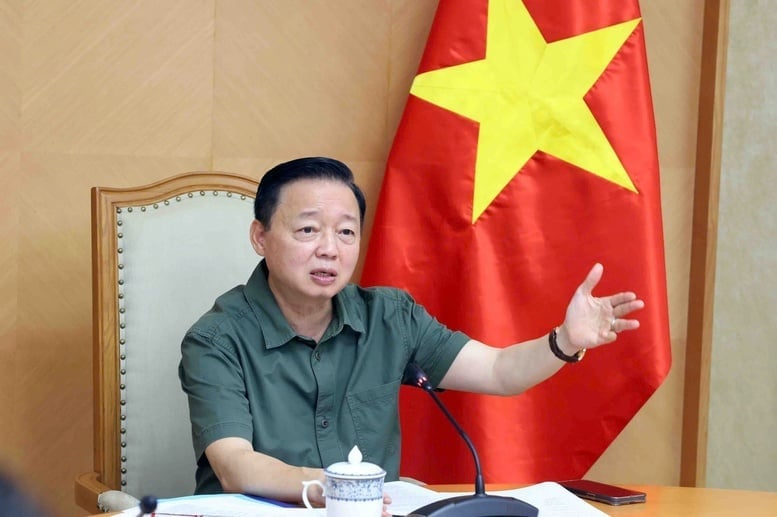
Deputy Prime Minister Tran Hong Ha emphasized the need for a consistent and coordinated policy to avoid overlaps and ensure practical effectiveness in livestock disease prevention. Photo: GVP.
At a recent meeting, Deputy Prime Minister Tran Hong Ha called on the Ministries of Agriculture and Environment to fully integrate relevant policies into the draft decree on animal disease prevention and control. He emphasized the need to eliminate overlaps in support mechanisms that have persisted in recent years. According to him, the new decree must reflect a shift in both mindset and approach, particularly by clearly distinguishing between "prevention" and "control."
"This decree needs to demonstrate innovation not only in thinking but also in support mechanisms and investment methods. If prevention is not implemented effectively, then control efforts will be significantly more challenging. The policies must clearly define what is meant by prevention and what is meant by control", Tran Hong Ha stated.
In the context of ongoing and complex disease outbreaks in the livestock sector, particularly in aquaculture, he stressed the importance of setting clear goals, identifying practical needs, and underscoring the urgency of the decree. He also emphasized the importance of proactive measures, decentralized management, and clearly defined responsibilities in disease response.
The Deputy Prime Minister suggested that disease prevention and control should be approached similarly to disaster management, emphasizing the need for regular, proactive, decentralized, and well-supported efforts, with strong capacity-building and rapid response mechanisms. Support policies, he added, must be timely, accurately targeted, and focused on high-risk areas.
The draft decree comprises three chapters and fifteen articles, which clearly outline the levels of support for production establishments with animals or animal products that must be destroyed due to disease outbreaks. It also specifies support for individuals involved in disease prevention and control activities.
The key provisions of the decree focus on providing support for the destruction of animals and products in disease-affected areas or outbreaks that have been confirmed. Additionally, it includes support for livestock farmers as well as personnel directly engaged in disease control efforts. This includes both paid and unpaid individuals.
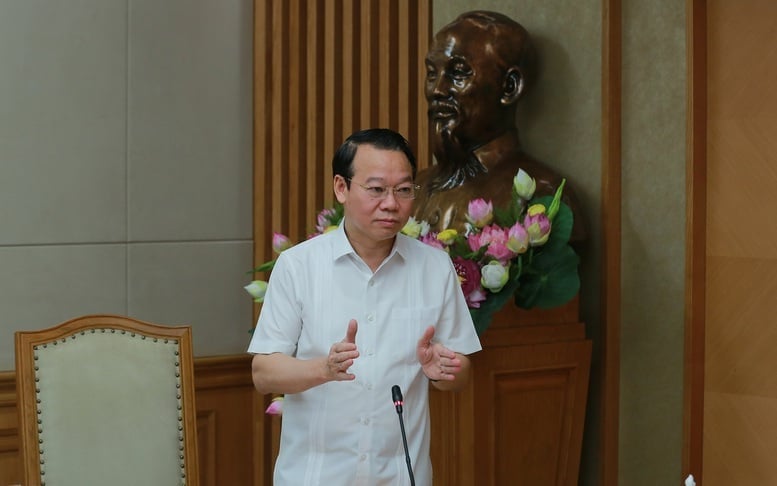
Minister of Agriculture and Environment Do Duc Duy speaks at the meeting. Photo: VGP.
The support measures are inherited from existing regulations, while removing elements that are difficult to implement in practice. Notably, the compensation for damages in livestock farming and aquaculture will increase by 1.5 to 2 times compared to previous levels, based on actual surveys of production costs, inflation, and the financial capacity of the state budget. The general principle is that "the state only provides partial support, not full compensation for losses".
For personnel directly involved in disease control who do not receive government salaries, the support level will be in line with the average wage for unskilled labor, taking into account the level of harm, danger, and especially the risk of infectious diseases such as avian flu, rabies, and anthrax.
Minister of Agriculture and Environment Do Duc Duy stated that disease prevention and control in livestock farming have been carried out regularly, with factors such as farming processes, animal quality, farm scale, and vaccination being considered. Funding from both the central and local governments is available but scattered across many different documents. Therefore, the new decree will focus on adjusting the response processes when disease outbreaks occur, such as area quarantine, culling, and restocking, as well as providing timely support to affected farmers and personnel involved in disease control efforts.
Notably, the decree incorporates policies for disease prevention, including support for early culling, disease prevention personnel, and post-outbreak recovery measures.
Concluding the meeting, Deputy Prime Minister Tran Hong Ha instructed the Ministry of Agriculture and Environment to thoroughly review the draft decree, ensuring that the title, scope, and target subjects align with the core focus of disease control and support for damage recovery.
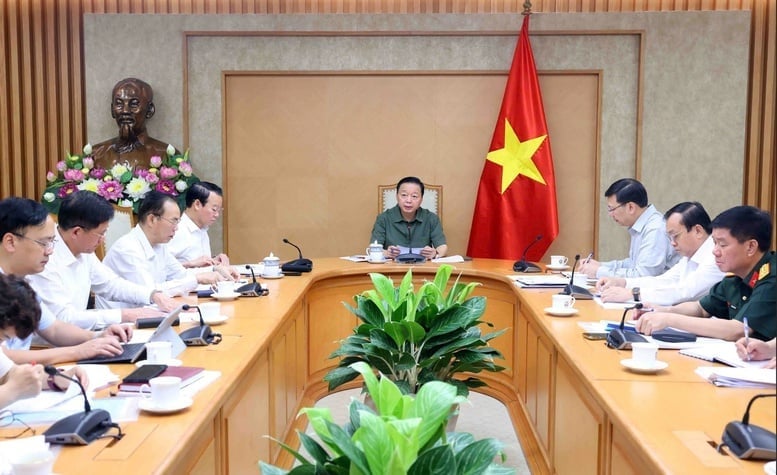
Deputy Prime Minister Tran Hong Ha chaired the meeting on the draft decree outlining policies to support animal disease prevention and control. Photo: VGP.
Deputy Prime Minister Tran Hong Ha emphasized that policies should be developed in a clear, consistent, and synchronized manner, ensuring that there is no overlap or inefficiency. The procedures for implementing disease control measures at both small-scale farms and industrial livestock facilities need to be clearly distinguished and defined.
For large-scale livestock farms, there must be a dedicated, well-trained disease control workforce in place to ensure that the principle of "the right person for the right job" is strictly adhered to. In contrast, for smaller, individual farms, the responsibility will lie with local specialized agencies such as veterinary services, preventive health, and environmental authorities. These agencies will play a key role in advising and coordinating disease control efforts. "Clear procedures and protocols are essential, so that in the event of an emergency, livestock facilities - particularly large-scale ones - can immediately implement the necessary response actions", the Deputy Prime Minister stated.
Furthermore, he urged the Ministry to continue researching and adding regulations concerning livestock insurance, particularly for large businesses, farms, and production chains. This is necessary to prevent the current situation where "profits are reaped when business is good, but the state is left to cover the losses during outbreaks".
Translated by Phuong Linh

(VAN) Located in three former provinces, Nam Dinh, Thai Binh, and Ninh Binh, and now in two provinces, Ninh Binh and Hung Yen, "Red River Delta" is the name of Vietnam's first interprovincial coastal wetland World Biosphere Reserve.
/2025/12/29/1046-1-210728_624.jpg)
(VAN) In 2025, Viet Nam recorded severe and extreme disasters, breaking multiple historical records and causing heavy losses in lives, property, and infrastructure nationwide.

(VAN) Applied technologies, water-saving irrigation is a strategic solution to promote climate-resilient agriculture and strengthen water security in the uplands.
/2025/12/29/3936-3-163422_251.jpg)
(VAN) Can Gio mangrove forest in particular and the entire Can Gio Mangrove Biosphere Reserve in general hold great potential for carbon credits.

(VAN) Chu Pah Rubber has announced its products that comply with the EU Deforestation Regulation (EUDR), affirming its commitment to sustainable production and product origin transparency.

(VAN) Deputy Director Nguyen Hoai Nam stated that a digital data platform will be developed with agricultural sector databases, utilizing AI to help farmers make informed decisions on 'watering correctly, sufficiently, and efficiently.’
/2025/12/29/4841-2-134224_777.jpg)
(VAN) From only about 10 individuals in 2009, the wild elephant population in Dong Nai has recovered to nearly 30 animals after more than 10 years.
