November 28, 2025 | 03:49 GMT +7
Hotline: 0913.378.918

November 28, 2025 | 03:49 GMT +7
Hotline: 0913.378.918
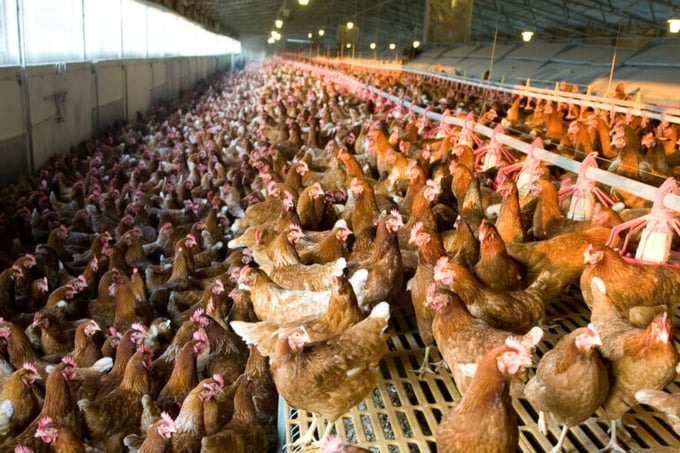
Compassion in World Farming says the government should lead by example by banning all caged production and supporting the industry in its transition to cage-free systems. Photo: Canva.
In its latest report ‘Food businesses paving the way for a cage-free Europe’, animal welfare charity Compassion in World Farming highlights that over 200 UK companies have committed to cage-free eggs, with over 75% of UK egg production already cage-free. However, it adds, approximately 8 million hens in the UK are still in confined, caged conditions, underscoring the urgent need for legislative action.
The charity says the government should lead by example by banning all caged production and supporting the industry in its transition to cage-free systems, citing a You Gov poll from 2020 which said 88% of the British public believed caged farming was cruel.
Beyond the UK and to Europe
But the call from the charity goes beyond the UK, as it continues to urge the EU Commission to deliver on its promise to ban caged animal farming. In response to the successful End the Cage Age European Citizens’ Initiative, signed by more than 1.4 million EU citizens, the European Commission made a clear and legally-binding commitment to introduce legislative proposals to end caged farming by the end of 2023.
The charity said the consensus achieved in the Strategic Dialogue on the Future of EU Agriculture is encouraging and it is urging the new Commission to adopt the recommendations and deliver the cage ban proposals by 2026 at the latest.
Introduction of legislation by the European Commission
The report highlights how major companies such as Barilla, Carrefour and Kaufland, are successfully phasing out cages for laying hens, sows and meat rabbits. Barilla, which operates in more than 100 countries, has fully transitioned to using cage-free egg products for its baked goods and pasta business.
Leonardo Mirone, ESG Leader Sourcing Chains at Barilla Group, said: “Barilla endeavours to ensure that all suppliers of raw materials of animal origin comply not just with legal requirements but also with the highest animal welfare standards and criteria and we proudly achieved our global cage-free goal in 2019.”
A crucial step forward in supporting and advancing sector-wide transformation would be the introduction of legislation by the European Commission to enforce a ban on cages.
As in the UK, these companies need the EU to support the transition by creating a level playing field and ensuring fair market competition by delivering on its 2021 commitment to present proposals to phase out cages across the EU.
Dr Tracey Jones, global director of Food Business at Compassion in World Farming, added: “Scientists are backing the call to end caged systems. Citizens are demanding change. Businesses are proving that large-scale cage-free farming is not only achievable but the right thing to do – for their customers, their brand and the animals in their supply chain.”
She added: “With the future of cages hanging in the balance, producers need clarity on timescales, system requirements and transition support. We urge both the new European Commission and UK government to deliver on their promises to the End the Cage, once and for all.”
(Poultryworld)

(VAN) A new study reveals how the simultaneous effects of ocean acidification, salinity and loss of oxygen are making the world more fragile.

(VAN) Hopes are growing that the creation of the first 3D turkey gut model could be a turning point in the battle against the virulent blackhead disease.

(VAN) Tyson, America’s biggest meat supplier, plans to shutter one of its largest beef processing plants as the industry continues to struggle with low cattle supplies and political pressure from Washington.

(VAN) New FAO study shows how digital solutions are empowering farmers and fishers to prevent losses and build resilient agrifood systems.

(VAN) Brazil's COP30 presidency pushed through a compromise climate deal on Saturday that would boost finance for poor nations coping with global warming but that omitted any mention of the fossil fuels driving it.

(VAN) Poultry farmers in the UK have been warned that they could face one of the worst winters yet for bird flu.

(VAN) Prices of main-crop paddy have risen sharply, with jasmine rice hitting 16,100 baht per tonne — the highest level in years.
