December 24, 2025 | 06:13 GMT +7
Hotline: 0913.378.918

December 24, 2025 | 06:13 GMT +7
Hotline: 0913.378.918
Launched in 2020, the project has been implemented across Thai Binh, Nam Dinh and Hung Yen provinces, funded by the Korean Government through its Ministry of Agriculture, Food and Rural Affairs (MAFRA).
In Vietnam, the Ministry of Agriculture and Rural Development (now the Ministry of Agriculture and Environment - MAE) assigned the National Institute of Agricultural Planning and Projection (NIAPP) to manage the project in collaboration with the Korea Rural Community Corporation (KRC).
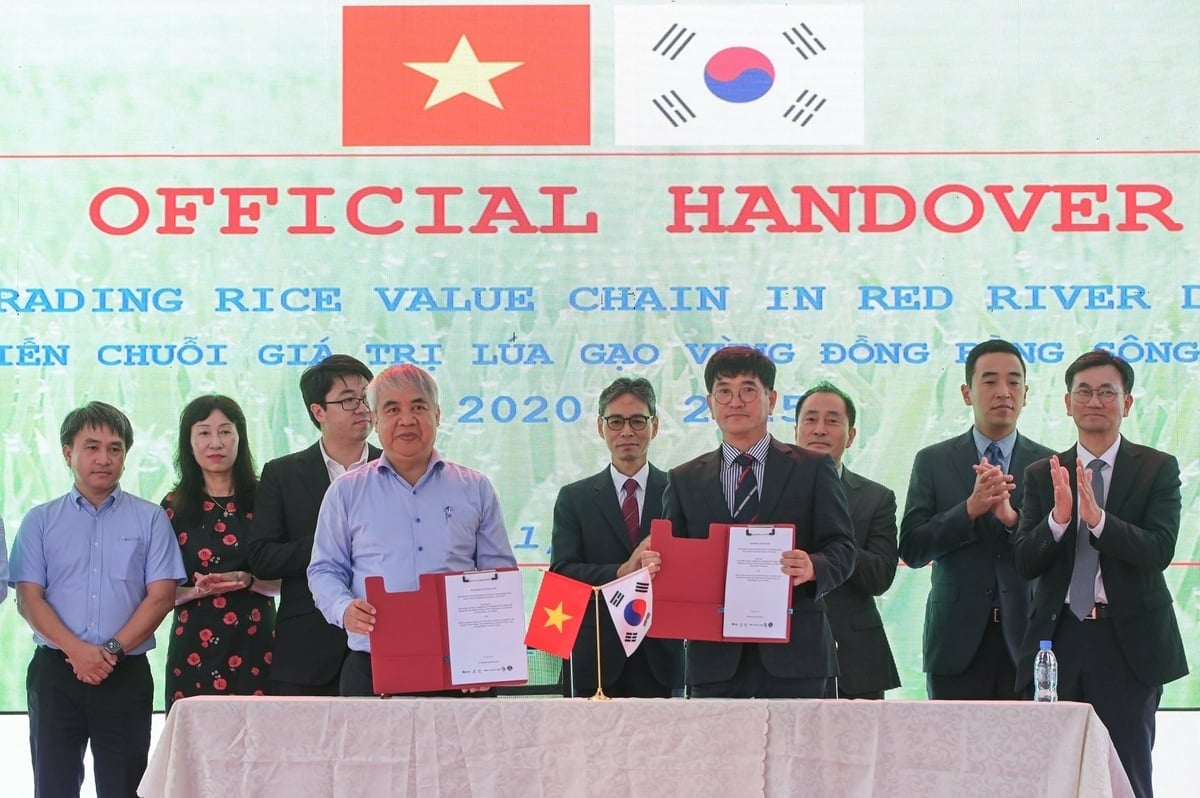
Representatives of KRC and NIAPP signed and handed over the project handover document. Photo: Tung Dinh.
At the handover ceremony in Thai Binh province, the KRC, representing MAFRA, officially transferred the project, including the infrastructure systems carefully developed over the past five years, to the Vietnamese side.
Vu Duc Dam Quang, Deputy Director of the International Cooperation Department (MAE), emphasised that the event was not merely a technical transfer but a symbol of the strategic, effective, and continually evolving partnership between Vietnam and Korea in agriculture.
According to Quang, the project not only delivers tangible outcomes in infrastructure and technology but also serves as a demonstration model for policies promoting the restructuring of the rice industry towards sustainable development and carbon emissions reduction - priorities actively pursued by the Vietnamese Government.
He remarked: “Today’s asset handover represents not only a technical milestone but also a profound commitment to responsibility, progress, and efficiency in the cooperation between our two governments. It lays a solid foundation for effective operation of the model, benefiting local communities and encouraging replication across the wider region.”
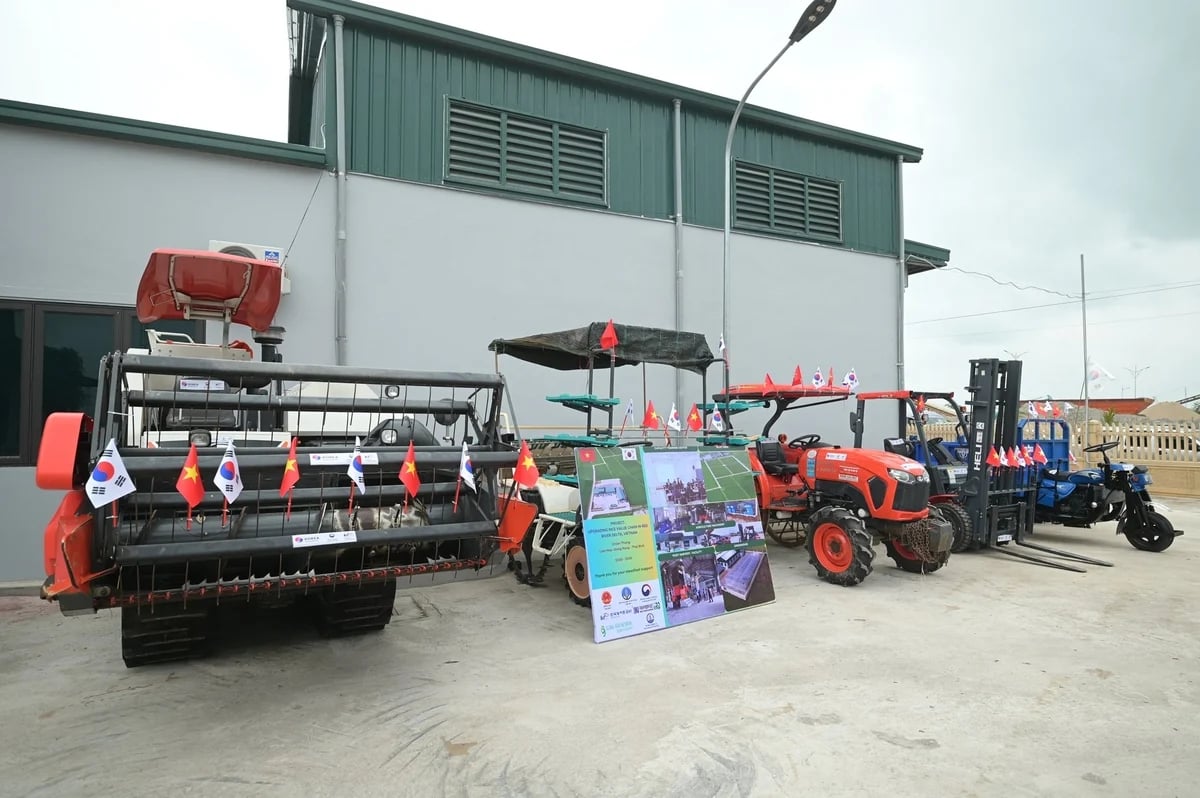
Some equipment and infrastructure funded by Korea for the project. Photo: Tung Dinh.
On behalf of Korea, Moon Kyung Duck, Head of the Global Agricultural Development Team, International Cooperation Bureau (MARFA), described the project as a model for agricultural cooperation between the two nations.
“We have not merely built infrastructure; we have jointly established a shared platform aimed at innovation and sustainable development in rice production,” he stated.
Explaining why this initiative was selected for grant assistance among numerous proposals from Vietnam, Moon Kyung Duck noted that the rice sector plays a crucial role in Vietnam’s economy, particularly in the Red River Delta - a key agricultural and economic region. Therefore, MAFRA prioritised this project to boost productivity, improve efficiency, and enhance the sector’s market competitiveness.
Beyond economic aims, the project seeks to contribute positively to regional development and living standards, while establishing a replicable, sustainable agricultural model.
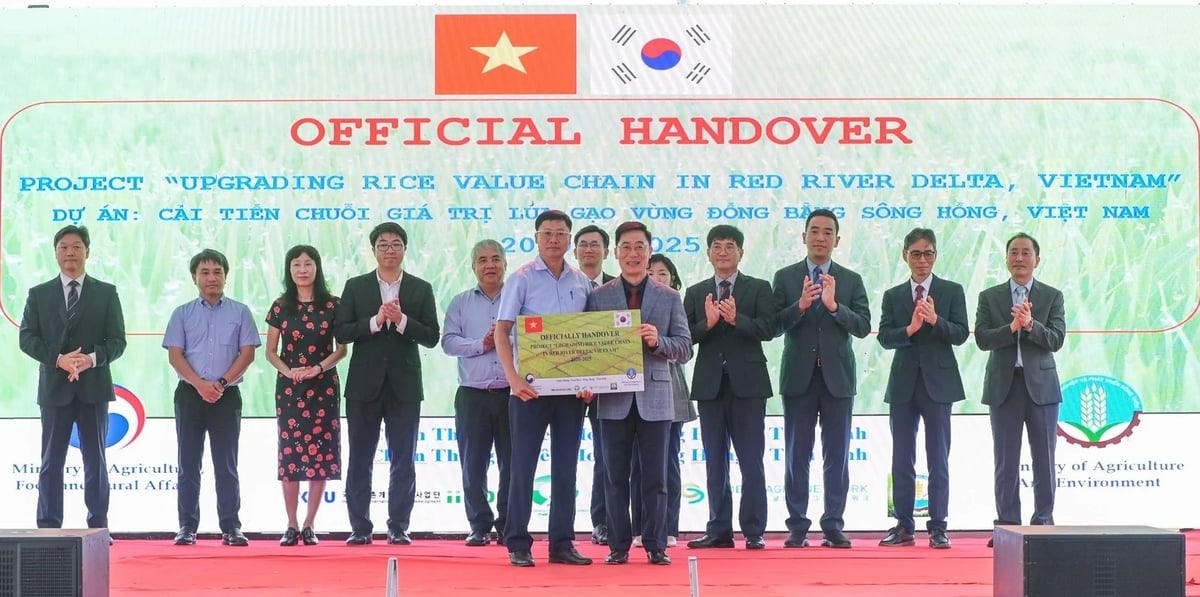
Representatives of Thai Binh province and the Korean side presented a symbolic project handover plaque. Photo: Tung Dinh.
Looking ahead, Moon Kyung Duck affirmed that Korea intends to replicate this success in other regions of Vietnam, thereby further strengthening agricultural productivity and promoting sustainable agricultural development in both countries.
Alongside initiatives to enhance agricultural value chains, Korea is exploring various modes of collaboration to support the sustainable development of Vietnam’s agriculture and rural areas. These include promoting smart agricultural technologies, improving climate resilience, and implementing farmer training and capacity-building programmes.
Representing the Vietnamese project management body, Bui Hai Nam, Deputy Director of the NIAPP, noted: “Today’s event marks the transition from construction and initial operation to asset handover. We hope that, under local management, the project will be operated even more effectively, delivering greater value and increasing farmers' incomes.”
Expressing gratitude to the Korean partners, Nam expressed hope for further collaboration aligned with Vietnam’s strategic direction towards responsible production and green economic growth.
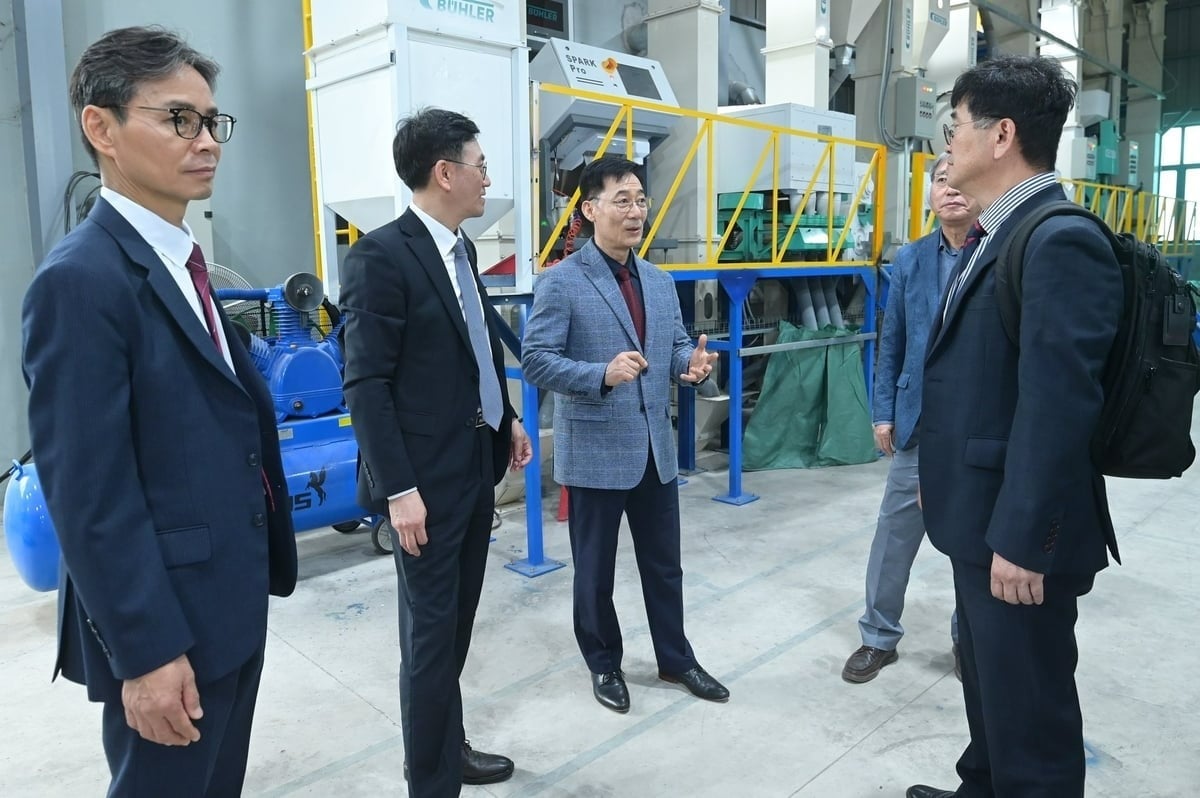
Korean delegates visit the project's post-harvest processing area. Photo: Tung Dinh.
Initiated in 2020, the project aimed to develop a master plan for enhancing the rice value chain in the Red River Delta, strengthen farmers' capacities for climate-resilient rice cultivation, increase incomes, and bolster food security.
A key component involved establishing a demonstration model for sustainable, high-value rice cultivation in Thai Binh province, intended for replication across the region.
Key project activities over the past five years included master planning, capacity-building, communication and marketing strategies, as well as the construction and operation of demonstration models for sustainable rice farming, training, processing, and replication planning.
Four main components have been implemented in Lien Hoa commune, Dong Hung district, Thai Binh province: an agricultural training centre, a pilot cultivation zone, a post-harvest processing area, and a greenhouse system.
The project has achieved notable results, including a 10% increase in average rice yields and a significant reduction in post-harvest losses. Furthermore, it has contributed to the formation of integrated models linking production, processing, and consumption, helping to stabilise supply, reduce farming risks, and enhance farmers’ incomes.
Translated by Huong Giang

(VAN) From changing soil management practices to reducing input use, many pepper farms in Lam Dong are showing clear results toward low-carbon production.

(VAN) In 2025, An Giang's agriculture achieved positive results, highlighted by stable rice production and the effective implementation of the 'One Million Hectares of High-Quality, Low-Emission Rice' project.

(VAN) Private sector will be a powerful force for investment and innovation to share solutions for nature conservation and biodiversity restoration.
/2025/12/18/4844-4-223614_595.jpg)
(VAN) Building on the 'Large-Scale Rice Field' project, An Giang is developing high-quality rice raw material zones, strengthening consumption linkages, and standardizing processes to meet market requirements.

(VAN) With support from KOICA, livestock sector is developing the regulatory framework for management based on South Korea’s experience.
/2025/12/17/0042-2-075234_14.jpg)
(VAN) In Vinh Long, high-quality, low-emission rice models are being scaled up from cooperatives, helping reduce production costs, increase farmers' incomes, and protect the environment.

Professor Nguyen Duc Ngu, the third generation of leaders since the establishment of Vietnam’s Hydrometeorology sector has witnessed and lived through the long arc of its development.
