December 1, 2025 | 18:19 GMT +7
Hotline: 0913.378.918

December 1, 2025 | 18:19 GMT +7
Hotline: 0913.378.918
From October 8 to 11, the ASEAN Cocoa Club (ACC) is hosting its 24th seminar focused on ASEAN cooperation and common approaches to promoting agricultural and forestry products. This event is being organized by the Ministry of Agriculture and Rural Development in Ba Ria - Vung Tau province.
At present, markets like the EU, the United States and several other countries have implemented new regulations. These regulations pose significant technical barriers for ASEAN cocoa producers aiming to penetrate these markets. Consequently, ACC members will need to reorganize their production processes and devise effective solutions to reduce pesticide residues in cocoa products, ensuring compliance with international standards.
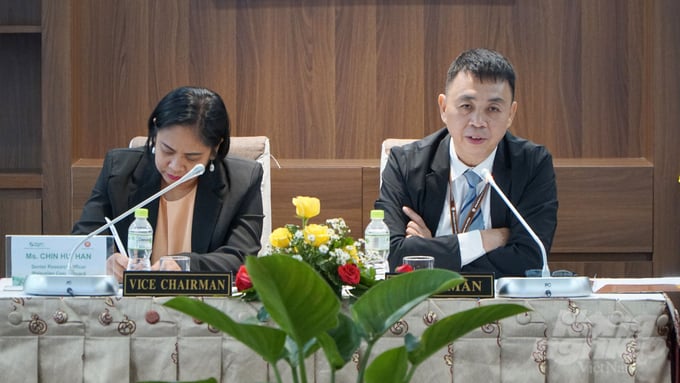
Dr. Nguyen Viet Khoa (right) from the Vietnam Cocoa Coordination Board is coordinating the conference. Photo: Le Binh.
Moreover, ASEAN countries are currently producing cocoa that does not adhere to a regional standard. It is crucial, therefore, to establish a common set of standards across member nations, creating a singular ASEAN standard. This unification would not only enhance the export potential of cocoa for the entire region but also provide significant advantages for individual member states.
Dr. Nguyen Viet Khoa from the Vietnam Cocoa Coordination Board points out that international experts highly appreciate the quality of Vietnamese cocoa. The world has previously awarded prizes to a cocoa product from Vietnam known for its unique aroma. The nutritional value of Vietnamese cocoa is regarded as superior, with qualities that many other countries do not possess. Additionally, Vietnamese farmers have demonstrated impressive skills in cocoa cultivation, positioning them to compete effectively with producers from Côte d'Ivoire, Africa and even Indonesia.
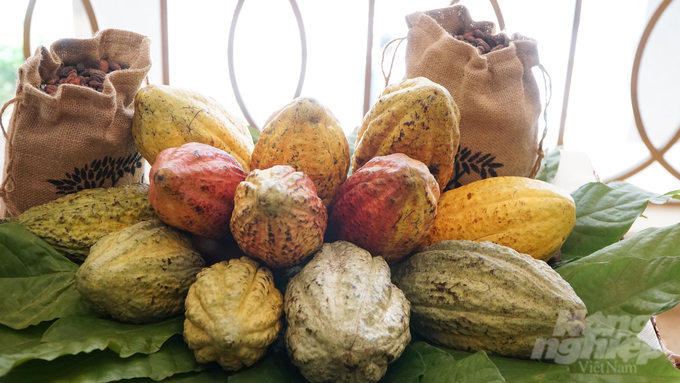
Vietnamese cocoa is recognized for its good yield and distinctive quality compared to other countries. Photo: Le Binh.
"We need to capitalize on our strengths, with an initial focus on improving our cocoa varieties. If we do not undertake timely research, the cocoa varieties in Vietnam could quickly fall behind. For example, Malaysia has already developed hybrid varieties that can yield up to one and a half times more than what we currently produce. We are actively discussing the establishment of a research project for cocoa varieties, which would provide benefits to both the ASEAN Cocoa Club (ACC) and Vietnam. This collaboration could significantly save time and costs in our efforts to enhance our cocoa industry", said Dr. Nguyen Viet Khoa.
Experts from various countries are recommending that Vietnam pursue a development strategy for cocoa that does not aim to increase land area or production volume, but rather focuses on intensive farming practices that improve yield and product quality, along with deeper processing capabilities. Given that Vietnam currently has many key fruit crops, it is quite difficult for cocoa to expand significantly in terms of land area. Additionally, climate change poses a common challenge for the agricultural sector.
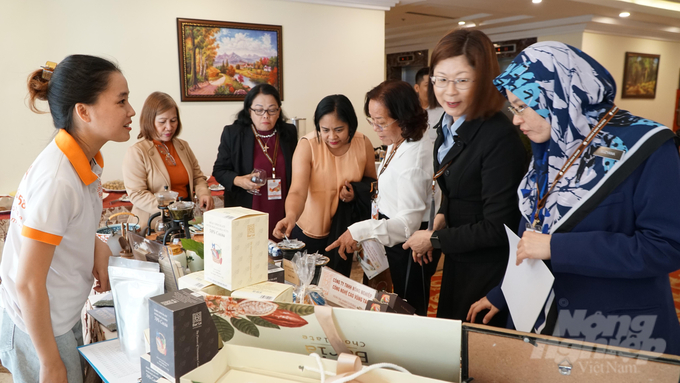
ASEAN experts are impressed by the deep-processed cocoa products from Vietnam. Photo: Le Binh.
The Vietnamese cocoa industry must reorganize its production not only to focus on quality, yield, and sustainable practices but also to establish supply chains for sourcing products and local processing. Many Vietnamese companies are already excelling in this area.
For instance, the Trong Duc cocoa model in Dong Nai and the Vung Tau High-Tech Agriculture Company have successfully created supply chains that provide technical support to farmers, ensuring they can enhance their cultivation practices. Furthermore, it is essential to consider the by-products of cocoa as valuable resources for alternative uses. By optimizing these materials, we can contribute to economic growth without causing harm to the environment.
According to Professor Divina M. Amalin from the Cocoa Coordination Board of the Philippines, Vietnam has exceptional potential for cocoa development compared to other countries in the region, thanks to its favorable land, advanced techniques and organizational advantages in production.
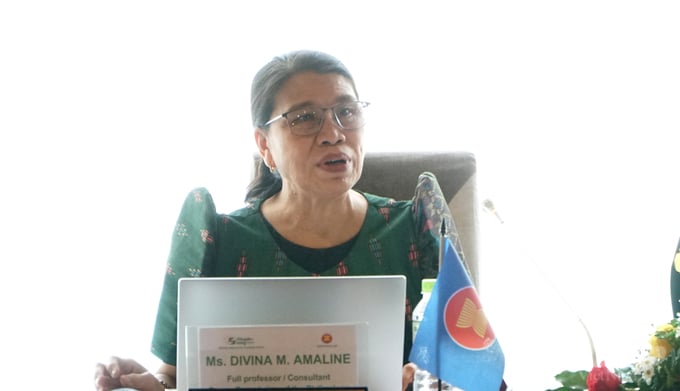
Professor Divina M. Amalin from the Cocoa Coordination Board of the Philippines. Photo: Le Binh.
However, to ensure the sustainable development of the cocoa industry in particular, Vietnam needs to adopt sustainable farming practices. Integral to this is the implementation of integrated pest and disease management strategies. At the same time, cocoa growers must minimize the use of chemicals and pesticides to avoid compromising the quality of the cocoa.
"If this issue is not managed well, the raw materials for chocolate production could become contaminated with harmful chemical residues. This would significantly compromise the quality of the cocoa, hindering its potential to succeed in international markets. Furthermore, Vietnamese deep-processed cocoa products possess unique qualities that set them apart, and it is essential for producers to leverage this distinctiveness", Professor Divina M. Amalin emphasized.
Sharing the same view as Dr. Nguyen Viet Khoa, Mrs. Divina M. Amalin also believes that Vietnam should focus on deep processing to create a competitive edge over other countries.
Translated by Phuong Linh

(VAN) The inevitable path forward is to reorganize production along the value chain, utilizing cooperatives as the core, enterprises as the driving force, and farmers as the central subjects.

(VAN) On November 28, Minister Tran Duc Thang, together with China's Minister of Agriculture and Rural Affairs Han Jun, chaired the 2nd meeting of the Viet Nam - China Agricultural Cooperation Committee.

(VAN) Forest carbon credits are only accepted when they ensure absolute environmental integrity, additionality, permanence, and transparency.

(VAN) Viet Nam partners with Beijing on controlling air pollution, cross-regional management, high-tech monitoring and relocating polluting facilities.

(VAN) With a USD 50 million investment, Australia is partnering with Viet Nam to operate its first public electric bus fleet and develop a nationwide EV charging network.

(VAN) On November 28, in Beijing, Minister Tran Duc Thang met Minister of Ecology and Environment of China Huang Runqiu, to share experience on environmental protection.
/2025/11/28/0950-2-120557_751.jpg)
(VAN) The recent flood spell in the South Central region clearly reflects the characteristics of natural disasters in 2025, which are compound, prolonged, and amplified.
