June 5, 2026 | 08:20 GMT +7
Hotline: 0913.378.918

June 5, 2026 | 08:20 GMT +7
Hotline: 0913.378.918
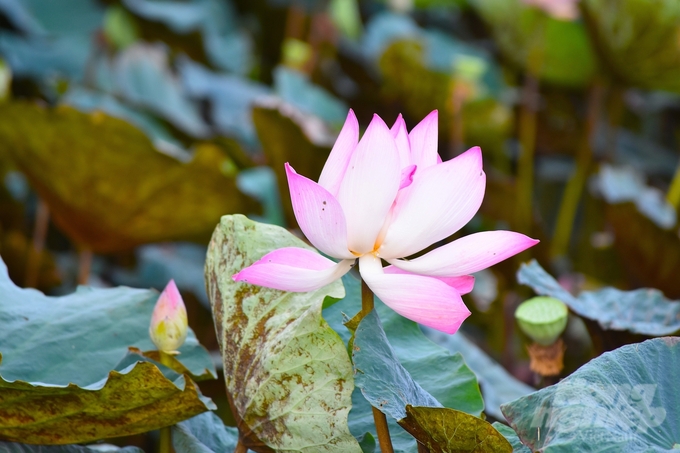
Lang Sen Wetland Reserve in Tan Hung district (Long An province) includes three subdivisions: strict conservation subdivision, economic Melaleuca forest subdivision, and biodiversity subdivision. Photo: Hoang Vu.
Lang Sen Wetland Reserve in Tan Hung district (Long An province) has a total area of 5,030 hectares, including three subdivisions: strict conservation subdivision, economic Melaleuca forest subdivision, and biodiversity subdivision. However, currently, the Reserve Management Board only manages an area of 1,971 hectares in Vinh Chau A and Vinh Loi communes, Tan Hung district.
The Reserve has three main ecosystems: Melaleuca forest, seasonally flooded grassland, and year-round flooded grassland, which is a place of diverse flora and fauna. According to records, this place has 261 species of plants, 161 species of birds, 86 species of fish, 4 species of amphibians, 17 species of reptiles, and 6 species of mammals.
Among these, there are 38 endangered, precious, and rare species of animals and plants according to the Vietnam Red Book and the World Red Book. Of concern are many critically endangered species, typically Sarus Crane, Snakebird, Mycteria leucoce, Lesser Adjutant Stork, Pangasianodon gigas, Giant barb, Heosemys annandalii, Heosemys grandis, Amyda cartilaginea, Python molurus, etc.
At the end of 2015, Lang Sen was recognized by the Ramsar Convention Organization as one of nine Ramsar Wetland Sites in Vietnam and the 2,227th in the world.
However, Lang Sen Wetland Reserve is now facing challenges in terms of biodiversity. Mr. Huynh Quoc Tinh, Expert of the World Wide Fund for Nature in Viet Nam (WWF-Vietnam), said that there are currently some challenges that the Reserve has to face.

Building dam systems causes the loss of habitat for migratory waterfowl species. Photo: Hoang Vu.
According to Mr. Huynh Quoc Tinh, the development of upstream areas, such as building hydroelectric dams, will affect the water regime in the Mekong Delta downstream. Besides, huge impacts of climate change also affect the development of this wetland.
Building dam systems prevents water source connection and causes the loss of habitat for migratory waterfowl species or fish and aquatic creatures, as well as the loss of alluvium for the delta. Meanwhile, the delta is formed through alluvial deposits, but that process is now being interrupted.
Additionally, increasing cultivation that does not follow the nature-based direction, such as overusing fertilizers and pesticides, also contributes to affecting the area's ecosystem.
Facing the above-mentioned challenges, in recent times, the work of preserving and conserving the habitat of natural flora and fauna in Lang Sen Wetland Reserve has always received attention. Particularly, the World Wide Fund for Nature in Viet Nam (WWF-Vietnam) has had many programs and projects to restore and conserve biodiversity of the Lang Sen wetland as well as enhance livelihoods for people living in the Reserve's buffer zone.
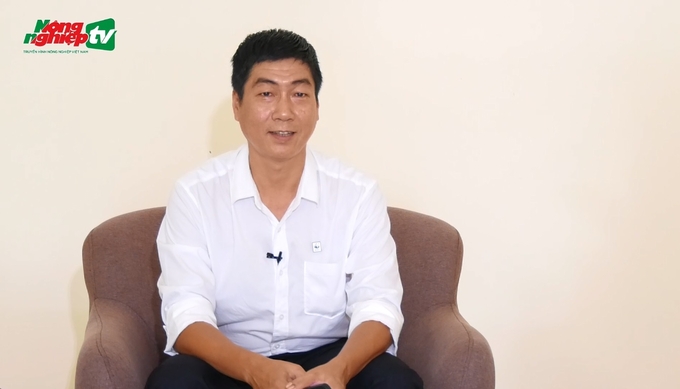
Mr. Huynh Quoc Tinh, Expert of the World Wide Fund for Nature in Viet Nam. Photo: VAN.
The representative of WWF-Vietnam said that WWF is currently implementing two main projects in the Lang Sen area. Of which, one project aims to promote nature-based solutions for this wetland.
WWF also has a support project implemented to both strengthen water management in biodiversity in the strict conservation area and support people's livelihoods. Especially for households that are poor and lack the means of production, such as land, WWF has two companion projects.
WWF acknowledged that to promote the development of livelihoods of people around that buffer zone through nature-based solutions, it not only supports people with a simple livelihood but must also gather many activities that can support each other to help people make a living.
Main livelihood models of people in the Reserve's buffer zone
According to Assoc. Prof. Dr. Nguyen Phu Son, who has accompanied WWF-Vietnam in implementing projects to improve livelihoods for people in the buffer zone of Lang Sen Wetland Reserve, people's main livelihood models are located in two areas.
In Dong Thap, the rice model is the main model of people here. Besides that are the models of snakehead fish farming in net cells, lotus-fish farming, rice seed production, dried fish making, water hyacinth weaving, and fruit tree growing.
In Long An, the main models include the rice-fish model, the water hyacinth weaving model, and especially the model of floating rice growing using the Nang Tay Dum rice variety that we have also heard about in recent times.
Translated by Thu Huyen

(VAN) Due to heatwaves and water shortages, weed outbreaks are surging in the Mekong Delta’s summer-autumn rice crop. Dong Thap is ramping up early-season weed management to cut costs and safeguard yields.

(VAN) At the Vegetable and Fruit Seed Research and Production Farm in Bac Ha, pear, peach, and plum orchards are carefully maintained to conserve valuable genetic resources and support the development of temperate fruit crops.
/2026/06/02/4947-3-223411_779.jpg)
(VAN) Protecting forests not only preserves natural resources but also helps safeguard water sources, living environments, and the foundation for long-term sustainable development.

(VAN) Jackfruit prices remain low despite the recent increase as exports to China struggle. Dong Nai is tightening quality control to restore the market.

(VAN) Mekong Delta farmland is degrading due to chemical abuse. Restoring soil with organic and microbial fertilizers while reducing chemicals is now urgent.
/2026/06/01/1824-2-211343_500.jpg)
(VAN) Quang Ngai province is implementing many measures to protect sargassum resources, contributing to restoring aquatic resources, preserving biodiversity, and creating sustainable livelihoods.

(VAN) Farmers in Phu Thuan Commune, Da Nang preserve healthy soil and maintain chemical-free farming seasons, producing clean sesame and bean export products.
