November 23, 2025 | 11:48 GMT +7
Hotline: 0913.378.918

November 23, 2025 | 11:48 GMT +7
Hotline: 0913.378.918
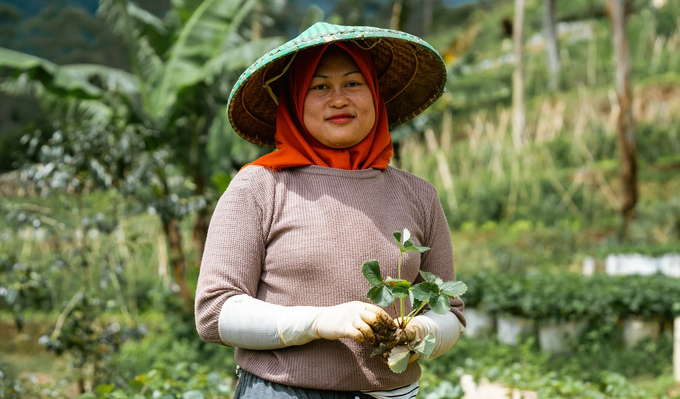
The project will work with local organizations across 14 countries: Bosnia and Herzegovina, Chile, Cook Islands, Cuba, Guyana, Indonesia, Jamaica, Kenya, Marshall Islands, Nicaragua, South Sudan, Tajikistan, Uganda and Venezuela.
The Food and Agriculture Organization of the United Nations (FAO) has helped 22 countries unlock $68 million in financing from the Global Environment Facility (GEF) to address biodiversity loss, groundwater management, climate change, land degradation, and pollution.
The projects were approved by the GEF Secretariat and Councils for the GEF Trust Fund, the Least Developed Countries Fund (LDCF), and the Global Biodiversity Framework Fund (GBFF) meeting this week in Washington D.C. The projects expect to leverage an additional $273 million in co-financing to advance global goals for biodiversity, social inclusion, land and water management, and reducing use of hazardous chemicals.
“The approval of this batch of projects comes at the end of a year of environmental summits that highlighted both the need for finance to unlock transformation of global agrifood systems to this critical agenda,” said QU Dongyu, FAO Director-General. “We look forward to supporting countries to meet their biodiversity, climate, land, water, and pollution goals through agrifood systems solutions under the overall guidance of the Four Betters.”
"These projects will help change the way we produce our food, fuel, and fiber to address global environmental crises. They will enhance coherence between agricultural and environmental sectors and support countries and communities to tackle environmental challenges, food insecurity, and poverty. With this new financing in place, it is now equally important to their success to effectively communicate their goals and impacts,” said Carlos Manuel Rodríguez, CEO and Chairperson, GEF.
Small Grants Program
As part of the funding, the Council approved a $19 million allocation for FAO’s first activities as a new implementing agency for the Small Grants Program. The project builds upon 30 years of impact by bringing FAO’s expertise in working with smallholder producers to support civil society organizations and community-based organizations in co-designing and delivering locally led initiatives. The project will develop strategies, provide financial and technical assistance, and foster South-South Cooperation, with a strong focus on innovation, scalability, and social inclusion of women, Indigenous Peoples and youth.
The project will work with local organizations across 14 countries: Bosnia and Herzegovina, Chile, Cook Islands, Cuba, Guyana, Indonesia, Jamaica, Kenya, Marshall Islands, Nicaragua, South Sudan, Tajikistan, Uganda and Venezuela. It aims to restore 20,000 hectares of land, improve practices across 350,000 hectares, and benefit 45,000 people.
Biodiversity
Five projects funded by the GBFF will help mainstream biodiversity in agrifood sectors, foster sustainable livelihoods, and empower Indigenous Peoples. These projects aim to improve the management of 500,000 hectares of protected areas, restore 13,000 hectares of landscapes, improve practices on 2.4 million hectares of land and sea, mitigate 1.2 million metric tons of greenhouse gas emissions, and benefit 100,000 people.
The $1.7 million project in Laos will enhance biodiversity through ecosystem restoration and biodiversity-friendly One Health practices. The $6.4 million project in Papua New Guinea will improve ecosystem connectivity and climate resilience with integrated landscape management. In the Solomon Islands, $2.4 million will support community-led management of key biodiversity areas by Indigenous Peoples, including through spatial management and other effective area-based conservation mechanisms (OECM). In Cuba, the $3 million project will address unsustainable fishing and agriculture in Northeastern Cuba, and the $1.3 million project in Nepal will help conserve endangered freshwater fish through ecosystem-based fisheries management.
A $8 million project funded by the GEF Trust Fund will enhance biodiversity, ecosystem service, and carbon sequestration in Areas Important for Biodiversity and Ecosystem Services (AIBDES), including areas inside and outside protected areas in South Sumatra and Central Java, Indonesia. The project aims to conserve and restore 91,000 hectares of natural ecosystems that house species such as the Javan Leopard and Sumatran Elephant. The project will also improve practices on 565,000 hectares of land, mitigate 6.2 million metric tons of greenhouse gas emissions, and benefit 40,000 people.
Land and Water
A regional project in Kenya and Tanzania will enhance water security and improve climate-resilience in the Mount Kilimanjaro region by improving the management of the shared Kilimanjaro Transboundary Aquifer System. With $7.8 million in GEF financing, this initiative will conserve 40,000 hectares of cloud forest, ensure sustainable groundwater use, and benefit 100,000 people.
A $5.1 million project will help achieve Liberia’s Land Degradation Neutrality (LDN) commitments by enhancing soil health and reducing land degradation through sustainable management practices in targeted rice landscapes. The project will restore 25,000 hectares of land, implement sustainable land management practices across 100,000 hectares, mitigate over one million metric tons of greenhouse gas emissions, and benefit over 60,000 people.
Chemicals
Under the Integrated Collaborative Approaches for Sustainable Tourism Program (iCOAST), FAO will support Vanuatu in promoting sustainable practices within the tourism industry through bioeconomy and circular approaches. The project will channel $4 million to update the national tourism strategy, restore over 32,000 hectares of degraded ecosystems, improve practices on 62,000 hectares of land and sea, and benefit over 246,000 people.
Under the Financing Agrochemical Reduction and Management Plus Program (FARM+), FAO will support Gambia to reduce harmful agrochemical use and transition to climate-resilient, agroecological practices in rice, millet and maize production. With $9.6 million from the GEF Trust Fund and the LDCF, the project aims to restore 10,000 hectares of land, improve practices on 120,000 hectares of land and sea, mitigate over 15,000 metric tons of greenhouse gas emissions, and benefit 240,000 people.
New heights in 2024
The program closes a year of record growth in the FAO-GEF partnership. In addition to $440 million approved across the February, June and December work programs in 2024, 13 FAO projects worth $14 million in GEF resources and $24 million in co-financing are providing global and national support in meeting reporting commitments for climate change and LDN.
FAO-GEF Partnership
As a partner agency for the GEF, FAO supports countries worldwide in addressing the complex challenges at the nexus between the agrifood systems and the environment. Since 2006, FAO has supported 141 countries in accessing $1.9 billion for projects that respond to local priorities, deliver global environmental benefits, and advance the Sustainable Development Goals (SDGs).
(FAO)

(VAN) Results from the Sustainable Durian Model Project in Dak Lak have confirmed the critical role of Yara Viet Nam in transferring advanced nutritional solutions to farmers.

(VAN) In Tuyen Quang province, livestock farmers have introduced effective models and innovative practices that significantly strengthen African Swine Fever prevention and control efforts.

(VAN) This is the study conducted by IRRI and Can Tho University on the rice straw value chain in Mekong Delta showing an economic potential of more than 6.6 trillion VND/year.

(VAN) By participating in cooperative economics, many farmers in Tay Ninh have overcome hardship, mastered clean dragon fruit cultivation techniques.

(VAN) The crossbreeding program in the former Binh Dinh province (now part of Gia Lai) has shown signs of decline, and urgent measures are needed to revive it and sustain past achievements.

(VAN) The agricultural sector agreed on a roadmap to pilot the MRV protocol and expand low-emission rice production from the 2025-2026 winter-spring crop.

(VAN) Agricultural extension officers in Quang Ninh do more than transmit knowledge; they have become a steadfast support system for farmers on the path to sustainable agricultural development.
