December 1, 2025 | 11:30 GMT +7
Hotline: 0913.378.918

December 1, 2025 | 11:30 GMT +7
Hotline: 0913.378.918
The Ministry of Agriculture and Environment (MAE) conducted a scientific conference on the conservation and development of genetic resources for the 2020–2025 period on May 8, with a focus on 2030. The School of Public Policy and Rural Development hosted the event, which concentrated on veterinary science, livestock, and fisheries.
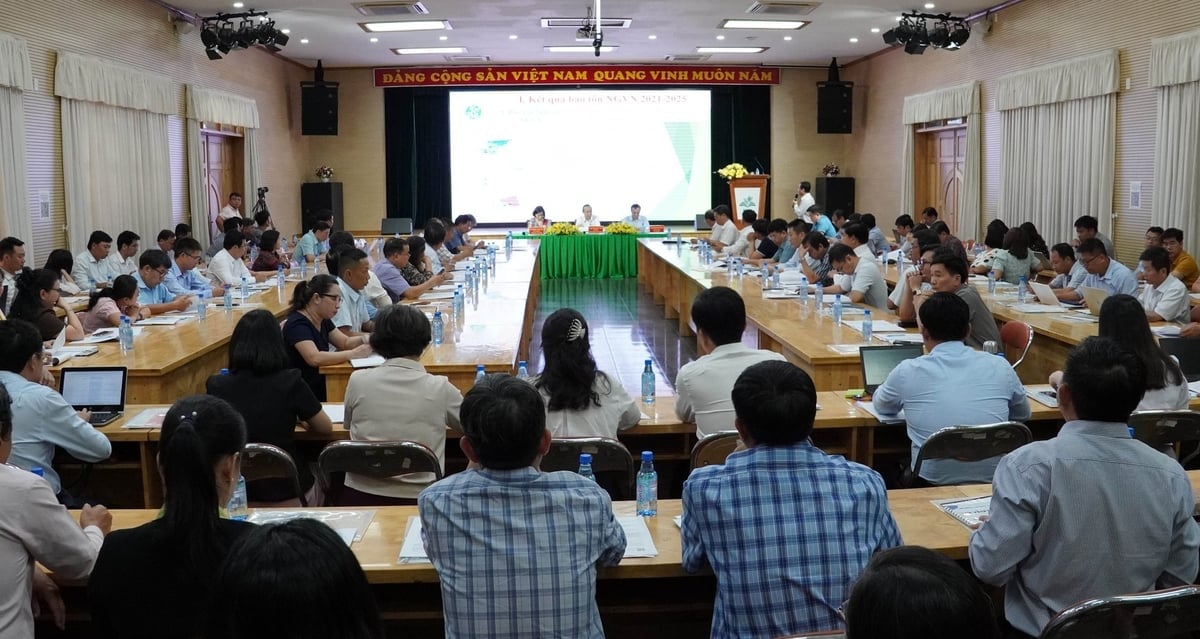
The workshop was participated by many experts, management agencies and institutes and schools. Photo: Le Binh.
Vietnam is the repository of an extensive and valuable accumulation of genetic resources in aquaculture and livestock. However, this biodiversity is at risk due to the accelerating effects of climate change, unsustainable practices, and overexploitation.
Nguyen Giang Thu, the Deputy Director of the Department of Science and Technology under the Ministry, stated that the conservation and sustainable use of genetic resources are now crucial components of Vietnam's agricultural innovation strategy.
At present, research institutes maintain 15 strains of microalgae and 57 rare aquatic gene sources. Evaluation and documentation of these resources are underway to facilitate the development of novel products and breeding. Several endangered species, including the leopard-spotted grouper, Sinilabeo lemassoni (ca dam xanh), and anh vu fish have been successfully restored. In fact, some of these species have been withdrawn from Vietnam's Red Book of endangered species.
Other gene sources, such as rainbow trout, tilapia, cá ngạnh, and king grouper, have also attained commercial success. Research institutes have been instrumental in providing progenitor stock for hatcheries, thereby promoting sustainable aquaculture.
Between 2021 and 2025, in situ and ex situ conservation of animal genetic resources was implemented. The National Institute of Animal Science has conserved 21 gene sources for livestock and poultry, three gene sources for bees, and seven categories of genetic material. Several indigenous varieties, including the Bao Yen buffalo, Lac Thuy chicken, Huong pig, and black goat, have been recognized as national genetic stocks and developed into commercial products.
Deputy Minister Phung Duc Tien emphasized that conservation is merely the initial measure. "We are unable to preserve genetic treasures in the same way as museum artifacts that are enclosed in glass cabinets." He emphasized the necessity of transforming these into commercial products that are globally competitive, such as Kobe beef, Norwegian salmon, or Wagyu beef.
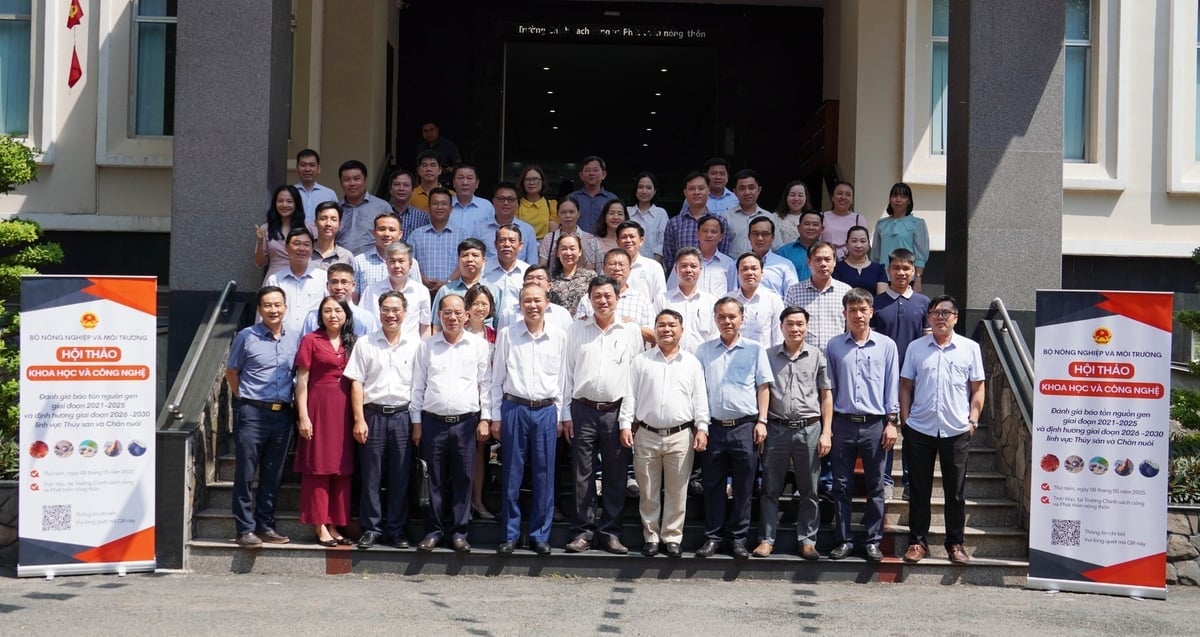
Leaders of the Ministry of Agriculture and Environment and delegates took a souvenir photo at the School of Public Policy and Rural Development. Photo: Le Binh.
Despite Vietnam's genetic resource bank's complete potential, the number of successfully commercialized native breeds is still relatively low. Experts caution that the primary obstacle is not the availability of gene sources but rather the capacity to master the technology required to decode, evaluate, and convert them into tangible value.
Deputy Minister Tien expressed the expectation that biotechnology and genetic conservation will act as the "kite string" propelling Vietnam's livestock and aquaculture products into new international markets. According to him, this will not only assist these sectors in overcoming their current stagnation but also promote the development of robust brands and new value chains for Vietnamese agriculture.
The agricultural sector of Vietnam is anticipated to receive a substantial stimulus due to Resolution No. 57-NQ/TW, which the Politburo issued. For the first time, science, technology, and innovation have been recognized as new pillars for national development in agriculture and the environment, rather than solely as supportive tools.
"This resolution instills in us the assurance that national programs on seed research, genetic data, and public-private partnerships in breeding will be granted priority access to resources. Businesses will be more inclined to invest in science, and scientists can anticipate improved incentives," stated Nguyen Giang Thu, Deputy Director of the Department of Science and Technology under the Ministry of Agriculture and Environment.
Resolution 57 establishes a new legal framework for demand-driven research, results-based funding, and the promotion of international cooperation and private sector engagement in genetic technology, in addition to establishing a strategic direction. These components are essential for bridging the technological divide between Vietnam and other advanced nations.
To modernize Vietnam's livestock and aquaculture sectors, it is necessary to transition from traditional production and natural exploitation to entirely controlled, science-based systems. These must include environmental management, global value chain integration, genetics, breeding, and nutrition. Vietnam can only transition from a resource-based agricultural model to one that is driven by science and innovation through this transformation.
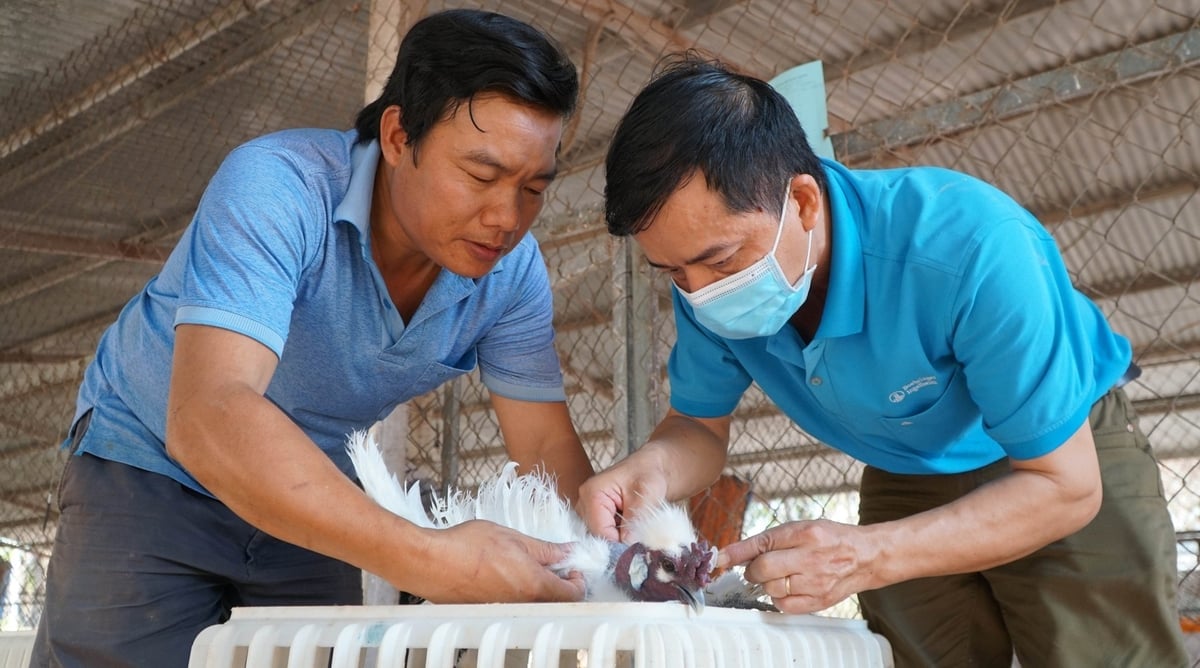
Staff from the Vigova Center (under the Southern Animal Husbandry Institute) take blood samples to analyze and evaluate the indicators of the endangered Ma Da chicken breed. Photo: Le Binh.
Deputy Minister Phung Duc Tien set an ambitious objective of surpassing USD 70 billion in agricultural exports in the coming years. He stated: "Gene technology will be the lever that enables Vietnam to develop a new generation of agricultural products that are knowledge-intensive, sustainable, distinctive, and proudly carry the Vietnamese brand."
Without the ability to master genetic technology, Vietnam risks remaining dependent and falling behind. However, by capitalizing on the momentum generated by Resolution 57, the nation can strive to conserve genetic resources and become a creator and innovator in the field.
Translated by Linh Linh

(VAN) The Provincial Competitiveness and Governance Index (PCGI) is a tool designed to reflect the quality of local governance.

(VAN) An environmental expert has outlined eight strategic actions for Vietnam to successfully meet its commitment to achieve Net Zero emissions by 2050.

(VAN) After the institutional merger, Da Nang possesses significant forest-carbon reserves and is proactively engaging in the carbon market, creating a new revenue stream.

(VAN) An Giang strengthens communication against IUU fishing, increases inspections and sanctions, and is determined to remove the EC’s “yellow card” while developing a sustainable fisheries sector.

(VAN) As green transition becomes a global trajectory, Viet Nam’s biggest challenge is not only technology and models, but how to ensure that capital flows reach the right beneficiaries.

(VAN) The Ministry of Agriculture and Environment must spearhead the construction of green governance, spanning decision-making processes and investment standards to policy evaluation mechanisms.

(VAN) The Agriculture and Environment sector of Khanh Hoa has achieved numerous milestones over the past 80 years, contributing significantly to the goal of establishing the province as a centrally governed city by 2030.
