November 27, 2025 | 17:36 GMT +7
Hotline: 0913.378.918

November 27, 2025 | 17:36 GMT +7
Hotline: 0913.378.918
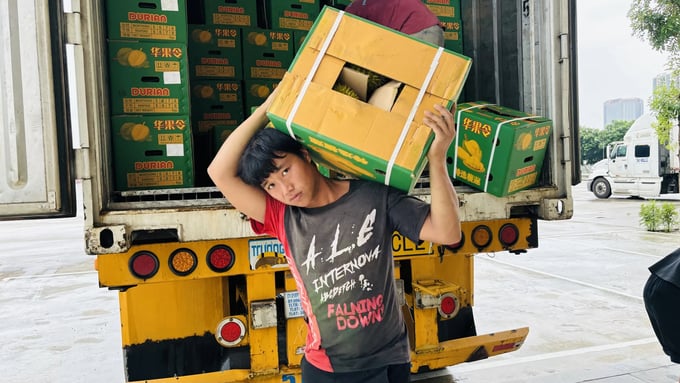
Durian products are highly popular in the Chinese market. Photo: H.D.
Durian has become a key agricultural export product, significantly contributing to export turnover in Lao Cai. At Kim Thanh International Border Gate No. 2 in this province, an average of 100 vehicles carrying fresh fruit are exported daily. Of these, more than 90 vehicles transport durian, with the remainder carrying dragon fruit, bananas, jackfruit, and grapefruit.
Currently, the price of Monthong durian is approximately 90,000 VND/kg, while Ri6 durian is around 60,000 VND/kg. Thus, each truckload of exported goods is valued between 1.1 to 1.5 billion VND. Earlier this year, during the off-season, durian prices reached 200,000 VND/kg, with the export value of each truckload reaching up to 3.5 billion VND.
In Lao Cai, dragon fruit used to dominate both in quantity and export value. However, now only a few trucks are exported daily. Shippers currently prioritize Lao Cai as their top choice for exporting durian products.
Mr. Vu Ngoc Nam from An Nguyen Import-Export Joint Stock Company highlighted that the key advantage in Lao Cai is the swift delivery of durian to Chinese buyers upon arrival at the border gate. This is crucial because any delay of 1-2 days can increase costs for businesses, and extended delays can cause the fruit to crack.
“When durian fruit reaches the ripening stage, cold storage cannot be used to slow down the process, which definitely affects the quality of the goods. Therefore, timely delivery is very important,” emphasized Mr. Vu Ngoc Nam.
Also according to Mr. Vu Ngoc Nam, China has recently intensified quarantine and testing for banned substances, especially heavy metal content in durian. The results are available after 2 - 3 days, and only then is the durian eligible for import into China. Therefore, some shipments have been delayed or even returned due to poor quality.
To minimize this risk, durian traders and exporters proactively check cadmium content before sending goods to Lao Cai. Currently, there are about 17 locations capable of testing cadmium content in fruit. These checkpoints are near durian granaries or major cities, ensuring product quality for export to the Chinese market.
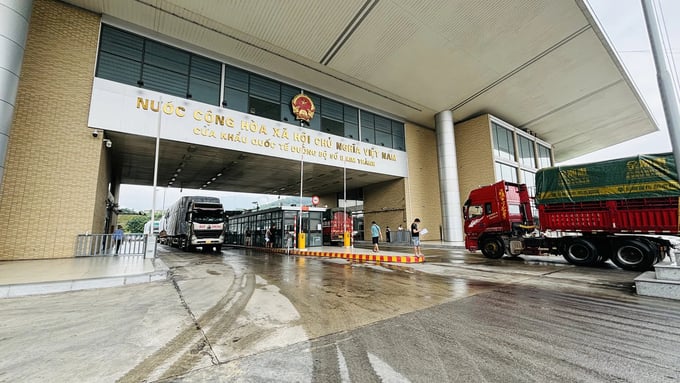
Agricultural product exports to China through the Lao Cai border gate have remained stable in the first six months of 2024. Photo: H.D.
According to traders and businesses in Lao Cai, China is a large market with many opportunities for Vietnamese agricultural exports, but it has very strict regulations. Therefore, individuals and businesses involved in import and export need to proactively consult and gather information from businesses and partners before signing contracts.
For durian products exported through Lao Cai, it is crucial to ensure that the growing area code is not included in China’s restricted list due to violations. This helps avoid situations where goods reach the border gate but cannot be exported or delivered to partners.
Ms. Nguyen Thi Men, a durian exporter, explained that it costs about 120 million VND per truckload to transport goods from the growing area to Lao Cai. Therefore, selecting goods is not only about quality but also about ensuring the growing area code is compliant. If the code is in a restricted area, the goods will be closely inspected and might not even be exportable. Additionally, as durian is a high-value item, the quarantine process is very strict. Fruits with mold, rot, pests, dead fruits, or even greenish peels will be rejected by partners, leading to compensation claims, deductions, and significant financial losses.
However, in response to the above information, the Management Board of Lao Cai Economic Zone has proactively communicated with traders and businesses involved in import and export to find solutions and minimize potential damage.
Mr. Pham Hung, Head of the Border Gate Management Department at the Lao Cai Economic Zone Management Board, stated that it is anticipated that the main crop fruits from the southern provinces will soon enter the harvest season, leading to a sharp increase in the number of vehicles exporting through the Lao Cai border gate. Consequently, the Management Board of Lao Cai Economic Zone is proactively organizing and directing functional forces to manage the flow of export and import vehicles, prioritizing dedicated channels for exporting fresh fruit during the day. They are ensuring that export processes and procedures are transparent, publicly available, and that new regulations on goods are communicated to businesses, reducing customs clearance times.
Additionally, regarding vehicles being detained in Hekou (China), the Economic Zone Management Board of Lao Cai province has urged traders and businesses to strictly adhere to delivery and receipt protocols and comply with regulations. This is to enforce mutual responsibility, avoid disputes, and minimize vehicle detention post-delivery.
According to the Lao Cai Border Gate Customs Branch, in the first six months of 2024, the total value of goods imported and exported through the Lao Cai border gate reached 1.1 billion USD. Of this, the value of exported agricultural products was 535 million USD, with the majority being durian exports amounting to nearly 97 thousand tons (worth 412 million USD), followed by dragon fruit (49.6 million USD), and watermelon (13.6 million USD).
Translated by Quynh Chi

(VAN) China’s cooking oil is suddenly flooding into India. It all comes down to a soybean surplus that Beijing doesn’t quite know what to do with.

(VAN) An Giang promotes supply-demand connections, standardizes quality and builds value chains, creating a foundation for sustainable bird’s nest development and aiming to expand exports.
/2025/11/24/5339-4-nongnghiep-075331.jpg)
(VAN) Recently, the conference on 'Sustainable Fisheries Linkage Chain - Tilapia for Export' took place in Tien Hai commune, Hung Yen province.
/2025/11/21/4309-2-153400_128.jpg)
(VAN) Green and low-emission rice is paving the way for Vietnamese rice to enter high-end markets, marking the beginning of a transformation journey toward greening and elevating the national rice brand.

(VAN) ‘Right to Win’ outlines a national action plan that shapes a new vision for Viet Nam’s agriculture in an era of renewal and global integration.

(VAN) Lam Dong’s farmed sturgeon output this year is expected to reach 2,300 tons, worth VND 450 billion, affirming the brand’s position on the market.

(VAN) A surge in Ukrainian egg exports, largely driven by soaring sales to the UK over the last few years, has notably pushed up egg prices on the domestic market.
