December 30, 2025 | 14:16 GMT +7
Hotline: 0913.378.918

December 30, 2025 | 14:16 GMT +7
Hotline: 0913.378.918
Vietnam is an agricultural country, with 84% of its natural land area classified as agricultural land and nearly 62% of the population living in rural areas. Therefore, land policies play a crucial role in guiding and promoting sustainable agriculture.
Mr. Le Van Binh, Deputy Director General of the Department of Land Management (Ministry of Agriculture and Environment), shared this in an interview with Vietnam Agriculture and Nature Newspaper regarding the new land policy aimed at advancing agricultural production.
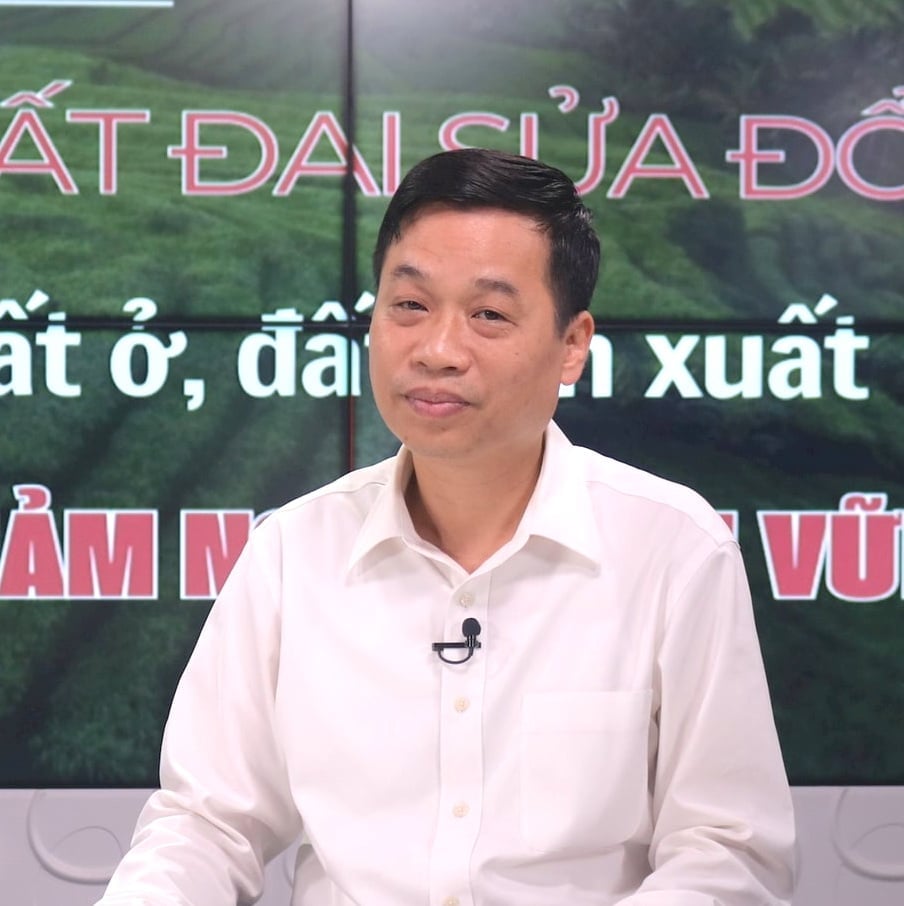
Mr. Le Van Binh emphasized that land policies play a crucial role in guiding and promoting sustainable agriculture. Photo: Truong Giang.
According to Mr. Binh, the Land Law 2024 introduces significant reforms in agricultural land policy.
Specifically, regarding land allocation limits, the new law inherits regulations from previous versions while maintaining stability in accordance with the directives of Resolution No. 18-NQ/TW. Accordingly, the maximum allocation for annual crop land, aquaculture land, and salt-making land for individuals directly engaged in agricultural production is capped at 3 hectares per land type in provinces and centrally-run cities in the Southeast and Mekong Delta regions, and at 2 hectares in other provinces and cities.
Individual allocation limits for perennial crop land are up to 10 hectares in plains and up to 30 hectares in midland and mountainous communes, wards, and townships. For protective forest land and production forest land (planted forests), the limit is up to 30 hectares per land type.
Regarding land use duration, individuals directly involved in agricultural production who are allocated land or have their land use rights recognized by the government (within the allocated limits) are granted a 50-year use term. Upon expiration, they may continue using the land according to the regulated term without completing renewal procedures. This provision facilitates the exercise of rights such as land conversion, transfer, capital contribution using land use rights, and cooperation in production and business.
Regarding the limit on receiving land use rights transfers, the law increases the cap to no more than 15 times the land allocation limit, and delegates authority to the provincial People’s Committees to adjust this based on local conditions.
The law also expands the eligibility for agricultural land use rights transfers to include economic organizations. Individuals not directly involved in agricultural production can acquire rice land within the allocation limit, enabling organizations and capable individuals with capital and technical expertise to access land and invest in commercial agriculture, thereby reducing land abandonment and inefficient, fragmented land use.
It also allows rice land users to switch crops or livestock on their land, provided the necessary conditions for reverting to rice cultivation are preserved, in accordance with crop production laws. A portion of the land may also be used for facilities directly serving agricultural production. Additionally, agricultural land users can combine production with commerce, services, livestock farming, and medicinal plant cultivation, as long as the land classification under the Land Law is not altered.
The law introduces provisions on land consolidation and accumulation to establish a legal framework supporting large-scale commodity-oriented agricultural production.
Thus, the Land Law 2024 includes regulations that facilitate land access for organizations and individuals with capital and scientific expertise to invest in commercial agriculture; reduce land abandonment and fragmented, inefficient use; and promote the consolidation and accumulation of agricultural land, thereby enabling land users to scale up agricultural production more effectively.
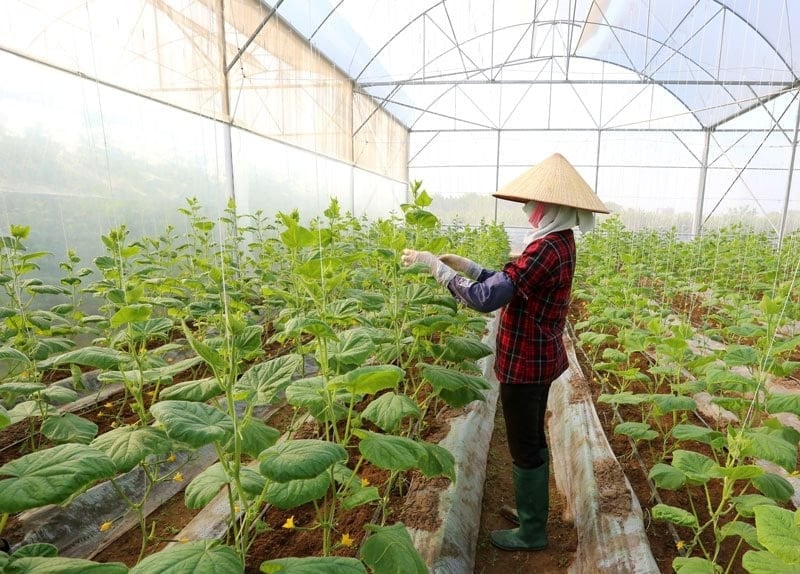
Land accumulation lays the foundation for developing large-scale agricultural models that are conducive to the application of science and technology in production, thereby increasing agricultural value. Photo: Hoang Mai.
One of the key new provisions of the Land Law is the allowance for multi-purpose land use, including integrating agriculture with commercial, service, livestock, and medicinal plant cultivation purposes.
Accordingly, multi-purpose land use must meet certain conditions to prevent abuse and unauthorized land-use conversion. Specifically, the area used for secondary purposes must not exceed 50% of the area designated for the primary use, excluding residential land used for multi-purpose activities.
Mr. Le Van Binh noted that multi-purpose land use will have many positive impacts on the agricultural sector. First and foremost, it will enhance land-use efficiency, enabling land users to generate added value from the same unit of land.
Integrating agricultural land with other uses can amplify the value of agricultural production by bringing it closer to markets and consumers. For example, combining tourism with agriculture can leverage the appeal of farming activities for tourism while also using tourism as a channel to promote agricultural products to a broader market.
"The multi-purpose use of agricultural land also contributes to protecting and maintaining ecosystems, reducing environmental pollution, and creating green spaces for the combined activities. The law requires that such use must not alter the designated land type under the Land Law, and it must minimize impacts on natural ecosystem conservation, biodiversity, and environmental landscapes," Mr. Binh emphasized.
Another positive impact is the simplification of administrative procedures - multi-purpose land users are not required to undergo formal land-use conversion procedures. Agricultural land remains tightly protected, and those using it for integrated purposes must ensure that the necessary conditions for reverting to its primary use are preserved.
Finally, multi-purpose land use allows land users to proactively adjust crop and livestock structures to align with market demands, enabling more efficient and economical land use and maximizing value per unit of land area.
“It can be said that the provisions of the Land Law have institutionalized the policy directions on the management and use of agricultural land as outlined in Resolution No. 18-NQ/TW. This serves as an important legal foundation for agricultural land users to fully leverage land resources and promote agricultural production,” shared Mr. Le Van Binh.
Translated by Kieu Chi

(VAN) Applied technologies, water-saving irrigation is a strategic solution to promote climate-resilient agriculture and strengthen water security in the uplands.
/2025/12/29/3936-3-163422_251.jpg)
(VAN) Can Gio mangrove forest in particular and the entire Can Gio Mangrove Biosphere Reserve in general hold great potential for carbon credits.

(VAN) Chu Pah Rubber has announced its products that comply with the EU Deforestation Regulation (EUDR), affirming its commitment to sustainable production and product origin transparency.

(VAN) Deputy Director Nguyen Hoai Nam stated that a digital data platform will be developed with agricultural sector databases, utilizing AI to help farmers make informed decisions on 'watering correctly, sufficiently, and efficiently.’
/2025/12/29/4841-2-134224_777.jpg)
(VAN) From only about 10 individuals in 2009, the wild elephant population in Dong Nai has recovered to nearly 30 animals after more than 10 years.

(VAN) The Bac Hai Van – Son Cha sea area holds significant ecological, economic, and national defense values, underscoring the need to establish a marine protected area to create an 'ecological belt' for the entire region.

(VAN) Amid the salty rhythm of life on the gem island, Co To is embarking on a journey to conserve the sea, protect livelihoods, and build a sustainable future for generations to come.
