November 28, 2025 | 01:27 GMT +7
Hotline: 0913.378.918

November 28, 2025 | 01:27 GMT +7
Hotline: 0913.378.918
In order to address the growing demands of international markets, resource depletion, and the impacts of climate change, Vietnam's agriculture sector must undergo a substantial transformation from "agricultural production" to "agricultural economy" in accordance with a circular, ecological, and multi-value approach.

Thứ trưởng Bộ Nông nghiệp và Môi trường Võ Văn Hưng. Ảnh: Tùng Đinh.
In this process, innovation and green growth are not only ineluctable trends, but also critical catalysts that increase productivity, decrease emissions, and generate greater added value for agricultural products. Nevertheless, in order to expedite this transition, Vietnam requires more robust mechanisms to assist businesses, cooperatives, and farmers with obtaining access to science and technology, implementing innovation, and fostering green, sustainable agriculture.
The global trend of the application of technology and digital transformation in agriculture is gaining momentum. Precision agriculture optimizes the utilization of water, fertilizers, and pesticides by utilizing AI and sensor systems. Blockchain technology assures the traceability of agricultural products, thereby enhancing the reliability of exports. Big Data facilitates the analysis of market trends, thereby enabling farmers and businesses to make informed decisions regarding their agricultural operations.
Nevertheless, there are many challenges associated with agricultural innovation policies. High investment costs, a lack of long-term financial support mechanisms, and ineffective connections between research institutions and enterprises or cooperatives continue to pose a challenge to accessing high technology.
Furthermore, the circular economy is evolving into one of the primary sustainable development models. Reusing agricultural by-products, implementing integrated livestock and cereal farming models, and producing organic fertilizers from rice straw and husks are viable alternatives that optimize resources, mitigate pollution, and increase the value of agricultural products.
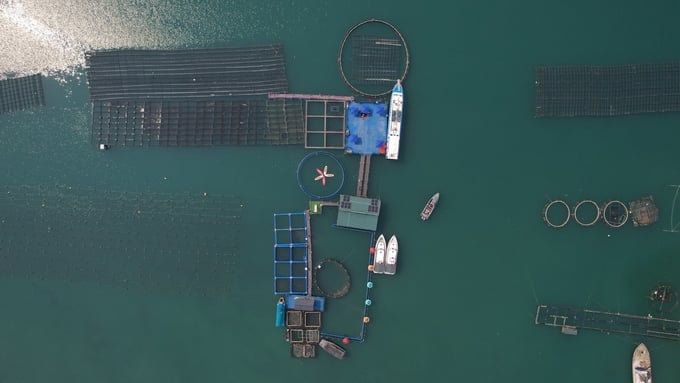
Application of science and technology in mariculture in Quang Ninh. Photo: Nguyen Thanh.
Development of ecological and organic agriculture not only enhances the quality of products but also guarantees the sustainable growth of ecosystems. Although Vietnam has more than 174,000 hectares dedicated to organic farming, the expansion of this model is still a challenge due to the high production costs, complex certification processes, and a lack of effective support policies.
Furthermore, agricultural tourism and landscape-based ecotourism are emerging as potential sectors that have the potential to increase the economic value of agriculture. Not only do experiential tourism models, such as the harvesting of agricultural products, the visitation of traditional artisan villages, or the participation in farm tourism, generate additional income for farmers, but they also contribute to the preservation of local culture and the promotion of sustainable rural community development.
A more robust support policy is necessary to motivate businesses to invest in recycling technologies and the sustainable utilization of agricultural resources in order to promote the widespread adoption of circular agriculture. However, the tourism and agricultural sectors' insufficient coordination, investment support mechanisms, and comprehensive planning have prevented agricultural tourism from realizing its maximum potential.
In order to effectively execute a circular, sustainable, and green agricultural development strategy, it is necessary to establish more robust mechanisms to provide assistance to farmers, cooperatives, and businesses. It is imperative to evaluate numerous priority solutions:

Rural and agricultural tourism is becoming an economic development trend in Binh Lieu district, Quang Ninh. Photo: Nguyen Thanh.
The initial step is to enhance policies that promote innovation in agriculture. Businesses and farmers should be able to access capital for investment in sustainable production models and high-tech industries through the implementation of financial support mechanisms and green credit programs. Additionally, the establishment of research and application centers for green agricultural technology would facilitate the transition from science to real-world production.
Secondly, the acceleration of high-tech applications and digital transformation is necessary. The establishment of a national agricultural database would facilitate traceability, market analysis, and production optimization. Agricultural enterprises should be encouraged to implement AI, IoT, and blockchain technologies in order to improve production efficiency and extend export markets.
Third, it is imperative to strengthen the promotion of circular agriculture and the green economy. To maximize resource utilization and cut emissions, investment incentives should be offered for circular economy models. In order to generate greater economic value, it is imperative to promote sustainable agricultural practices that combine crop cultivation with closed-loop livestock production.
Fourth, it is imperative to fortify agricultural tourism and multi-sector value chains. In order to facilitate the investment of enterprises and cooperatives in infrastructure and ecotourism services, it is imperative to establish support policies. In order to integrate local cultural identity and rural economic development, Vietnam should establish a national agricultural tourism brand that promotes its agricultural products and tourism destinations.
Fifth, it is imperative to encourage market expansion and international cooperation. An increase in collaboration with countries that have developed agricultural industries would facilitate the transmission of technology and the exchange of knowledge. A strategic strategy to increase the value of Vietnamese agricultural products on the global market would also be beneficial.
In summary, it is imperative to transition from "agricultural production" to a "agricultural economy" that is founded on circularity, multi-value creation, and sustainability in order to enhance productivity, safeguard the environment, and enhance the incomes of farmers. Nevertheless, in order to expedite this transformation, Vietnam must establish more robust mechanisms for innovation and green development, which will guarantee that businesses, cooperatives, and farmers have easy access to technology, finance, and markets.
Vietnam's agriculture sector can only develop sustainably, adapt to climate change, and establish a stronger presence in the global market with comprehensive policy support and proactive efforts from businesses and farmers.. Businesses and farmers require more transparent mechanisms to facilitate their access to financial resources, scientific and technological advancements, and export opportunities. Concurrently, it is imperative to prioritize the promotion of the branding of Vietnamese organic agricultural products on the international stage.
Translated by Linh Linh

(VAN) After the institutional merger, Da Nang possesses significant forest-carbon reserves and is proactively engaging in the carbon market, creating a new revenue stream.

(VAN) An Giang strengthens communication against IUU fishing, increases inspections and sanctions, and is determined to remove the EC’s “yellow card” while developing a sustainable fisheries sector.

(VAN) As green transition becomes a global trajectory, Viet Nam’s biggest challenge is not only technology and models, but how to ensure that capital flows reach the right beneficiaries.

(VAN) The Ministry of Agriculture and Environment must spearhead the construction of green governance, spanning decision-making processes and investment standards to policy evaluation mechanisms.

(VAN) The Agriculture and Environment sector of Khanh Hoa has achieved numerous milestones over the past 80 years, contributing significantly to the goal of establishing the province as a centrally governed city by 2030.

(VAN) Viet Nam is entering the pivotal period of 2025-2030, moving toward the formulation of the Remote Sensing Law, which will establish a legal foundation for the development of national digital data.

(VAN) The agricultural sector is finalizing the strategic framework for emission reduction, setting the goal of sharply cutting methane and 403.7 million tons of CO2 equivalent and moving toward Net Zero by 2050.
