December 5, 2025 | 15:34 GMT +7
Hotline: 0913.378.918

December 5, 2025 | 15:34 GMT +7
Hotline: 0913.378.918
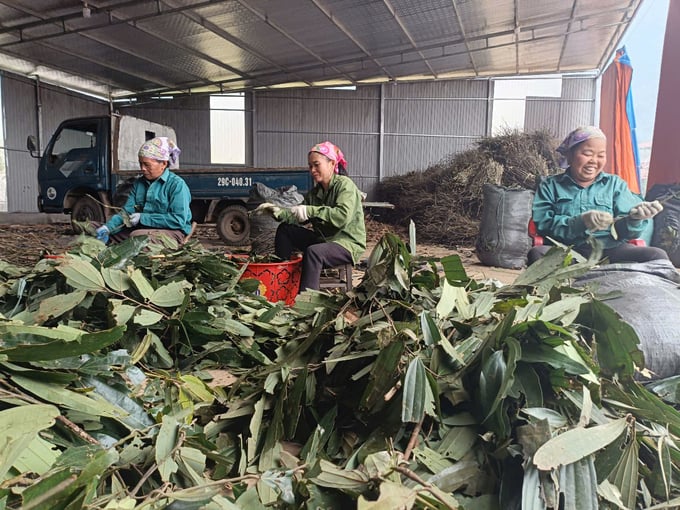
The processing of cinnamon leaves for export has created jobs for many workers in Hung Khanh commune. Photo: Thanh Tien.
Cinnamon is one of the main crops in Hung Khanh commune, Tran Yen district, Yen Bai province. The key products derived from cinnamon trees, such as cinnamon bark, essential oils and handicrafts, have long been important export items, providing a steady source of income for the people in this area.
During a visit to Hung Khanh commune in early 2025, we were pleasantly surprised when the commune's chairman took us to see a cooperative that specializes in processing cinnamon leaves for export to India. These leaves, which are typically considered byproducts of the cinnamon tree, were once either harvested by locals to extract essential oils or simply discarded as waste. However, at this cooperative, they have found a new purpose. The leaves are now carefully processed and packaged for export, creating a valuable commodity that has provided consistent employment for many local workers.
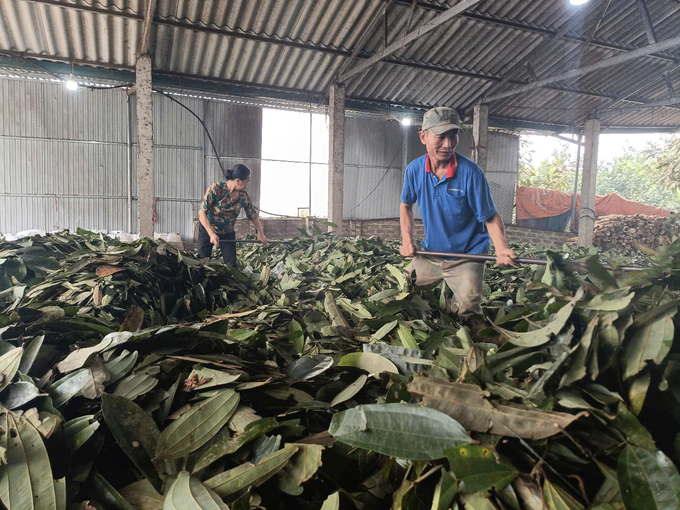
The cinnamon leaves, after being separated from the branches, are sorted and completely dried. Photo: Thanh Tien.
For over a year now, separating cinnamon leaves from the branches at the production workshop of the Hung Khanh Cinnamon Cooperative has become a routine task for Mrs. Tran Thi Hanh and many other women in Nui Vi village. This work, which keeps them sheltered from the sun and rain, brings in an average daily income of 8 to 10 USD and can be carried out year-round.
Mrs. Hanh shared that her family owns nearly 1.5 hectares of cinnamon, which is the main source of their income. In the past, cinnamon was only harvested twice a year, with a harvest period lasting 3 to 4 months. Typically, the harvest would focus on the bark, larger branches and trunks of the cinnamon tree, while the smaller branches and leaves were either collected and sold to essential oil distillation factories if they had value, or were left to rot or burned.
However, since the Hung Khanh Cinnamon Cooperative began operations, it has provided daily employment for Mrs. Hanh and many others in the village. For her own cinnamon farm, she can now prune the branches throughout the year and sell the leaves to the cooperative for an average price of 80 to 100 USD per ton. After finishing her own harvest, Mrs. Hanh continues to work as a seasonal laborer at the cooperative's workshop. This job is not physically demanding and, importantly, it allows local farmers to fully utilize all the byproducts of the cinnamon tree, thereby significantly boosting their income.
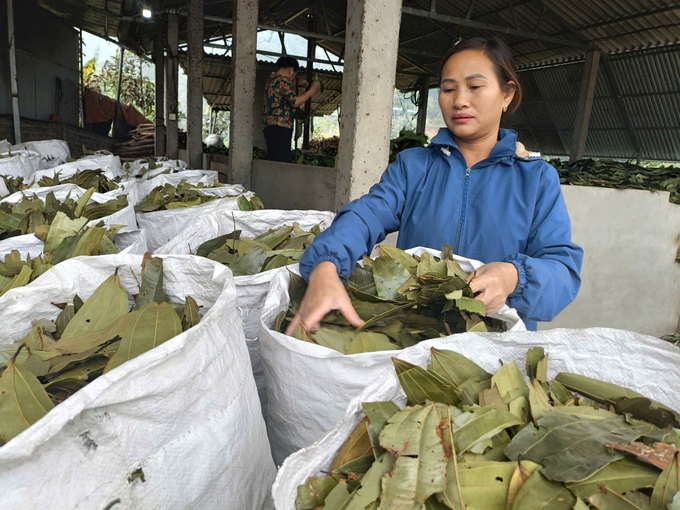
Each month, the cooperative exports 30 to 40 tons of dried cinnamon leaves to India. Photo: Thanh Tien.
The Hung Khanh Cinnamon Cooperative, located in Hung Khanh commune, Tran Yen district, was founded in 2023 with over 20 members. The cooperative specializes in post-harvest services, processing, and manufacturing various cinnamon products for both the domestic and international markets.
Mrs. Nguyen Thi Quyen, the representative of the cooperative, explained that on average, between 15 and 20 workers are employed at the cooperative each day. However, during the peak harvest season, the number of workers can increase significantly, reaching 40 to 50 people. The cooperative buys up all the cinnamon branches and leaves from local farmers, which are then carefully processed. The leaves are separated, sorted, dried, and packaged into bags ready for export. Each month, the cooperative typically exports between 30 and 40 tons of dried cinnamon leaves, earning approximately 320 USD per ton.
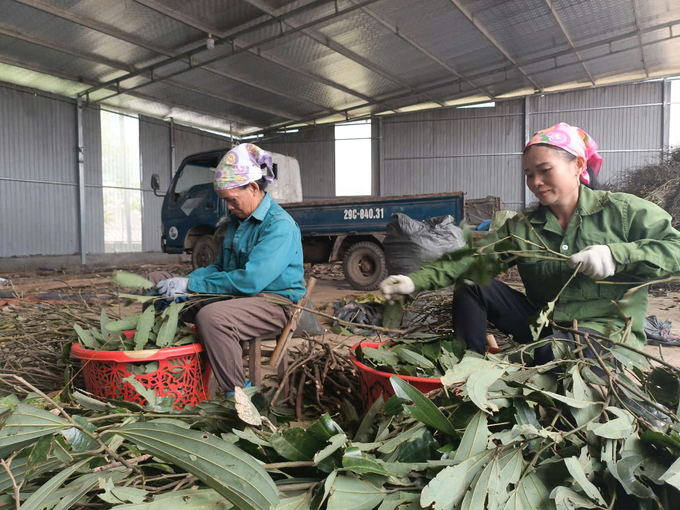
The full utilization of cinnamon leaves not only creates jobs and increases income but also contributes to environmental protection. Photo: Thanh Tien.
In order to meet customer demands, the cooperative ensures that its production process adheres to strict standards of cleanliness. This includes ensuring that the cinnamon leaves are free from branches and debris, and are thoroughly dried to prevent mold. An important aspect of the cinnamon leaf processing at the cooperative is its commitment to fully utilizing available resources while minimizing any negative environmental impact. After processing, all byproducts are carefully handled and reused in a sustainable manner. For example, cinnamon leaves that do not meet the required quality standards are ground into powder and sold in the domestic market. This practice not only helps to protect the environment but also generates additional value for the product.
Mr. Tran Van Tam, Chairman of the Hung Khanh Commune People's Committee, shared that the use of cinnamon byproducts such as branches and leaves has created year-round employment and income opportunities for local farmers, which was not possible when they previously only relied on the seasonal harvest. This approach has been instrumental in helping to reduce poverty and improve the livelihoods of the local population. The local government is actively encouraging and supporting the cooperative in refining its production processes, adopting modern technologies for processing and preserving products. These efforts aim to gradually improve product quality and expand the cooperative’s market reach, not only in India but also to other international markets.
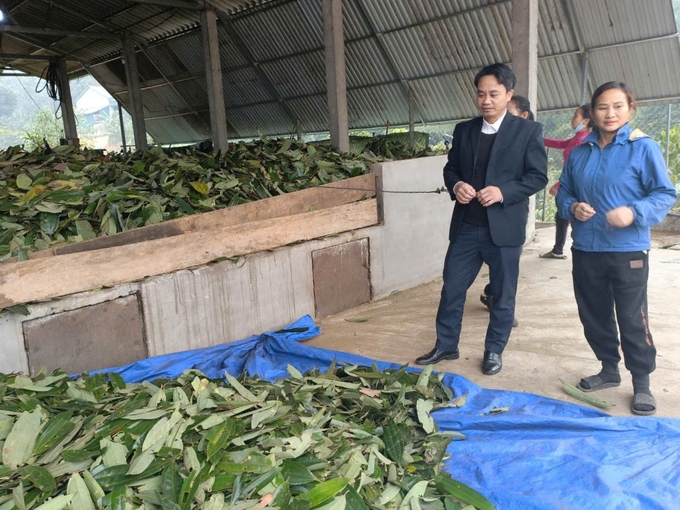
The local authorities aim to expand export markets to increase the product's value. Photo: Thanh Tien.
The story of the cinnamon leaf processing cooperative for export is a clear example of applying a sustainable production model, which not only brings economic benefits but also protects the environment. What were once considered worthless cinnamon leaves have now become a stable source of income, helping hundreds of families transform their lives.
Translated by Phuong Linh

(VAN) Despite numerous challenges, Vietnam's key seafood products are maintaining strong momentum, setting the stage for full-year exports to potentially reach USD 11 billion.

(VAN) The signing of a protocol between Viet Nam and China on the export of fresh jackfruit represents a significant milestone in agricultural trade cooperation between the two countries.

(VAN) On November 27, the Ninh Binh Department of Agriculture and Environment and the Institute for Green Growth Research organized a training course on greenhouse gas inventory for businesses.

(VAN) China’s cooking oil is suddenly flooding into India. It all comes down to a soybean surplus that Beijing doesn’t quite know what to do with.

(VAN) An Giang promotes supply-demand connections, standardizes quality and builds value chains, creating a foundation for sustainable bird’s nest development and aiming to expand exports.
/2025/11/24/5339-4-nongnghiep-075331.jpg)
(VAN) Recently, the conference on 'Sustainable Fisheries Linkage Chain - Tilapia for Export' took place in Tien Hai commune, Hung Yen province.
/2025/11/21/4309-2-153400_128.jpg)
(VAN) Green and low-emission rice is paving the way for Vietnamese rice to enter high-end markets, marking the beginning of a transformation journey toward greening and elevating the national rice brand.
