December 7, 2025 | 12:54 GMT +7
Hotline: 0913.378.918

December 7, 2025 | 12:54 GMT +7
Hotline: 0913.378.918
kiAt the recent seminar titled “Roadmap for green business transition” organized by Net Zero Carbon Joint Stock Company in collaboration with its partners, Mr. Tran Minh Tien, the company’s CEO, officially introduced and presented the Carbon Park initiative. He also called on businesses to join hands in the journey toward green transformation.
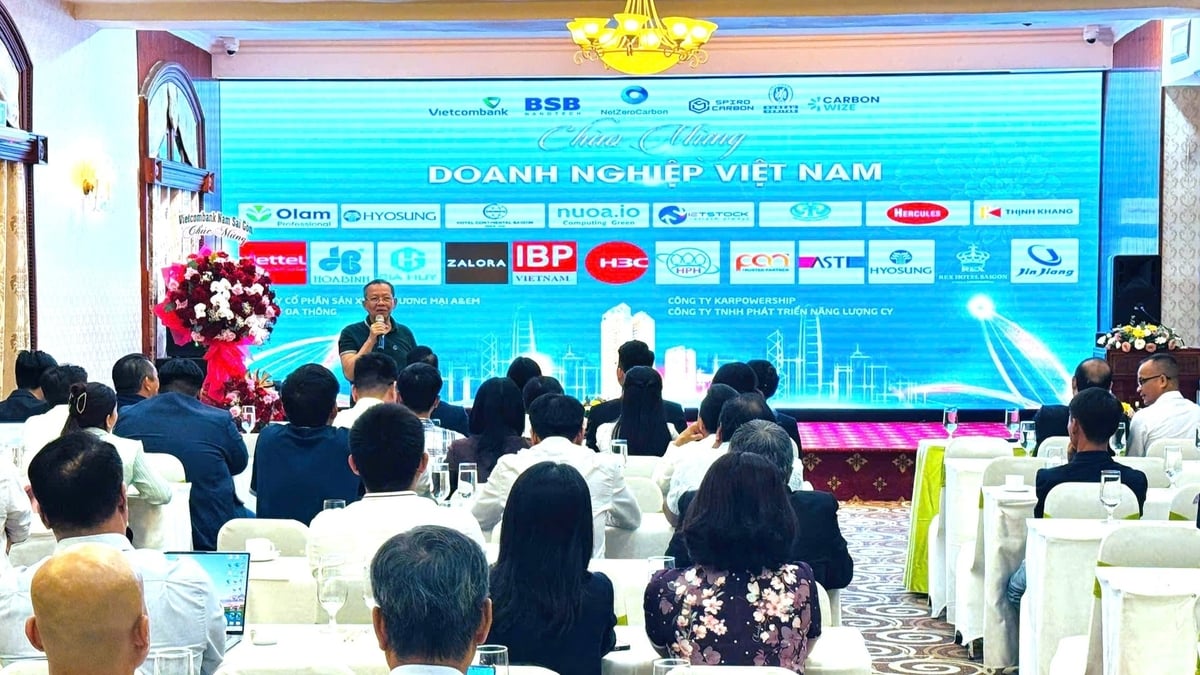
Mr. Tran Minh Tien, CEO of Net Zero Carbon JSC, shares insights on the Carbon Park initiative. Photo: Kim Anh.
According to Mr. Tran Minh Tien, as Vietnam accelerates the implementation of its commitment to achieve net-zero emissions, an increasing number of businesses are under mounting pressure from both market forces and tightening regulatory requirements. This pressure is especially acute for enterprises with high emission levels, those engaged in export activities, or operating in sectors that are subject to mandatory emission reduction obligations, such as industrial manufacturing, logistics, and five-star hospitality.
Despite this urgency, many businesses still lack sufficient knowledge about legal obligations, how to prepare carbon inventories or carbon neutrality reports, and how to select and apply suitable emission reduction strategies. The Carbon Park initiative was launched to respond to this critical gap.
Carbon Park is envisioned as a centralized hub where emission reduction solutions are piloted, scaled, and shared, laying the groundwork for a broader, more sustainable green transformation. The initiative seeks to build an integrated and transparent model that accompanies businesses throughout the entire carbon management process: from project registration, screening, measurement and verification, carbon credit issuance, carbon neutrality reporting, and access to green finance mechanisms.
One of the Carbon Park initiative's most distinctive features is its multi-stakeholder design, which brings together five key actors: businesses, financial institutions, scientists, farmers and agricultural cooperatives, and MRV units (Measurement—Reporting—Verification).
The Carbon Park project is considered by businesses to be consistent with the sustainable development goals they are pursuing.
Vietcombank is a strategic partner, offering preferential green finance and loan packages to help businesses ease the burden of upfront investment. Funding will be disbursed based on the scale and actual progress of each project’s implementation.
Bureau Veritas guides businesses in measuring their carbon footprint and enhancing their competitiveness through international certification.
Carbonwize and Spiro Carbon will provide technological platforms for tracking, managing emissions, and trading carbon credits using blockchain technology.
Farmers and agricultural cooperatives are key in implementing low-carbon agricultural practices, particularly through emission-reducing cultivation methods. Notably, Net Zero Carbon JSC has partnered with BSB Nanotech to roll out a sustainable rice farming model across 18 provinces and cities nationwide, covering nearly 5,000 hectares. This model is based on the alternate wetting and drying (AWD) irrigation technique.
Through their participation in the Carbon Park project, businesses can actively pursue carbon neutrality while becoming part of a broader green business ecosystem—one that encourages peer learning, collaborative innovation, and collective branding. Being part of this network not only helps companies improve their environmental performance but also opens the door to new market opportunities, strategic partnerships, and improved access to green financing. Moreover, it supports the effective implementation of ESG (Environmental, Social, and Governance) indicators, helping companies demonstrate their commitment to sustainability and responsible business practices in line with global standards.
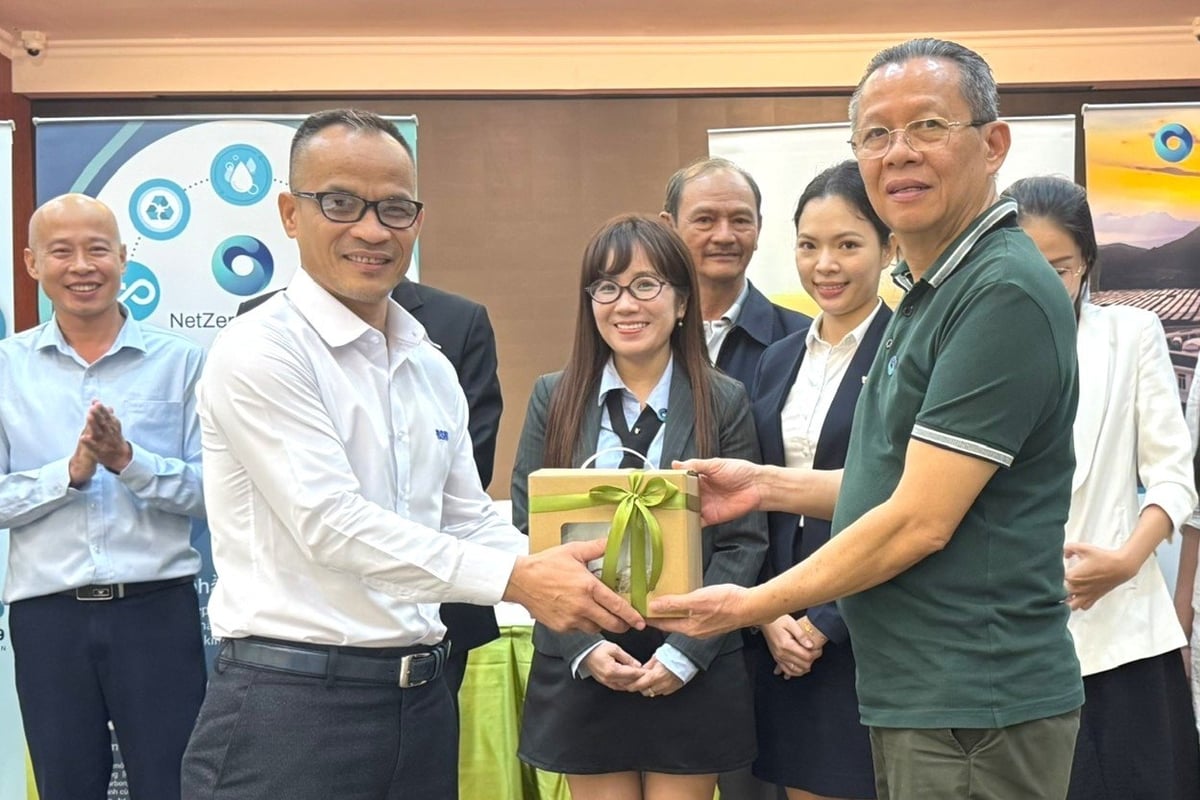
The Carbon Park initiative is currently receiving strategic support from Vietcombank, Bureau Veritas, BSB Nanotech, Carbonwize, and Spiro Carbon. Photo: Kim Anh.
Businesses can make flexible investments tailored to their specific needs and scale, gradually moving toward achieving carbon neutrality certification. This strategic approach not only demonstrates corporate responsibility but also significantly enhances their competitiveness in both the domestic market and the broader international arena.
According to Net Zero Carbon's CEO, the Carbon Park initiative is more than just a model connecting enterprises, financial institutions, and farmers. It is a foundational platform for generating positive carbon value through multi-stakeholder collaboration. Doing so facilitates a green transition that is both effective and efficient, helping businesses save time and reduce operational costs.
With a long-term vision, the initiative is designed to make a substantial and sustainable contribution to the Government’s overarching goal of achieving net-zero emissions.
Through this model, Net Zero Carbon JSC aspires to build a comprehensive ecosystem of green-oriented enterprises, jointly shaping a practical roadmap toward carbon neutrality in the near future.
Translated by Phuong Linh

(VAN) After three years, Project FST/2020/123 collected approximately 3,000 insect specimens, classified them into about 50 morphological groups, and identified around 40 species, including several new species.
/2025/12/01/0509-2-175427_206.jpg)
(VAN) Emission-reducing coffee areas in Lam Dong have entered the new crop with stable yields, improved quality, and a remarkably enhanced cultivation environment.

(VAN) The Institute of Agricultural Sciences for Southern Vietnam (IAS) marked its 100th anniversary in Ho Chi Minh City, celebrating a century of growth as a leading institute contributing significantly to Viet Nam’s agricultural development.

(VAN) An increasing number of livestock farms are using biogas generators to create a source of renewable electricity, helping to save costs and mitigate environmental pollution.

(VAN) Small changes in rice cultivation, from irrigation methods and straw collection to input management, are paving a new way for Vietnam's agriculture in the journey toward emission reduction.

(VAN) With the project of converting biogas into renewable electricity, Australia is both helping pig farms reduce their energy costs by up to 25% and contributing to environmental protection.
![Hue aims for Net Zero: [1] Initial steps from green transportation](https://t.ex-cdn.com/nongnghiepmoitruong.vn/608w/files/huytd/2025/11/28/0853-anh-6-giao-thong-xanh-hue-094717_940-153724.jpg)
(VAN) For sustainable development, Hue City is implementing many solutions to promote green transportation, which is an important initial step on the journey to building a Net Zero Hue.
