June 4, 2026 | 06:04 GMT +7
Hotline: 0913.378.918

June 4, 2026 | 06:04 GMT +7
Hotline: 0913.378.918
Unrealistic payment for forest protection to local communities
According to the Government's Decree No. 107/2022/ND-CP dated April 6, 2023 on the benefit sharing plan under the Emission Reductions Payment Agreement (ERPA), Ha Tinh's Provincial Fund for Forest Protection and Development has developed a draft annual financial plan for the area.
Accordingly, 10% of the budget for management and other activities at the Provincial Fund for Forest Protection and Development is deducted. Additionally, 10% of the total coordinated amount or deposit interest for Clause 1, Point a, Point b, Point d and Point e Clause 4 Article 6 under Decree 107 is deducted.
90% of the fund is paid to the suppliers including forest owners, commune-level People's Committees and non-forest-owner organizations, individual households, and local communities based on the assigned forest area.
The detailed financial plan shows that individual or household forest owners occupy an area of over 18,300 hectares across 8 districts and towns. Organizational forest owners receive payment for more than 186,000 hectares, and local People's Committees receive payment for more than 9,700 hectares.
According to Ha Tinh Fund for Forest Protection and Development, the drafting of a benefit sharing plan was implemented in a timely manner. However, based on reports from forest owners, the fund concluded that several issues must be addressed so that the appropriate beneficiaries can receive their full payment.
Appendix I issued in conjunction with Decree No. 107 clearly stated that the ERPA exclusively covers the cost of forest protection for residential communities. However, point c, clause 2, article 6 under the Government's Decree No. 168/2016/ND-CP dated December 27, 2016 states: “A residential community's contracted limit is determined through agreement. However, the total contracted area cannot exceed the average total area of each household in the community with fewer than 30 hectares at the time of the contract".
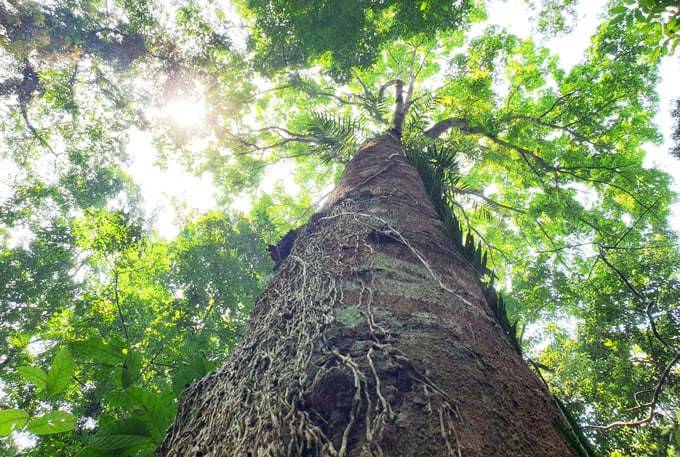
The management of resources is facing several challenges, including forest protection payment to the community. Photo: Thanh Nga.
However, the aforementioned law is not suitable for organizational forest owners whom the Government assigned to manage and protect substantial areas of natural forest. The majority of organizational forest owners are located in remote and inter-regional areas with uninhabited large forests. As a result, the allocation limit of 30 hectares is suitable for fundamental forest protection.
Moreover, the budget for forest protection at the current limit of 30 hectares does not guarantee minimum income, according to the new rural standard income. Additionally, the limited budget cannot create sustainable livelihoods for local communities as well as encourage them to participate in forest protection.
Various Management Boards of special-use forests and protection forests have established their own specialized and professional forest protection forces.
“In short, payment for forest owners who are organizations or special-use forest management boards is rendered difficult as per Appendix I of Decree 107. The Vietnam Fund for Forest Protection and Development is recommended to consider and propose additional forest protection targets to benefit from the ERPA", emphasized Ha Tinh's Provincial Fund for Forest Protection and Development.
According to Mr. Tran Trung Anh, Head of the Department of Science and Investment Cooperation under Huong Son Forestry and Service One Member Co., Ltd., the core zones of forests in Ha Tinh province are mainly uninhabited the management and protection of forests can only be contracted in border zones. The protection of core zones is the sole responsibility of forest owners. As a result, the payees are full-time forest protection units who are not eligible for salaries from the state budget, so the contracting limit under point c, clause 2, article 6 of Decree 168 does not apply.
“Forest protection is a work contract, so the contracted area and limit must be agreed upon by the forest owner and the contracted recipient. Accordingly, the provisions under the Appendix I of Decree 107 are not practical," noted Mr. Anh.
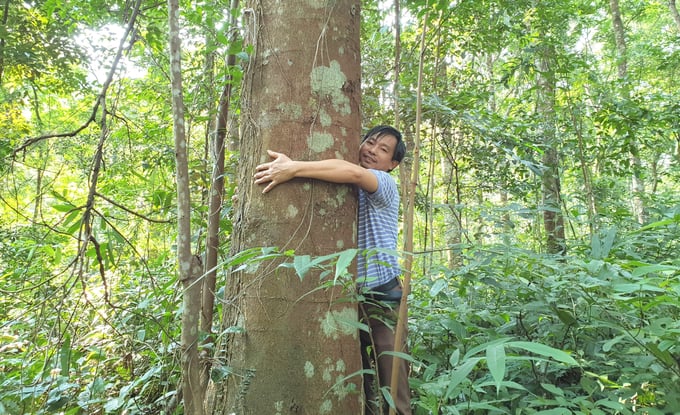
Forest owners looking to make money from selling forest carbon credits must consider expenditures for silvicultural measures as well as forest protection. Photo: Thanh Nga.
On the other hand, payment for forest owners to implement silvicultural measures are a cause for concern. According to point b, clause 3, Article 8 under Decree 107, forest owners are reimbursed for the costs of silvicultural measure in accordance with the law. However, forest owners in the area have reported that the need to implement silvicultural measures on the natural forest area is marginal. Consequently, ERPA resources cannot be utilized effectively in Ha Tinh province with regards to Decree No. 107. Ha Tinh's Provincial Fund for Forest Protection and Development has proposed the Vietnam Fund for Forest Protection and Development to consider and propose additional forest protection targets to benefit from the ERPA.
“Most forest owners in the province share this wish. Vu Quang National Park, who will be receiving over 10 billion VND in 2023, would like to dedicate half of our budget towards forest protection. However current regulations only allow for expenditures on the implementation of silvicultural measures. On the other hand, the core zone of our forests require immediate attention and protection. There is a severe shortage of labor, and even with a budget, it is impossible to spend on necessary activities," said Mr. Thai Canh Toan, Deputy Director of Vu Quang National Park.
Forest owners in Ha Tinh province has great expectations for the sale of their forest carbon credit. However, many forest owners are concerned about the fund distribution stage. The majority of forest owners are untrained in terms of financial regulations, which is a recent issue.
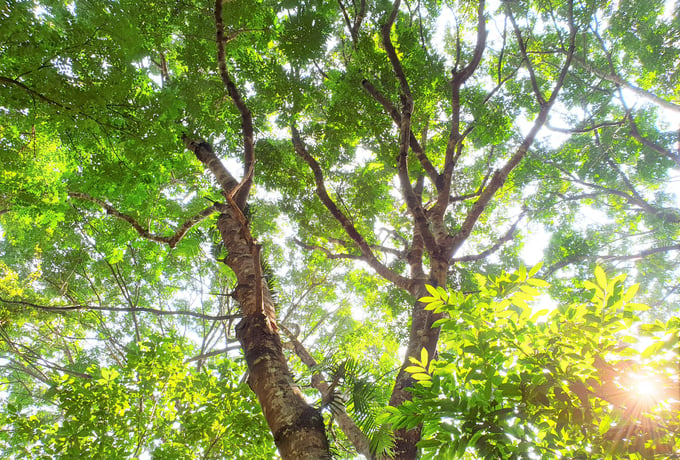
Local governments must provide forest owners with thorough training on current financial regulations. Photo: Thanh Nga.
Mr. Nguyen Huu An, Director of Ngan Pho Protection Forest Management Board said: “We are in need of urgent training. The Central Fund for Forest Protection and Development needs to organize in-depth training on the sale of carbon credits . Additionally, the Fund should appoint financial and technical experts to assist forest owners in preparing documents and filing financial records in accordance with the law".
Ngan Pho Protection Forest Management Board is currently managing and protecting over 20,000 hectares of natural forest across 12 communes in Huong Son district. A total of 1,000 local households have been contracted to protect these forest areas.
The emission reduction program in the North Central region covers 6.1 million hectares of land, accounting for 16% of the total natural land area of Vietnam. The program spans the six provinces of Thanh Hoa, Nghe An, Ha Tinh, Quang Binh, Quang Tri and Hue.
The agreement to transfer 10.3 million tons of CO2 (ERPA) was signed in 2020 between the Ministry of Agriculture and Rural Development and the International Bank for Reconstruction and Development (IBRD), which is a unit entrusted by the Forest Carbon Partnership Facility.
According to the benefit sharing plan, the aid capital from 2023 to 2025 is distributed as follows: Thanh Hoa will receive over USD 8.3 million; Nghe An will receive over 14.5 million; Ha Tinh will receive over 6.3 million; Quang Binh will receive over 12.1 million; Quang Tri will receive over 2.6 million and Thua Thien Hue will receive over USD 5.6 million.
Translated by Nguyen Hai Long

(VAN) At the Vegetable and Fruit Seed Research and Production Farm in Bac Ha, pear, peach, and plum orchards are carefully maintained to conserve valuable genetic resources and support the development of temperate fruit crops.
/2026/06/02/4947-3-223411_779.jpg)
(VAN) Protecting forests not only preserves natural resources but also helps safeguard water sources, living environments, and the foundation for long-term sustainable development.

(VAN) Jackfruit prices remain low despite the recent increase as exports to China struggle. Dong Nai is tightening quality control to restore the market.

(VAN) Mekong Delta farmland is degrading due to chemical abuse. Restoring soil with organic and microbial fertilizers while reducing chemicals is now urgent.
/2026/06/01/1824-2-211343_500.jpg)
(VAN) Quang Ngai province is implementing many measures to protect sargassum resources, contributing to restoring aquatic resources, preserving biodiversity, and creating sustainable livelihoods.

(VAN) Farmers in Phu Thuan Commune, Da Nang preserve healthy soil and maintain chemical-free farming seasons, producing clean sesame and bean export products.

(VAN) Alongside his lush golden melon ready for harvest, Nguyen Van Truong from Ha Tinh province is eager to collect another 4,000 Hami melon plants.
