November 27, 2025 | 16:28 GMT +7
Hotline: 0913.378.918

November 27, 2025 | 16:28 GMT +7
Hotline: 0913.378.918
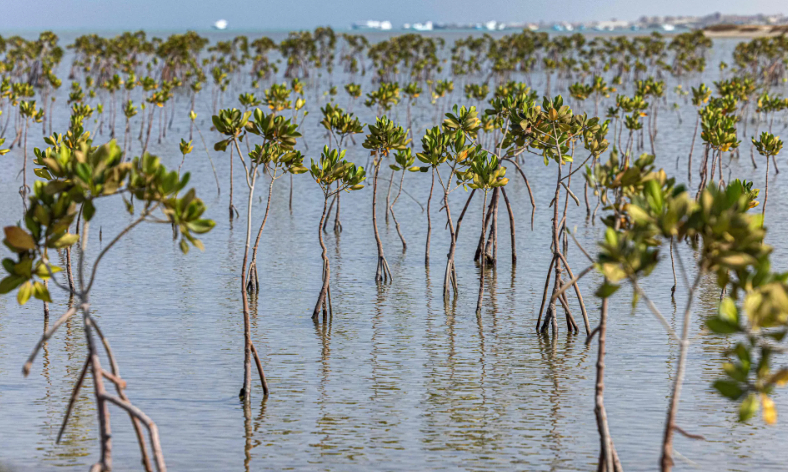
A state-sponsored mangrove reforestation project in the Hamata area south of Marsa Alam along Egypt's southern Red Sea coast on Sept. 16, 2022. Photo: Khaled Desouki—AFP
In recent months, media reports from outlets like Bloomberg and The Guardian have questioned many prominent players in the sector of overstating the purported carbon benefits of projects intending to use natural systems to compensate for human emissions. That, in turn, has increasingly called into question the validity of net zero claims from major polluters based on those kinds of offsets.
Some researchers and green advocates have called the entire practice a form of greenwashing, or an effort to cover up continued pollution. Fortescue, a major mining company based in Australia, has gone so far as to declare that it will cease using carbon offsets, instead focusing on direct emissions cuts within their operations to meet their climate goals.
Kelly Kizzier, Director of Corporate Action and Markets at the Bezos Earth Fund, is an influential voice in the offset space. She sat down with TIME in Manhattan during New York Climate Week.
I think you would probably agree that we can’t ship boatloads of natural gas and say that projects in the Amazon rainforest will offset it. Are there reasons companies should continue investing in those sorts of carbon sequestration projects?
I think the question is how do we drive investment in [helping] the climate and nature. The science is pretty clear, and the data is very clear that we need to accelerate investment, private sector investment in particular, in the environment and nature by something like 700% by 2030. We have a limited number of tools to do that. And carbon markets are one of the main tools that we have to do it. Some new innovative tools are emerging, but I don't know why we would throw any tools away at this moment. I would rather focus on fixing what's wrong, and making it a viable and robust solution with integrity, then throw it out altogether. It is a tool that has been around since the early 2000s. We've learned a lot. There's an incredible amount of transparency. And I think, starting with a blank sheet of paper is going to take too long. And we don't have that time.
Why is this sector on the defensive? Do you think that the criticism that’s been leveled recently has been valid?
I think what's happened is a lot of the NGOs and sometimes even government-backed standards and guidance in the emerging space have focused very much on the question of greenwashing. And a lot of the safeguards and rules that they have put in place have been put in place to thwart greenwashing. A lot of that is valid. I think what hasn't happened enough is that teaching to the top of the class. I think what's not happening is an acceleration of the leaders, those that are willing to invest. You have to create the enabling environment for leading companies to be able to not only reduce their emissions within their supply chain, but also to invest beyond their supply chain in nature and energy. I think you can't just teach to the bottom of the class and expect the kind of results we need for climate and nature. You really have to also enable leadership through investments in climate and nature. I think what's emerged as a result is we're seeing evidence of “green hushing,” where companies are finding it less risky to do nothing than to be ambitious and fail.
I think the biggest criticism is that companies use nature-based carbon offsets as a reason not to de-invest in fossil fuels or to fix their own supply chains. So how do we stop people from doing that?
I think you have to set up expectations, standards, and guidance that make it clear that this is a “yes, and,” scenario. It's not an “either/or.” Companies must both reduce their emissions and invest beyond their own value chains.
Does that mean there needs to be a shift away from describing those investments in nature as literally offsetting corporate emissions, and instead describe them in terms of positive benefits for local ecosystems and that sort of thing?
What we find is we can unlock literally billions of dollars of investment if the [investment] vehicle has high quality, if it counts towards climate goals, and if it can achieve impact at scale. So I think as long as the system and the standards we are setting out achieve those three things to unlock that investment that we so critically need, we can be innovative.
Is there anything that worries you going forward in the offset space?
I have a few that are sort of equal in priority. I worry that we're going to let perfect be the enemy of good, and by doing so we're gonna halt this critical investment in nature. I worry that we won't get the rules and standards right, so these investments won't have impact and won't result in real, additional, long lasting emission reductions and removals. And I worry that all of the controversy will make companies averse to climate ambition.
(Time)

(VAN) A new study reveals how the simultaneous effects of ocean acidification, salinity and loss of oxygen are making the world more fragile.

(VAN) Hopes are growing that the creation of the first 3D turkey gut model could be a turning point in the battle against the virulent blackhead disease.

(VAN) Tyson, America’s biggest meat supplier, plans to shutter one of its largest beef processing plants as the industry continues to struggle with low cattle supplies and political pressure from Washington.

(VAN) New FAO study shows how digital solutions are empowering farmers and fishers to prevent losses and build resilient agrifood systems.

(VAN) Brazil's COP30 presidency pushed through a compromise climate deal on Saturday that would boost finance for poor nations coping with global warming but that omitted any mention of the fossil fuels driving it.

(VAN) Poultry farmers in the UK have been warned that they could face one of the worst winters yet for bird flu.

(VAN) Prices of main-crop paddy have risen sharply, with jasmine rice hitting 16,100 baht per tonne — the highest level in years.
