December 15, 2025 | 20:49 GMT +7
Hotline: 0913.378.918

December 15, 2025 | 20:49 GMT +7
Hotline: 0913.378.918
In an interview with Vietnam Agriculture News, Director-general Plant Protection Department Hoang Trung said that the department conducted regular check, assessment and consideration to eliminate those pesticides which feature low biological effectiveness, harm human's health and affect the surroundings including the herbicide.
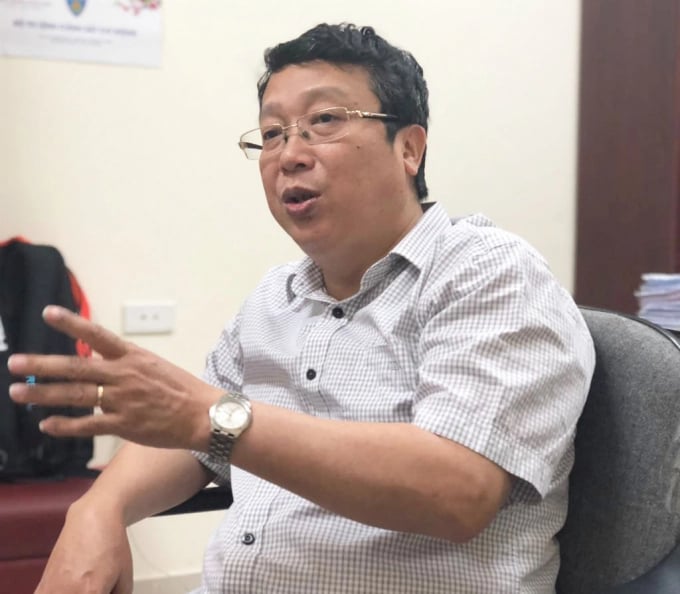
Director-general Plant Protection Department Hoang Trung. Photo: TL.
Following international practices and "Rotterdam Convention (Annex III) on hazardous pesticides in international trade, Vietnam has been removing the active ingredients of pesticides from the list of plant protection chemicals. Since 2017, the department has also proposed to the Ministry of Agriculture and Rural Development (MARD) that 14 active elements of pesticides should be removed from the list of plant protection chemicals that are allowed for use in Vietnam including the Glyphosate herbicides.
This is the most commonly used and multi-purpose herbicide in Vietnam, especially among farmers in mountainous provinces. It is also utilized to clear weeds in construction sites, railway, or road among others leading to the risk of harmful effects on the environment.
In recent years, some international organizations have reported on the evidence of Glyphosate herbicide's bad impacts on human health.
The department also followed the information around herbicides that contain the chemical glyphosate has a potential role in causing cancer in the US. The department has researched and gathered sufficient information and scientific evidence about Glyphosate herbicide's adverse impacts on human health and the environment.
From 2015, numerous cities, states, and countries throughout the world have taken steps to either restrict, ban or reduce the use of glyphosate after the International Agency for Research on Cancer’s (IARC) report on glyphosate, which concluded the chemical is probably carcinogenic to humans.
Following the situation, the Plant Protection Department has consulted the MARD to suspend the registration of pesticides containing the active ingredient Glyphosate from April 2016. In April 2019, the Ministry decided to remove Glyphosate from the list of pesticides authorized for use in Vietnam. Current regulation stipulates that pesticides containing the active ingredient Glyphosate cannot be manufactured or imported; only be sold and used until June 30, 2021, in Vietnam.
From 30 June onward, even the backlog of products containing this active ingredient must be destroyed. Trung said that the Plant Protection Department had a meeting with the US Embassy to Vietnam in Hanoi on May 4 and the announcement on the elimination of active ingredient of Glyphosate from the list of pesticide allowed for use in Vietnam.
After the MARD decided to remove Glyphosate from the list of pesticides allowed for use in Vietnam in April 2019, the US Environmental Protection Agency (EPA) formed an opinion to Vietnamese authorities that the substance was safe and still be allowed for use in the US.
In July 2019, the department and EPA had meetings and discussed technical issues relating to the risk assessment of Glyphosate. The latter said that it would complete the collection of comments on the risk assessment report of Glyphosate and send it to the Vietnamese counterparts by the end of 2019.
However, since then, the Plant Protection Department has yet to receive any other notice from EPA about Glyphosate.
Luxembourg is set to become the first country in the European Union to ban the use of glyphosate entirely.
France, Switzerland, and the Netherlands have taken measures to ban the use of Glyphosate in public places (schools, parks) at the end of 2015. Italy and Denmark are now strictly managing and restricting its use. use of Glyphosate for non-agricultural purposes.
Meanwhile, countries in the Americas (Brazil, Colombia, Mexico) announced to stop using the drug with the active ingredient Glyphosate to destroy cannabis plants.
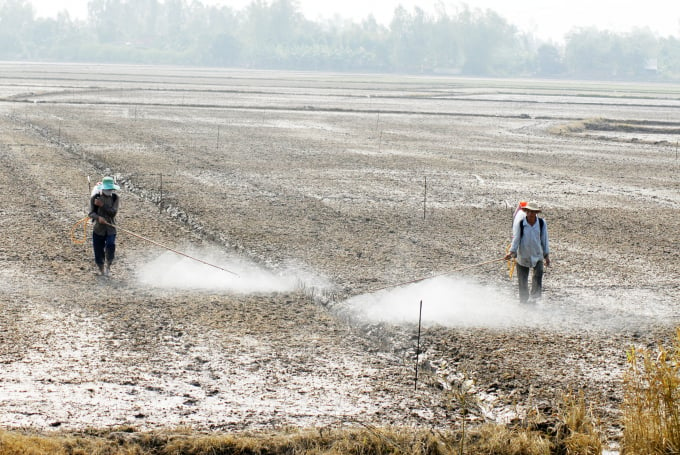
There are many scientific publications in the world about the effects of the herbicide Glyphosate on the environment and human health. Photo: Le Hoang Vu.
In Germany, on February 10, decided to gradually reduce the use of Glyphosate and completely stop using it from 2024 to protect the environment and ecology.
In the European Union (European Union-EU), Glyphosate is currently approved for use in the EU until December 15, 2022.
In Austria, the National Assembly voted to ban Glyphosate in July 2019. However, in December 2019, the Austrian Interior Ministry announced that the ban would not be implemented for the foreseeable future.
In Thailand, Thailand's Glyphosate ban began on January 1, 2019. However, on November 27, the country announced that it would not ban this active ingredient, but implemented restrictions on the use of this product.
In the United States, Glyphosate has not been restricted or banned from widespread use, but there have been 26 states in the country that have issued different regulations on the limited use or prohibition of Glyphosate in public spaces namely parks, schools, and golf course among others.
Translated by Linh Linh

(VAN) MAE and GIZ organized the conference to strengthening capacity and readiness for EUDR implementation in Vietnam.

(VAN) When women, men, children, and people with disabilities all have the opportunity to maximize their potential, the economy will grow, and the country will prosper.

(VAN) Effective disaster prevention and the creation of sustainable livelihoods through practical forestry policies are the distinct and crucial values of special-use and protection forests.

(VAN) The policy movement regarding carbon emission reduction is opening up a new approach, linking national goals with practical agricultural production.

(VAN) Deputy Prime Minister Tran Hong Ha made this request at the 24th meeting of the National Steering Committee for Combating IUU Fishing with 21 coastal provinces and cities joining virtually.
/2025/12/03/5125-2-204704_295.jpg)
(VAN) As the province with the largest forest area nationwide, Nghe An is standing before a special opportunity to develop the forest carbon credit market.
/2025/12/02/2629-3-141849_60.jpg)
(VAN) Based on its large-scale planted forests, several rubber enterprises have proactively conducted greenhouse gas emission inventories in preparation for entering the forest carbon credit market.
