June 3, 2026 | 11:59 GMT +7
Hotline: 0913.378.918

June 3, 2026 | 11:59 GMT +7
Hotline: 0913.378.918
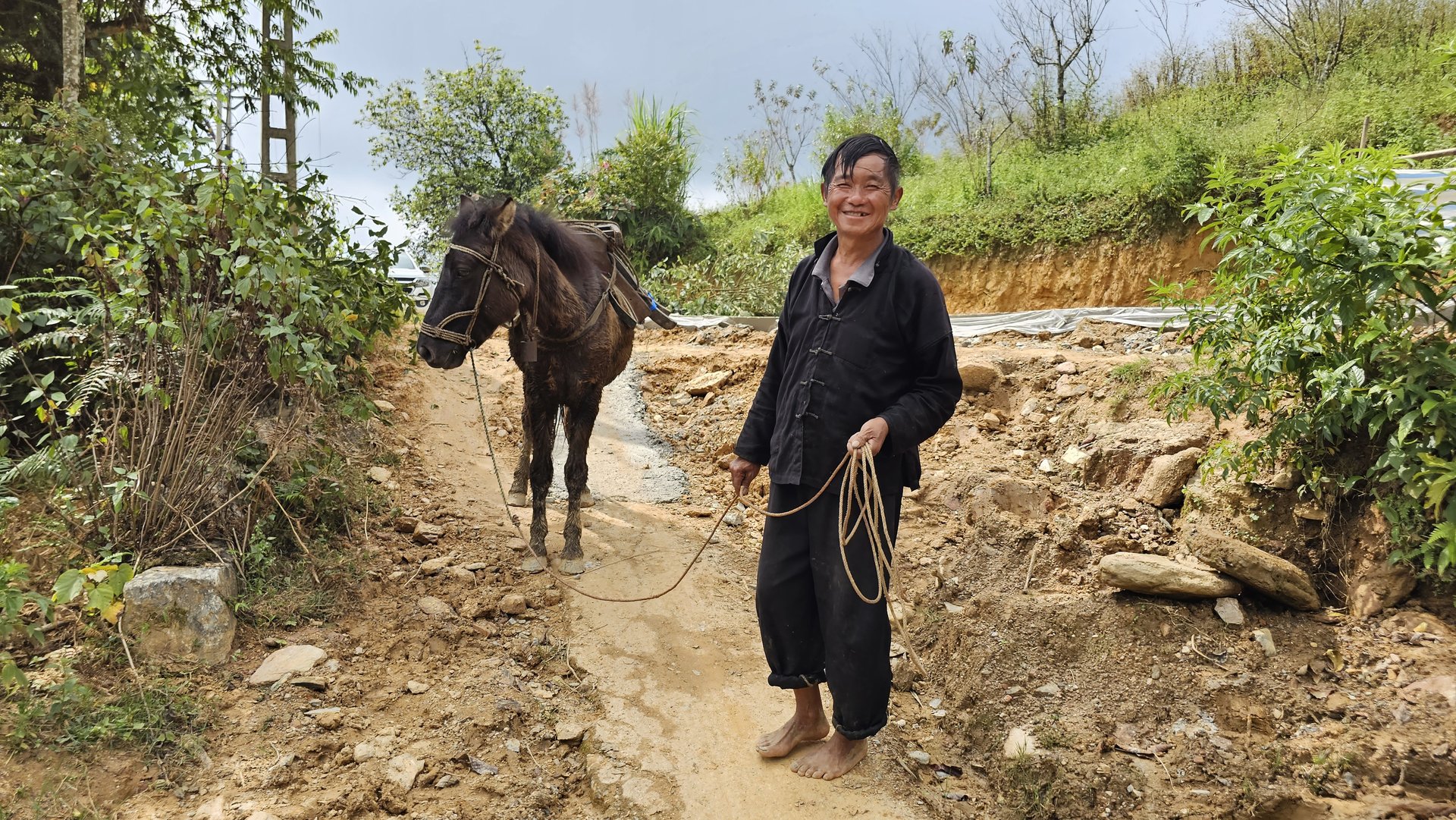
Pack horses always walk side by side with people in the highlands of Bac Ha. Photo: Hai Dang.
Bac Ha is a highland mountainous district located in the northeast of Lao Cai province with a natural land area of over 68,000 ha, but the population is only nearly 67,000 people, mainly Mong, Tay, and Dao ethnic people. The district’s climate and soil conditions help people grow medicinal herbs and plums with ease, bringing high economic value. Bac Ha also has a traditional horse racing festival where the "barefoot jockeys" are also farmers of this "white plateau".
Chao Van Den, a man of Bac Ha with nearly 80 years of age, said that the ethnic community here considers the horse not only a pet but also a close friend. “The horse is used as a means of transportation to help people carry baskets, carry manure to the fields, carry rice back home, carry agricultural products to the market. Dozens of years ago, the mountains were dangerous and travel was difficult, so it was even more a precious asset of the family”
No matter how much rice or corn households sell, they have to try their best to acquire a horse if they wish to have a decent life, and the rich even raise dozens of heads. To the people of Bac Ha, raising horses is more than just a custom.
In the past, ethnic minorities scattered around Bac Ha, and lived in remote places. Even if they wanted to go to the market, it would take all day, so they mainly relied on horse power. The trails across the mountainside were also formed thanks to a lot of travel, unlike the rural concrete roads in the present day.
At the beginning of the new year, families here also stick red paper on the stable door which symbolizes the ancestors' protection for the family's livestock. Horse racing and parade are also cultural feature that emphasizes the role of horses in the cultural life of ethnic minority communities.
Nguyen Xuan Giang, Head of the Department of Agriculture and Rural Development of Bac Ha district (Lao Cai) said, “Bac Ha's native horses are resilient, rarely get sick and can withstand harsh weather. But to keep the horse healthy, ample care is needed, an example would be feeding the horse more corn, rice, and soybeans instead of grass every day”.
The entire Bac Ha district only has 1,300 horses of all kinds at present, a sharp decrease compared to 2 years ago. Among these are horses used for food and work, and white horses used to make medicine. Possessing a slender body with robust strength, Bac Ha horses need to be grown in unique ways. The horse eats day and night and the food must be clean otherwise it will get intestinal disease.
“Horses usually have quite a long life and must be 27 - 30 months old or older to breed. Raising commercial horses for approximately 24 months, people can sell them because the weight of each horse can now reach 150 - 170kg. Each Bac Ha horse can currently be sold for VND 20 - 70 million depending on weight, age and breed,” said Giang.
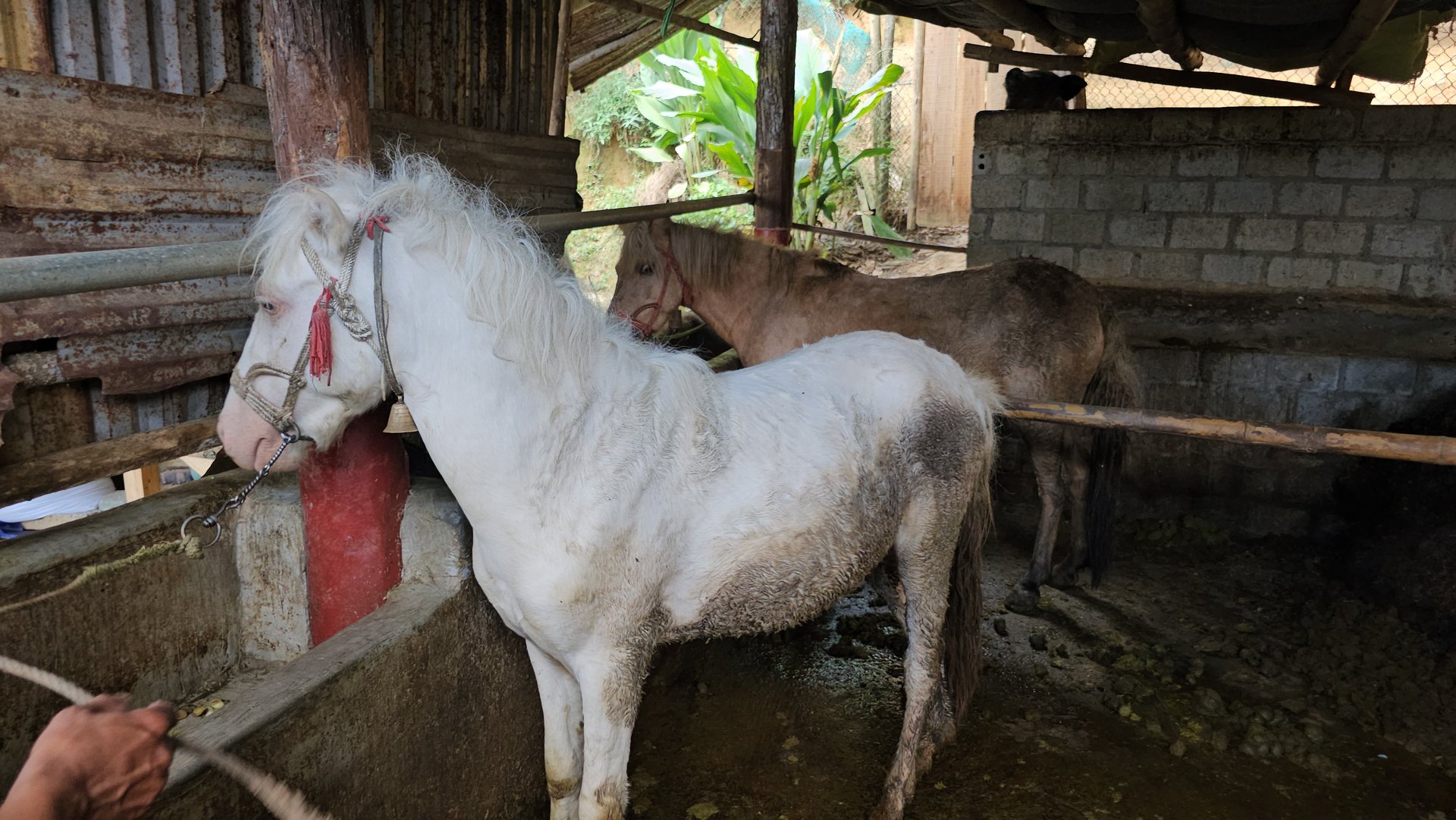
Each horse is worth tens of millions of VND, so it is considered a great asset for people in the highlands of Bac Ha. Photo: Hai Dang.
Compared to buffaloes and cows, horses are more resilient and can withstand heat better. Although the number of herds has decreased, horse raising in Bac Ha is still maintained as livestock for economic development. This district even has an “exchange” for horses, which is also the largest cattle market in Lao Cai. Previously, the market only sold mainly buffaloes and cows, but now people also bring horses to the market.
Every weekend, the livestock selling area is much more bustling than usual because traders and people from Si Ma Cai, Muong Khuong, and Bat Xat districts flock to Bac Ha. There are also traders from the Central region who come to conduct trade.
The market opens from morning to afternoon, so buyers and sellers are free to choose and estimate a reasonable price. The transaction usually takes place very quickly. The seller sets the price, the buyer agrees to pay, and only 1 - 2 extra words are needed to close the deal, no compromise, just like the character of highland people.
“Sometimes people come straight to the house to buy or if we want to sell, we can just call people to come, but going to the market is more fun. You can find out the price and measure the profit. I only sell when there is a need for money," said Vang A Sinh, a horse seller at the market.
In addition to buying and selling, people also share information and knowledge about horse breeding and also interact with friends at the market. The market mechanism established here is a rare sight to see.
Translated by Samuel Pham
/2026/06/01/1824-2-211343_500.jpg)
(VAN) Quang Ngai province is implementing many measures to protect sargassum resources, contributing to restoring aquatic resources, preserving biodiversity, and creating sustainable livelihoods.

(VAN) Farmers in Phu Thuan Commune, Da Nang preserve healthy soil and maintain chemical-free farming seasons, producing clean sesame and bean export products.

(VAN) Alongside his lush golden melon ready for harvest, Nguyen Van Truong from Ha Tinh province is eager to collect another 4,000 Hami melon plants.

(VAN) Summer-autumn crop season is peaking with effectively new weed, pest control to help reduce production costs and improve yields.

(VAN) Save Vietnam’s Wildlife (SVW) has launched the country’s first mobile nature center, using three interactive exhibition buses to promote nature conservation.

(VAN) A project funded by non-refundable official development assistance (ODA) from the German government will focus on restoring natural forests, strengthening forest management, and conserving biodiversity in Quang Ngai Province.
/2026/05/30/4118-3-142117_486.jpg)
(VAN) The pilot deployment of an aquatic weed harvester is expected to help reduce pollution and clear water flow, contributing to the development of a green, clean Hue City.
