June 5, 2026 | 07:41 GMT +7
Hotline: 0913.378.918

June 5, 2026 | 07:41 GMT +7
Hotline: 0913.378.918
According to Mr. Nguyen Nhu Tiep, Director of the Agro-Forestry-Fisheries Quality Assurance (MARD), we have often talked about the issue of market opening. But many experts do not even clearly understand what exactly is market opening, including the specifics.
If we want to export agro - forestry - fishery products to a certain country, we will first need to request them to allow us to export that product to their country.

According to Mr. Nguyen Nhu Tiep, opening the market for agricultural products is difficult, keeping the market is even harder. Photo: Le Ben.
Simply in terms of food, there is food of animal origin and plant origin. In general, most countries will have stricter food and disease safety regulations for products of animal origin, since many diseases from animals can be transmitted to humans.
For plant origin agricultural products, in addition to the control requirements for food safety, exporting countries are often concerned with the requirement to not carry pests affecting production by carrying out Pest Risk Assessment (PRA).
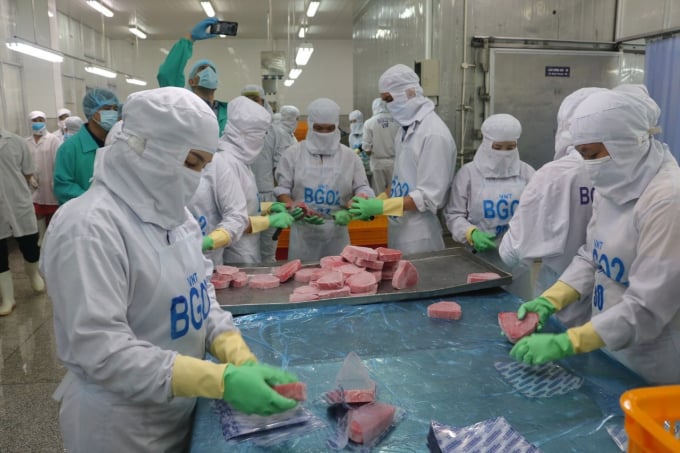
Vietnam's agro - forestry - fishery products entering the international market will have to comply with market regulations if they want to develop sustainably. Photo: TL.
Currently, the way countries allowing us to export food and agricultural products to their countries is basically divided into several groups. The first group is countries that require recognition of equivalence. The second group is countries with mutual recognition requirements. The third group does not require an equivalence assessment, but we are only recognized and licensed for specific businesses (eg: Russia, Brazil ...).
Enterprises have the right to export as if they had a "market entry ticket". But whether the business itself can sell goods in the exporting country's market is another matter.
Market opening is the story of how we meet the technical requirements to enter that market. However, how to sell goods in the export market depends on many factors such as marketing, trade promotion, design improvement,… to increase the market share of their goods.
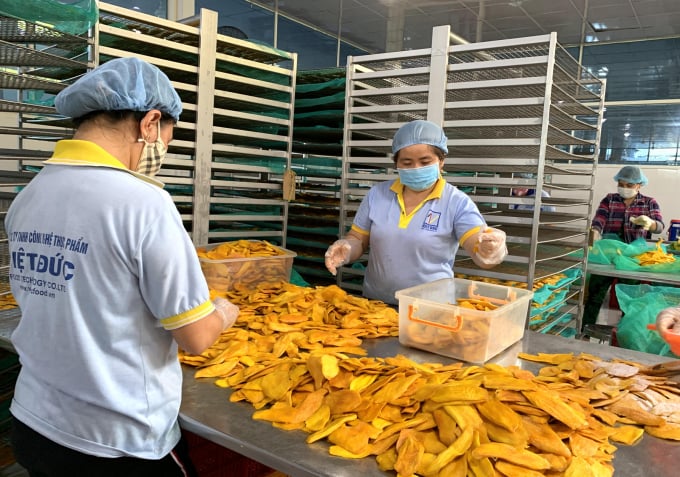
After opening the market, how products are consumed and compete in the export market depends on many factors. Photo: Le Ben.
Many improvements must be made
In general, over the years, Vietnamese enterprises have made great progress in improving their capacity and better responding to export markets’ regulations on agricultural food and products. However, a certain percentage of businesses are negligent in the process, which is very dangerous.
In terms of product quality, most businesses are aware of the problem. But in regard to meeting the food safety requirements of the exporting country, at present, there are still several businesses that often commit violations.
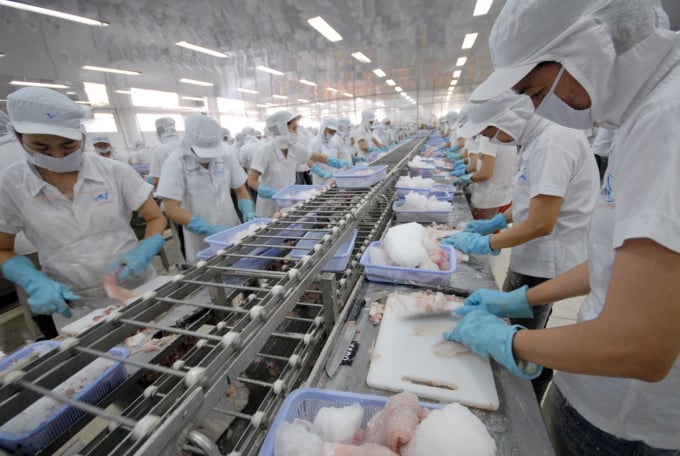
Meeting export market’s requirements is to serve the long-term interests of enterprises. Photo: LHV.
At present, looking at the common ground, the regular monitoring and sampling process at enterprises as well as in the market show that agricultural food and products have been significant improved in meeting food safety requirements.
The violation rate regarding conditions and standards of food hygiene and safety has decreased, especially the rate of shipments that committed violations in export markets and were returned has decreased a lot compared to the past.
However, frankly speaking, with our country’s strategic orientation to become the top 10 processed food industry countries in the world, our ability to meet the requirements for product quality and food safety will still have to improve a lot.

According to Mr. Nguyen Nhu Tiep, Vietnamese businesses will have to improve a lot in order to further lower the rate of violated shipment in the export market. Photo: LHV.
We will not only be allowed to export to those markets but also create a brand and reputation on the global market.
Apart from food safety factors, origin transparency, and quality assurance must of course be done. At the moment, our agricultural food and products when exported must also ensure another factor: social responsibility.
Enterprises’ social responsibility when producing goods is the responsibility to the environment, zero bad impact and affect to the ecological environment; to ensure elements of social welfare such as workers' rights, labor usage prohibition for children and people with disabilities,…
Social responsibility is when consumers buy products not simply for their use value but also for them to bring sustainable value to humanity…
This standard is currently rising as a pillar that businesses will have to work towards.

(VAN) Trade remedy measures imposed on cane sugar imports from Thailand and five ASEAN countries in recent years have helped Viet Nam’s sugar industry recover.

(VAN) Vietnam's fruit and vegetable exports maintained strong growth momentum in May 2026, driven by favorable market conditions, domestic policy measures, and seasonal harvest cycles.
/2026/06/03/4402-1-nongnghiep-094359.jpg)
(VAN) Investments by businesses and market demand are helping processed products account for an increasingly larger share of Viet Nam's fruit and vegetable exports.

(VAN) Khanh Hoa Province has approved a project to develop Halal-compliant goat and sheep products through 2030, creating opportunities to bring the province’s distinctive livestock products to export markets.

(VAN) Viet Nam was Malaysia’s largest coffee supplier in the first three months of 2026, with exports totaling 8,000 tons worth $37.1 million.

(VAN) The recognition of Buon Ma Thuot City in Dak Lak Province has opened up new opportunities to showcase the rich cultural and culinary heritage of Viet Nam’s Central Highlands to the world.

(VAN) This year’s egg lychee season at Doan Dao Egg Lychee Cooperative is considered the most successful, achieving high yields and record selling prices.
