June 5, 2026 | 07:47 GMT +7
Hotline: 0913.378.918

June 5, 2026 | 07:47 GMT +7
Hotline: 0913.378.918
"Vietnam aims to effectively implement marine biodiversity conservation initiatives and the Fisheries Strategy, thereby improving the livelihoods of coastal communities and fishermen," was the remark of Associate Professor Dr. Vu Thanh Ca, former General Director of the Vietnam Institute of Seas and Islands under the Vietnam Administration of Seas and Islands, in an interview with the Agriculture and Environment Newspaper. He also discussed the merger of the Ministry of Natural Resources and Environment (MONRE) and the Ministry of Agriculture and Rural Development (MARD) into the Ministry of Agriculture and Environment, with the expectation of promoting unity in management as well as the effective use of marine space.

Associate Professor Dr. Vu Thanh Ca. Photo: Truong Giang.
What are your thoughts on the merger between the Ministry of Natural Resources and Environment (MONRE) and the Ministry of Agriculture and Rural Development (MARD) into the Ministry of Agriculture and Environment in the context of marine sustainability?
I believe that merging MONRE and MARD is an effective policy decision by the Party and the Government. These two sectors have had overlapping responsibilities in terms of state management over the years.
In the marine sector, for instance, MONRE was previously responsible for managing and conserving marine biodiversity, while MARD oversaw marine protected areas. However, the conservation of marine biodiversity has a strong connection with marine protected areas.
One example of overlapping functions is that MARD was tasked with managing fisheries, including both capture and aquaculture. However, these activities directly impact marine biodiversity, which falls under MONRE’s jurisdiction.
Another issue is that MONRE was responsible for allocating marine areas to local stakeholders, whereas MARD was assigned marine areas for aquaculture.
As a result, the merger between these two ministries is crucial in promoting unity in management and the effective use of marine space. It will also contribute to national socio-economic development and improve the livelihoods of local communities.
What opportunities will this merger create for coastal communities and fishermen?
Coastal residents in areas with a developed tourism scene enjoy a relatively stable livelihood. Conversely, coastal communities and fishermen in regions primarily reliant on fishing as an economic activity continue to face significant challenges due to the absence of tourism services.
Consequently, effective marine biodiversity conservation and sustainable fisheries management will directly benefit vessel owners and fishermen by providing long-term and sustainable livelihoods. However, local conservation efforts have been limited in recent years, leading to a drastic decline in marine fishery resources. This depletion has forced numerous fishing vessels to remain idle due to the high costs of fuel and labor, while the low catch volume and declining seafood quality have resulted in reduced income.
In the past, we expanded our fishing fleet too aggressively and overexploited marine resources. Experts in the natural resources and environment sector had warned that fishery resources were being depleted at a critical rate, but these warnings had limited impact on policy decisions.
Recent assessments conducted by the Research Institute for Marine Fisheries and the Institute of Fisheries Economics and Planning have confirmed that Vietnam is exploiting its fishery resources at 1.5 times the sustainable level. Based on scientific research and the urgent need for conservation, the Prime Minister has issued a Sustainable Fisheries Development Strategy, outlining goals for the sector until 2030 with a vision toward 2045.
In my opinion, the merger of these two ministries will help eliminate overlapping functions, enhance marine biodiversity conservation, and improve the implementation of the Sustainable Fisheries Development Strategy. This initiative will facilitate the effective management of marine fishery resources, which is a key factor in improving the livelihoods of coastal communities and fishermen, increasing their income, and accelerating poverty alleviation in coastal areas.
The merger enhances the effectiveness of marine spatial planning and the comprehensive plan for sustainable coastal resource use. Accordingly, stakeholders can effectively allocate residential areas and resources, thereby optimizing the potential of marine space and fostering economic growth in coastal regions.
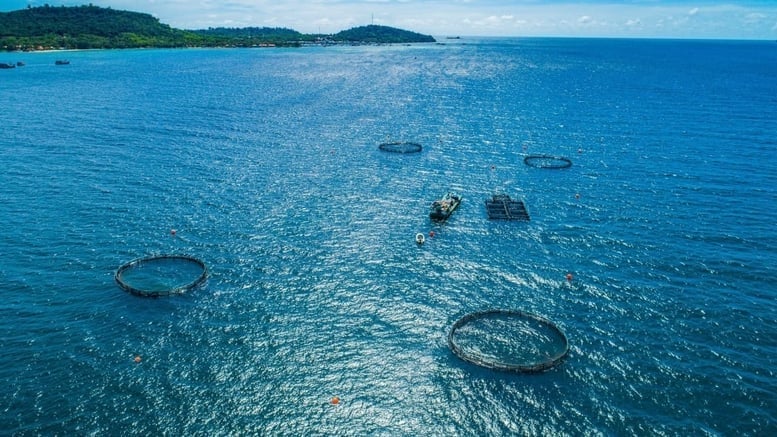
The merger of MONRE and MARD into the Ministry of Agriculture and Environment also enhances the effectiveness of marine spatial planning and the comprehensive plan for sustainable coastal resource use, thereby optimizing marine potential and promoting coastal economic growth. Photo: Illustration.
From a communication perspective, what should the Agriculture and Environment Newspaper (formed through the merger of the Natural Resources and Environment Newspaper and the Agriculture and Rural Development Newspaper) do to raise awareness on this issue?
I believe that the Agriculture and Environment Newspaper should further enhance its communication efforts regarding policies and legal regulations, with a focus on those related to marine biodiversity conservation and fisheries resource protection. For instance, there are existing detailed regulations on the size of fish available for legal capture and the appropriate fishing seasons under the Law on Fisheries. However, enforcement by state management agencies has faced several challenges, which is why we must strengthen public awareness and communication on these issues.
One seemingly minor but important detail is the need to raise awareness regarding the protection of waterbirds, such as egrets and herons, as well as other similar species. Many fishermen consider these birds as competitors for fish and shrimp, believing that their presence can negatively impact fishery resources. However, all species contribute to ecological balance within a given ecosystem, with the exception of invasive species that pose a destructive threat to the environment. Protecting waterbirds helps maintain this balance, supports natural selection processes, and strengthens the overall health of marine ecosystems.
Additionally, we need to focus on discouraging overfishing and eliminating destructive fishing methods that harm the environment and deplete fishery resources. These practices cause long-term ecological damage and restrict our efforts to lift the European Commission's IUU (Illegal, Unreported, and Unregulated) fishing "yellow card" imposed on Vietnam's fisheries sector.
Furthermore, communication efforts should clearly demonstrate the objectives of biodiversity conservation, marine environmental protection, and sustainable blue economy development. We must aim to utilize marine resources in a way that meets present-day needs without compromising the ability of future generations to do the same.
Finally, communication strategies should be compatible with the policies and directives issued by the Party and the Government, thereby enabling coordination among relevant ministries, sectors, and the public. With these goals in mind, Vietnam can effectively conserve marine resources, optimize marine space management, and protect fisheries, biodiversity, and marine ecosystems for long-term sustainability.
Translated by Nguyen Hai Long

(VAN) Due to heatwaves and water shortages, weed outbreaks are surging in the Mekong Delta’s summer-autumn rice crop. Dong Thap is ramping up early-season weed management to cut costs and safeguard yields.

(VAN) At the Vegetable and Fruit Seed Research and Production Farm in Bac Ha, pear, peach, and plum orchards are carefully maintained to conserve valuable genetic resources and support the development of temperate fruit crops.
/2026/06/02/4947-3-223411_779.jpg)
(VAN) Protecting forests not only preserves natural resources but also helps safeguard water sources, living environments, and the foundation for long-term sustainable development.

(VAN) Jackfruit prices remain low despite the recent increase as exports to China struggle. Dong Nai is tightening quality control to restore the market.

(VAN) Mekong Delta farmland is degrading due to chemical abuse. Restoring soil with organic and microbial fertilizers while reducing chemicals is now urgent.
/2026/06/01/1824-2-211343_500.jpg)
(VAN) Quang Ngai province is implementing many measures to protect sargassum resources, contributing to restoring aquatic resources, preserving biodiversity, and creating sustainable livelihoods.

(VAN) Farmers in Phu Thuan Commune, Da Nang preserve healthy soil and maintain chemical-free farming seasons, producing clean sesame and bean export products.
