December 19, 2025 | 08:50 GMT +7
Hotline: 0913.378.918

December 19, 2025 | 08:50 GMT +7
Hotline: 0913.378.918
On May 17, the Department of Fisheries and Fisheries Surveillance (under the Ministry of Agriculture and Environment) collaborated with the Hai Phong Department of Agriculture and Environment, the Cat Hai District People's Committee, and the International Collaborating Center for Aquaculture and Fisheries Sustainability (ICAFIS) — a member of the Vietnam Fisheries Society — to conduct a cottonii seaweed planting ceremony at Ben Beo Bay in Cat Ba Town (Cat Hai District, Hai Phong City).
Thirty local households enrolled to participate in the cottonii seaweed cultivation pilot program in Cat Ba during the event. The participants were provided with starter seedlings and were instructed on the proper methods for planting and caring for them.
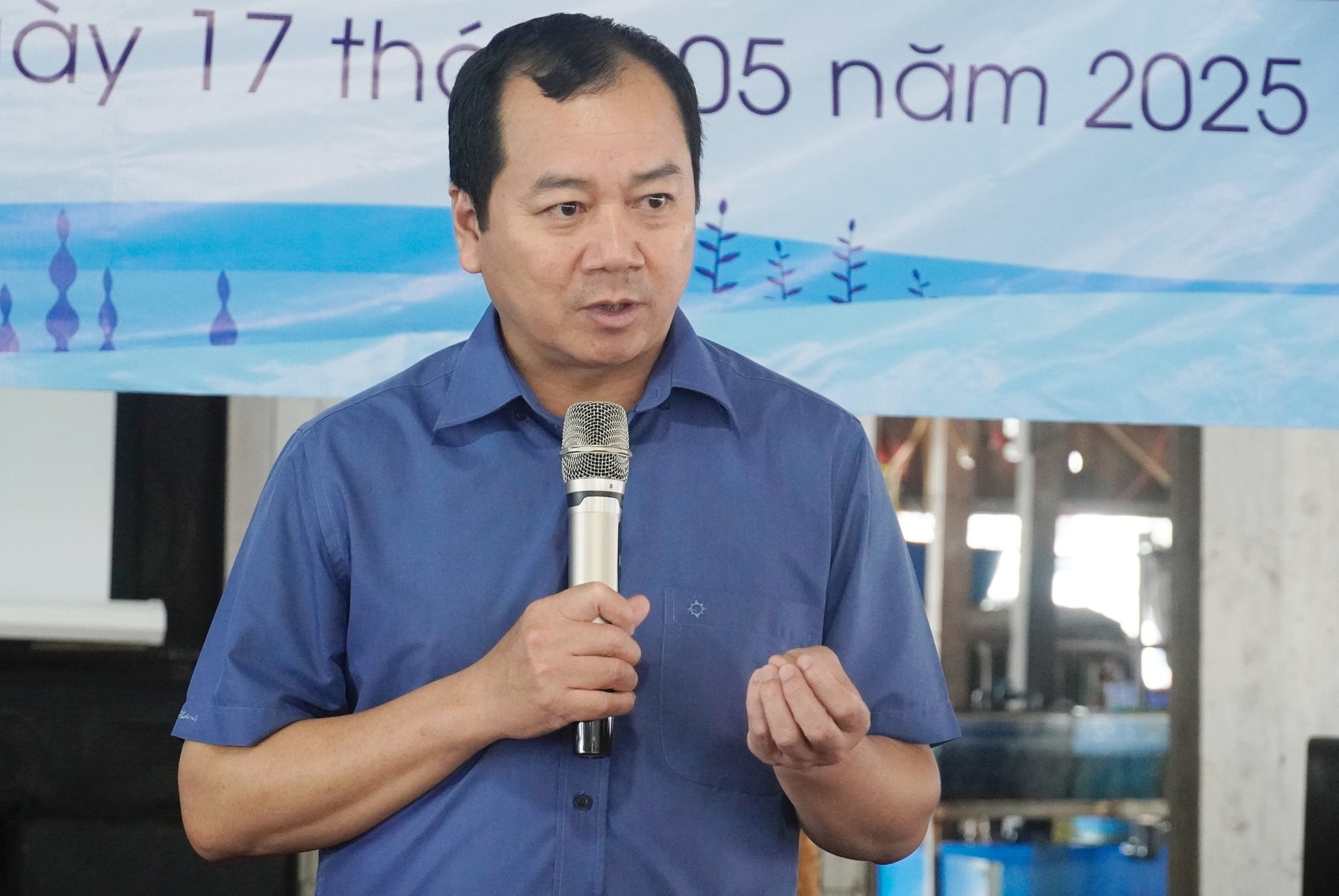
Director of the Department of Fisheries and Fisheries Control Tran Dinh Luan hopes that growing seaweed combined with raising some molluscs and raising fish will help diversify products and contribute to environmental protection. Photo: Hong Tham.
In 2024, the Department of Fisheries and ICAFIS initiated the "Blue Ocean - Blue Foods: Building a Carbon Sink in the Fisheries Sector" initiative, which includes the pilot model.
Dinh Xuan Lap, the Deputy Director of ICAFIS, has stated that the program's objective is to cultivate a minimum of 1,000 hectares of cottonii seaweed within the first three years. It is anticipated that the initiative will not only promote green growth in the fisheries sector and decrease greenhouse gas emissions, but also contribute to the restoration of marine ecosystems and the promotion of sustainable livelihoods for the coastal communities of Vietnam.
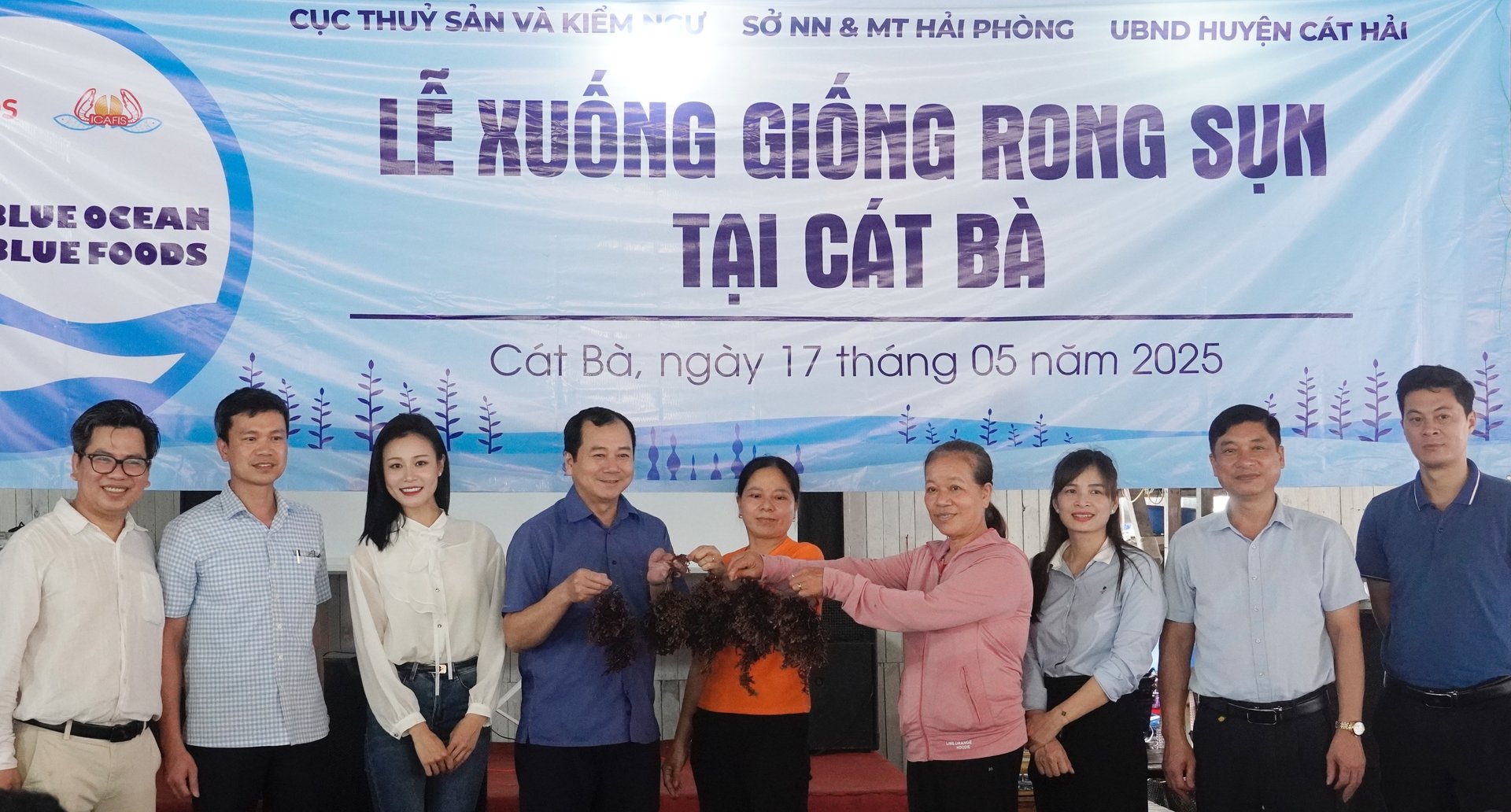
Director of the Department of Fisheries and Fisheries Surveillance Tran Dinh Luan presents seaweed seeds to households. Photo: Hong Tham.
Tran Dinh Luan, the Director General of the Department of Fisheries and Fisheries Surveillance, underscored the accelerated depletion of marine fishery resources. The industry is transitioning from natural capture to aquaculture. The integration of Cottonii cultivation with mollusk and fish husbandry will contribute to the diversification of products and the preservation of the environment. "We also intend to provide rabbitfish angling services to tourists in regions where Cottonii is in cultivation," he stated.
Hanoi implemented the 'Blue Ocean - Blue Foods' initiative in 2024. I place a high value on the objectives of this initiative. I hope that together we can develop clean, green products so that when tourists visit Cat Ba, they’ll see vibrant, thriving marine areas — clear evidence that Cat Ba is becoming greener and more beautiful,” Luan added. “This will help draw visitors, support local livelihoods, and especially keep the Cat Ba Biosphere Reserve cleaner, greener, and more recognized globally.”
Nguyen Thi Sam, Director of Japi Foods Co., Ltd., pledged to acquire the Cottonii harvest from households that participated. “People can feel confident about planting cottonii, as Japi Foods will buy the crop. She shared, "We anticipate that the seaweed will thrive and contribute to the establishment of a consistent income source for the local population, all the while creating a value chain for Vietnam's seaweed industry."
Director Tran Dinh Luan personally visited numerous households to demonstrate the process of planting the seaweed and provide technical advice to guarantee the pilot model's success immediately after distributing the Cottonii seedlings.
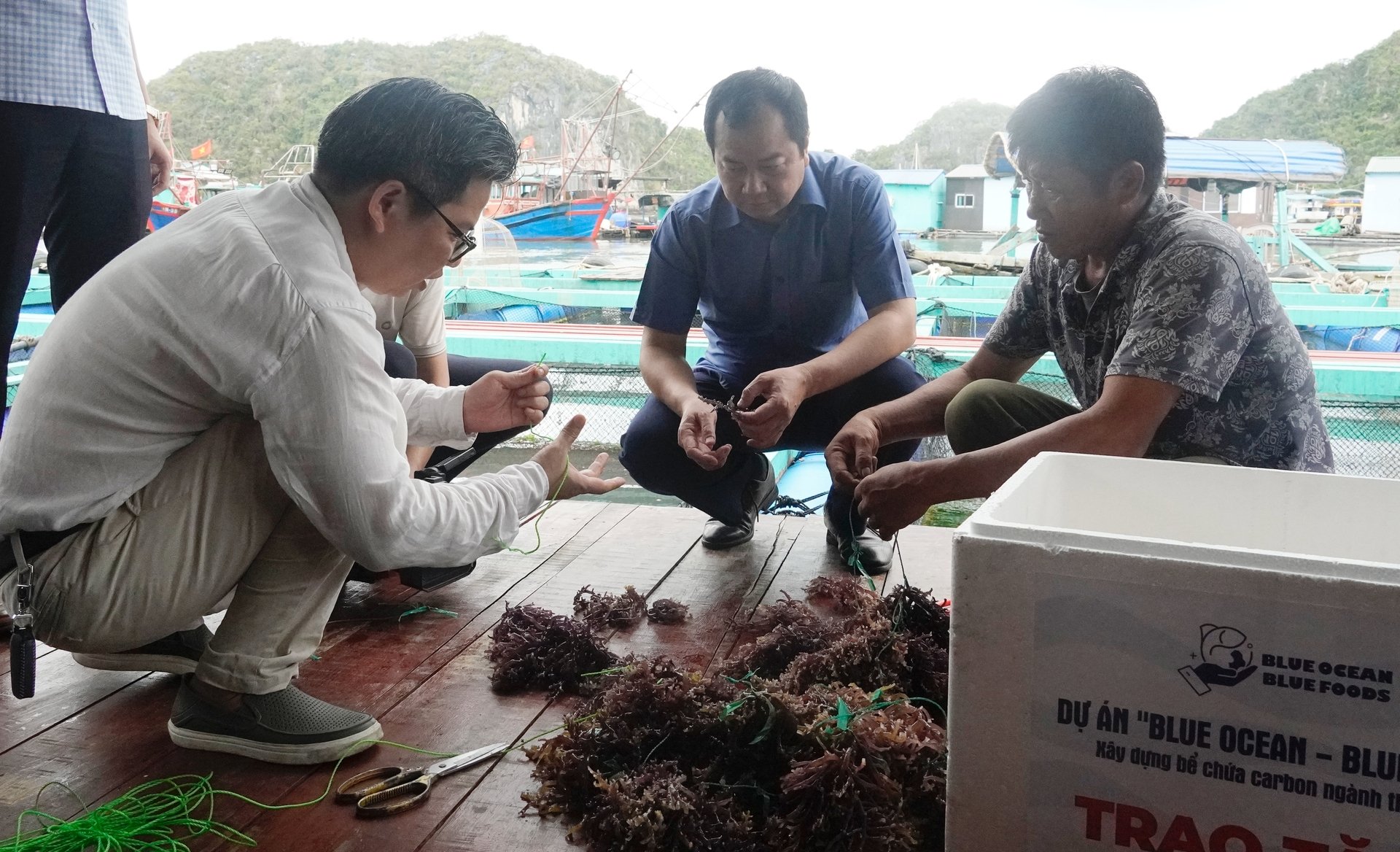
Director of the Department of Fisheries and Fisheries Control Tran Dinh Luan (middle) directly guides people on how to release carrageenan seeds. Photo: Hong Tham.
Pham Van Day, a resident of Cat Ba Town and a representative of the 30 participating households, stated that his family and numerous other aquaculture and fishery households experienced significant losses following Typhoon Yagi (locally known as Typhoon No. 3). He expressed optimism that this Cottonii cultivation pilot would produce promising results, enhance household incomes, ensure long-term livelihoods, and make a significant contribution to the preservation of the marine environment.
Translated by Linh Linh
/2025/12/17/0042-2-075234_14.jpg)
(VAN) In Vinh Long, high-quality, low-emission rice models are being scaled up from cooperatives, helping reduce production costs, increase farmers' incomes, and protect the environment.

Professor Nguyen Duc Ngu, the third generation of leaders since the establishment of Vietnam’s Hydrometeorology sector has witnessed and lived through the long arc of its development.

(VAN) Climate change, saline intrusion, and unsustainable farming practices are depleting agricultural land in the Mekong Delta. Restoring soil health is a key solution for the future of agriculture.

(VAN) Agroforestry coffee not only enhances coffee quality but also helps farmers in Quang Tri enter carbon credit market with high expectations.

(VAN) Towards Net Zero 2050, fertilizer manufacturers are proactively developing bio-based products, reducing emissions, and demonstrating responsibility to the environment.

(VAN) The smart rice cultivation model, which reduces methane emissions and aims at developing agricultural carbon credits, has been deployed in Thai Nguyen province and delivered positive results.

(VAN) The purpose of this visit is to unify the proposal for a technical assistance project supporting sustainable agricultural and forestry development in Angola.
