June 4, 2026 | 01:10 GMT +7
Hotline: 0913.378.918

June 4, 2026 | 01:10 GMT +7
Hotline: 0913.378.918
The model involves eating, sleeping, and working without leaving aims to keep production going while ensuring COVID-19 control and prevention measures.
Hoang Quoc Vuong, Director of Quang Binh FOCOCEV Joint Stock Company, in Quang Binh Province said “Our factory has bought over 20,000 tonnes of raw cassava from farmers, worth about VND48 billion (USD2.1 million) so far.”
It is thanks to the timely policy of the Government to support businesses during the pandemic, he said.
The cassava starch processing factory has a total of 100 employees. When the company applied the model, the company's officials retained about 50 employees to ensure production.
It also prepares facilities to ensure following regulations on pandemic prevention in production as well as implementing periodical tests of SARS-CoV-2 for their employees.
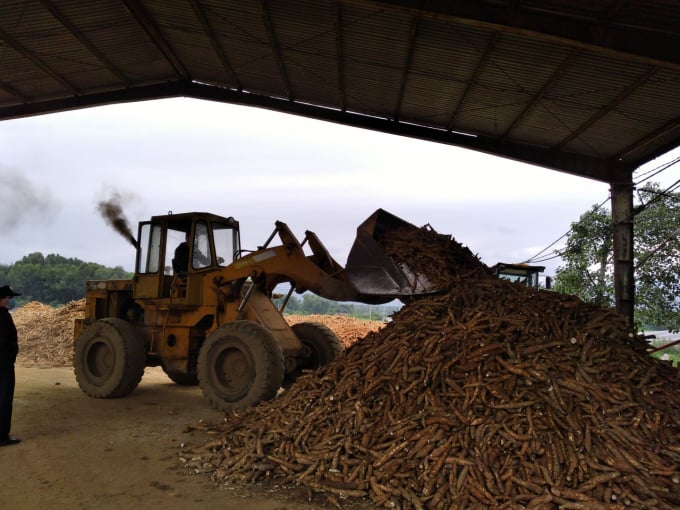
Buying raw cassava at the factory of Quang Binh FOCOCEV Joint Stock Company. Photo: T.P.
The employees have received a rapid test every three days and real-time polymerase chain reaction (RT-PCR) twice a week.
When being put into operation again, the factory has divided into two working shifts instead of 3 working shifts as before.
Vuong said “I am really happy because we have kept safe production for nearly seven weeks.”
Both the company’s officials and employees have been very calm and no longer felt stressful like the first days of implementation, he said.
Le Van Tho, director of Long Giang Thinh Starch Factory said the factory urgently take procedures to re-opening after the local administration gave the greenlight.
The factory bought 10,000 tonnes of cassava from local farmers, worth about VND2-2.5 million (USD88-110) per tonne, depending on the starch content, he said.
The factory's products are mainly sold on the domestic market and exported to China, he said.
Tho said "The support of the Government and relevant agencies has created a great motivation for businesses to overcome the pandemic.”
It not only helps to maintain and stabilise the factory operation during the pandemic but also contributes to promote agriculture development, bringing income to local farmers, he said.
Tho also said the policies to support businesses such as lending capital, reducing land tax or supporting employees have had a good impact on the operation of enterprises in general.
“We strive producing and exporting over 6,000 tonnes of tapioca starch to China until the Lunar New Year," said Tho.
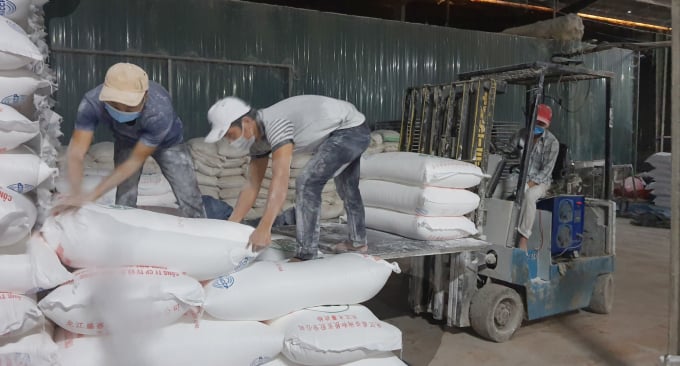
Long Giang Thinh Factory strives to promote production with high efficiency by the end of the year. Photo: Tam Phung.
Nguyen Cam Long, head of Agriculture and Rural Development Department of Bo Trach district, Quang Binh Province said thanks to the re-opening of cassava starch processing factories, local farmers are very excited.
In addition to selling the cassava with a good price, harvesting on time has also supported the farmers to deploy the next winter-spring crop timely, he said.
Vo Van Khanh, a farmer of Nam Trach Commune, Bo Trach District said he has more than two hectares of cassava under harvest.
Khanh said that when the pandemic hit the province, the factory was not in operation, so traders only bought the cassava with the price of only VND1.7 million (USD75) per tonne, causing local farmers very worry.
Then, the factories came into operation and bought cassava from the farmers with a higher price, and the farmers were very excited, he said.
Now when the harvest is almost done, the farmers start to sow seeds for the new crop, he said.
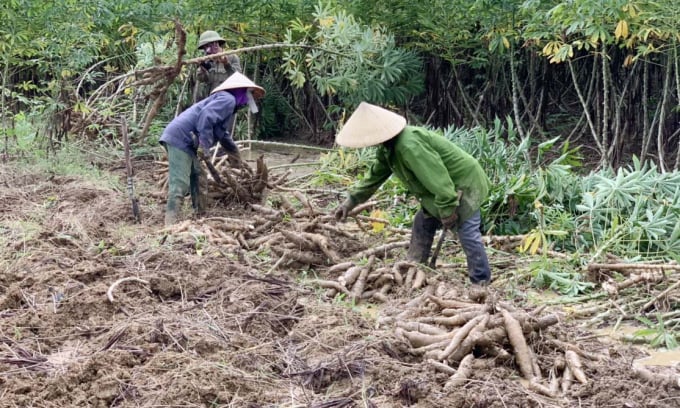
Farm produce processing factories come into operation again, helping Quang Binh Province’s farmers to stabilise and develop production in the winter-spring crop. Photo: Tam Phung.
The Viet Nam Bank for Social Policies’ branch in Quang Binh Province has implemented a number of policies to support employees and employers affected by the pandemic.
The Government’s Resolution No. 126 has abolished the condition that enterprises without bad debts can borrow money to pay severance packages and pay wage for employees to restore production.
Accordingly, employers are allowed to borrow capital pay severance packages and pay wage for employees to restore production at the bank without interest rate and do not have to apply loan security measures.
For loans to pay wages to restore production, the maximum loan amount is equal to the regional minimum wage for the number of employees working under labour contracts and participating in compulsory social insurance with the maximum period of three months. The loan term is less than 12 months.
Up to now, the branch has provided loans to 32 businesses and 1,500 employees with a total amount of over VND5.5 billion (USD242,000).
Translator: Thu Hang

(VAN) The Viet Nam Association of National Parks and Nature Reserves (VNPPA) has warned of the risk of ecological fragmentation if management is divided along administrative boundaries.

(VAN) The IUU inter-agency working group met to agree on regulations, build transparent coordination and boost database digitization.
/2026/06/02/2436-2-211902_630.jpg)
(VAN) The rural tourism development plan for the 2026–2030 period aims to create sustainable livelihoods, increase incomes, and promote the value of indigenous culture and resources.

(VAN) The delegation from MAE exchanged experiences on Extended Producer Responsibility (EPR), Deposit Return Systems (DRS), and the circular economy during a working visit to Germany and Norway.
/2026/05/30/1359-3-130327_621.jpg)
(VAN) Green transition requires a '4-party' linkage ecosystem to reduce capital pressure on enterprises, maximize social resources, and form a green value chain network.

(VAN) The Ministry of Agriculture and Environment is developing an implementation plan for three strategic technology task groups covering the 2026 - 2030 period, in accordance with Prime Ministerial Decision 808/QD-TTg.
/2026/05/26/4722-3-123409_745.jpg)
(VAN) During Viet Nam's pilot phase for the domestic carbon market, enterprises allocated greenhouse gas emission quotas will be allowed to trade on the carbon exchange.
