November 26, 2025 | 15:51 GMT +7
Hotline: 0913.378.918

November 26, 2025 | 15:51 GMT +7
Hotline: 0913.378.918
U.S. President Donald Trump has signed an Executive Order imposing minimum and additional tariffs on 180 import markets. Specifically for Vietnam, the announced tariff rate is 46%, ranking among the highest in the world.
The U.S.'s new tariff policy has created significant challenges for Vietnam's agricultural exports, as competitors such as Thailand and India are enjoying an advantage thanks to lower tariff rates. Meanwhile, the U.S. remains Vietnam's largest export market for agricultural, forestry, and fishery products. The U.S.'s imposition of new reciprocal tariffs will create obstacles for Vietnam's agricultural exports.
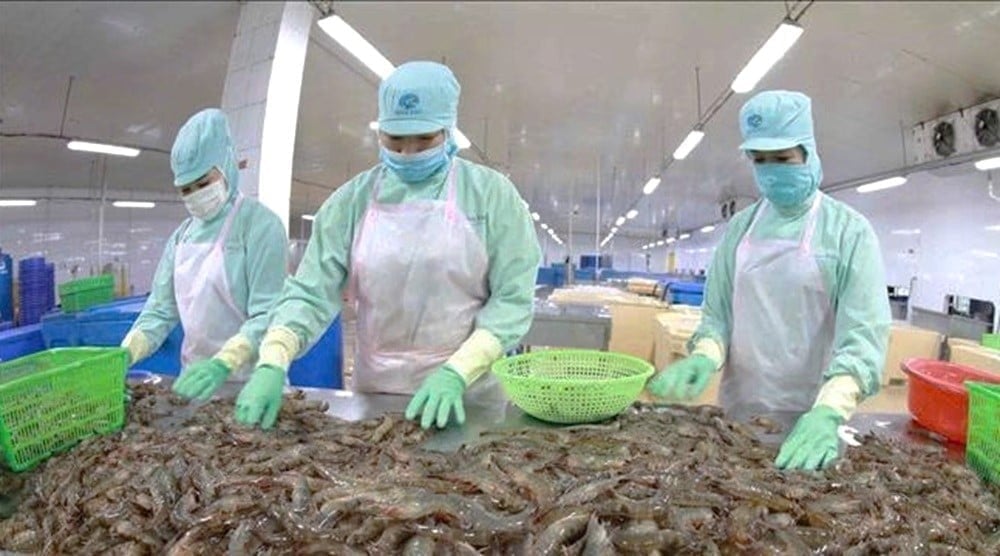
It is necessary to quickly implement urgent support measures for key items heavily impacted by the U.S. tariff policy.
According to the Ministry of Agriculture and Environment, the U.S. is currently Vietnam's second-largest export market for agricultural, forestry, and fishery products (after China), accounting for 20.2% of Vietnam’s total export turnover of agricultural, forestry, and fishery products. In 2024, agricultural, forestry, and fishery exports to the U.S. surpassed USD 14.3 billion, up 25% compared to 2023. In the first quarter of 2025, agricultural, forestry, and fishery exports to this market reached over USD 3.2 billion, up nearly 15% over the same period in 2024. Key export items included wood, pepper, cashew nuts, seafood, coffee, and fruits and vegetables.
Currently, the U.S. is postponing the imposition of a 46% reciprocal tariff on goods imported from Vietnam. However, to respond to the next time the U.S. may still proceed with high tariffs, the Institute of Policy and Strategy for Agriculture and Environment (under the Ministry of Agriculture and Environment) has outlined three forecast scenarios for Vietnam's agro-forestry-fishery sector in 2025. Each scenario is associated with specific tariff rates that the U.S. might apply, thereby reflecting the corresponding impact on export turnover and sectoral growth.
Scenario 1: If the tariff remains at 10% throughout 2025 and is uniformly applied to all countries, the agricultural sector's exports and growth targets would be almost unaffected.
Scenario 2: If both sides agree on a 20% tariff rate after the postponement period, exports in the second half of the year could decline by 20%, resulting in a drop of 0.15–2 percentage points in the agro-forestry-fishery sector's growth, to around 3.8–3.85%.
Scenario 3: If the U.S. maintains the 46% tariff, exports in the second half of the year are expected to decline by 40%, resulting in a decrease of 0.3–0.4 percentage points in the sector's growth, to 3.6–3.8%.
To address these challenges, the Institute of Policy and Strategy for Agriculture and Environment has proposed a series of response measures, including intensifying dialogue with the U.S., providing urgent support, and expanding export markets.
Specifically, it is necessary to strengthen dialogue with the U.S. to find solutions to reduce two-way import tax or apply for tax exemptions for some strategic agricultural products. Along with that is to enhance transparency in product origin and to establish a clear quality control system.
Urgent support measures need to be quickly implemented for key items heavily impacted by the new tariffs. These measures should be short-term but need to be deployed quickly and strongly enough to help enterprises and farmers adapt promptly. Immediate actions could include reducing import tariffs on raw materials, deferring VAT and corporate and personal income tax payments, and offering interest rate support for affected groups. At the same time, efforts to improve productivity, quality, and cost efficiency should be intensified, primarily through research and the application of science and technology, to boost the competitiveness of Vietnam's agricultural, forestry, and fishery products, in line with the spirit of Resolution 57-NQ/TW of the Politburo on innovation and digital transformation.
Enterprises are also urged to diversify their export markets. Besides traditional markets such as China, East Asia, ASEAN, the U.S., and the EU, it is also necessary to accelerate the exploitation of potential markets such as the BRIC countries (Brazil, Russia, and India), Latin America, major African countries, and new markets such as Halal food consumption countries.
The new U.S. tariffs pose significant challenges to Vietnam's agricultural, forestry, and fishery exports, particularly for key export items such as wood, pepper, cashew nuts, seafood, coffee, and fruits and vegetables. Therefore, immediate actions, including intensifying dialogue with the U.S., providing urgent support, and expanding export markets, are extremely essential not only to help Vietnam overcome the current challenges but also to ensure the sustainable growth of its agricultural, forestry, and fishery exports in the future.
Translated by Thu Huyen

(VAN) China’s cooking oil is suddenly flooding into India. It all comes down to a soybean surplus that Beijing doesn’t quite know what to do with.

(VAN) An Giang promotes supply-demand connections, standardizes quality and builds value chains, creating a foundation for sustainable bird’s nest development and aiming to expand exports.
/2025/11/24/5339-4-nongnghiep-075331.jpg)
(VAN) Recently, the conference on 'Sustainable Fisheries Linkage Chain - Tilapia for Export' took place in Tien Hai commune, Hung Yen province.
/2025/11/21/4309-2-153400_128.jpg)
(VAN) Green and low-emission rice is paving the way for Vietnamese rice to enter high-end markets, marking the beginning of a transformation journey toward greening and elevating the national rice brand.

(VAN) ‘Right to Win’ outlines a national action plan that shapes a new vision for Viet Nam’s agriculture in an era of renewal and global integration.

(VAN) Lam Dong’s farmed sturgeon output this year is expected to reach 2,300 tons, worth VND 450 billion, affirming the brand’s position on the market.

(VAN) A surge in Ukrainian egg exports, largely driven by soaring sales to the UK over the last few years, has notably pushed up egg prices on the domestic market.
