June 5, 2026 | 03:48 GMT +7
Hotline: 0913.378.918

June 5, 2026 | 03:48 GMT +7
Hotline: 0913.378.918
In April, the Vietnam Rice Sector Association (VIETRISA) officially launched the 'Vietnam green and low-emission rice' brand, marking a significant milestone in the journey toward a more sustainable and environmentally friendly agricultural economy.
King Green Natural Food Joint Stock Company, the owner of the 'Rice King' brand, was granted the right to use the 'Vietnam green and low-emission rice' label for nearly 182 hectares of certified rice fields, with a total production of 620 tons.
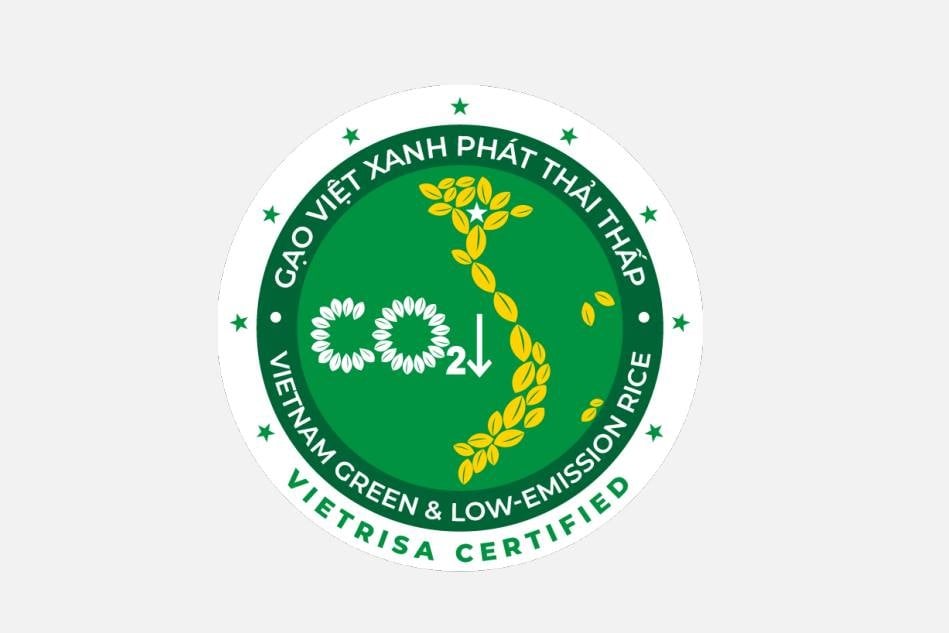
Logo image of the 'Vietnam green and low-emission rice' brand. Photo: Kim Anh.
Mr. Dang Van Vu, representative of King Green, shared that in the 2024 summer-autumn season, the company began collaborating with 700 local farming households to produce low-emission rice. However, at that time, both the company and the farmers were uncertain and concerned, as they did not fully understand the impact of the high-quality, low-emission rice farming process on yield, costs, and profitability.
Thanks to the active support from local authorities, VIETRISA, and international organizations, the company and the farmers involved in the supply chain received comprehensive training on advanced farming techniques. The training also incorporated several social initiatives, including health consultations for those directly involved in production, the use of safe and sustainable agricultural inputs, and the promotion of gender equality in agriculture.
After three growing seasons, these advanced techniques significantly improved soil quality, boosting its organic content. The results were clear: production costs were reduced, profits increased, and rice quality consistently improved over the seasons.
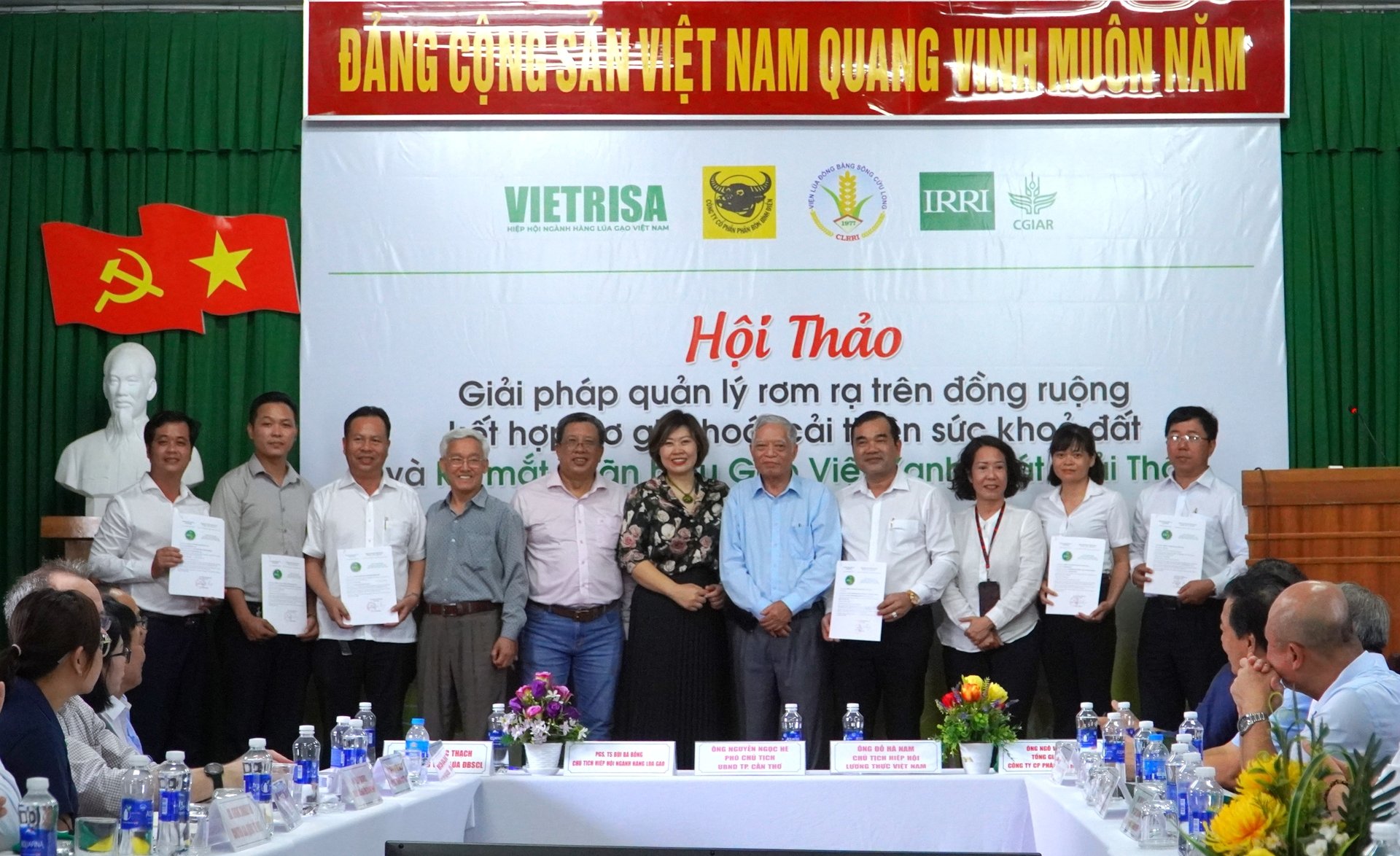
Currently, the Vietnam Rice Sector Association has granted the 'Vietnam green and low-emission rice' brand certification to eight rice production and trading enterprises. Photo: Kim Anh.
The certification of the 'Vietnam green and low-emission rice' brand by King Green not only proves the efforts of both farmers and the company in producing high-quality rice, but also opens the door to exports to demanding global markets.
According to Mr. Vu, several market surveys conducted by the company across Europe, America, Australia, and other regions have revealed a clear and growing consumer demand for rice and rice-based products made from clean, safe, and healthy raw materials. Consumers in these regions are increasingly seeking out products that meet high standards of quality and sustainability.
For years, King Green has received numerous orders from discerning international markets for Vietnam's low-emission rice. However, due to limited supply, the company was unable to meet the demand at the time. This certification now acts as a powerful lever, allowing the company to assert its capabilities, expand its share in the export market, and strengthen its position among domestic consumers.
Currently, King Green is in the process of designing packaging and preparing for the labeling of 620 tons of rice under the 'Vietnam green and low-emission rice' brand. These rice products will be distributed to domestic supermarket chains and exported to markets where the 'Rice King' brand has a competitive edge, such as Australia, and emerging markets in Europe, America, South Korea, and Japan. This move not only meets the increasing demand for sustainable rice but also supports the broader goal of enhancing Vietnam's rice industry on the global stage.
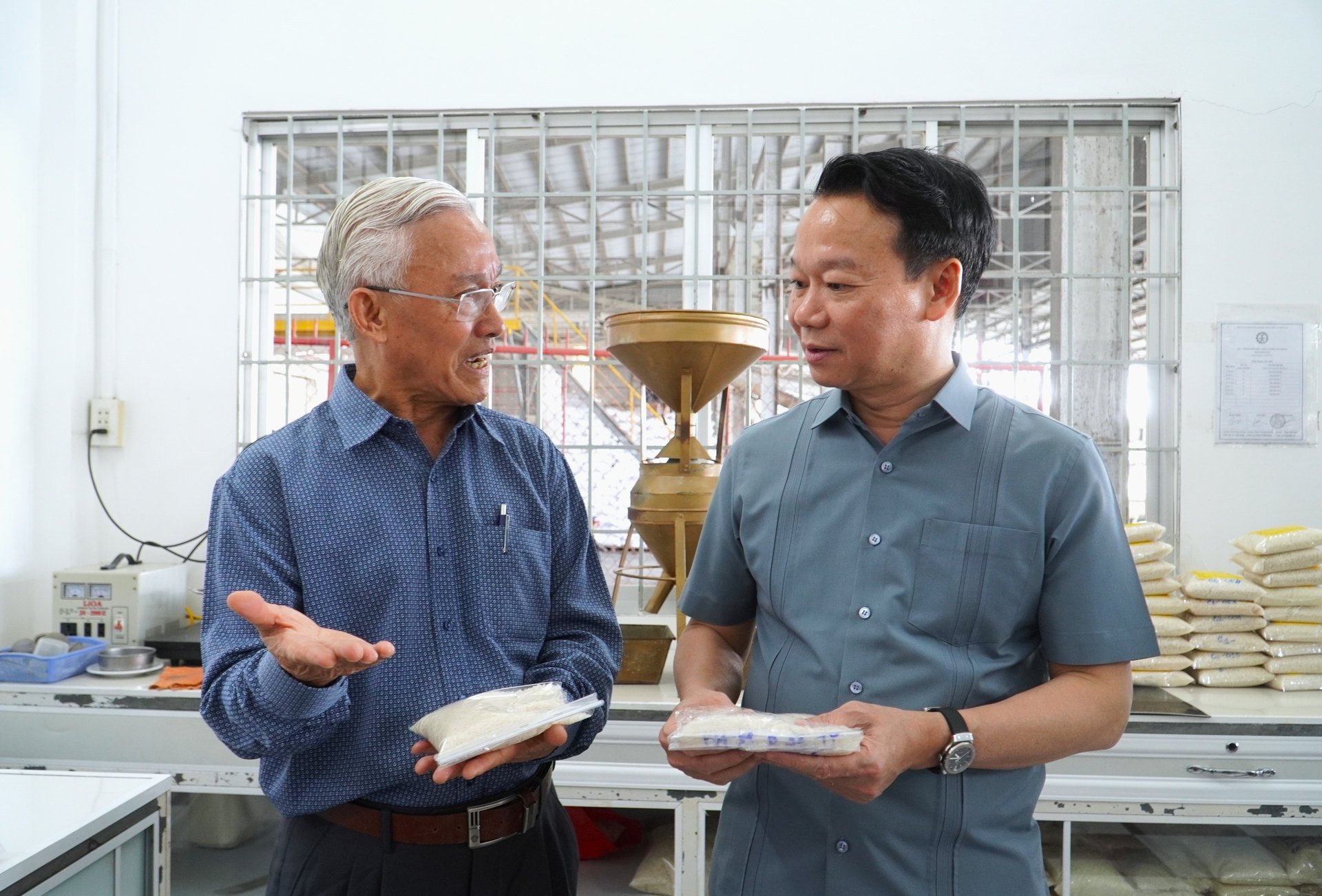
Minister of Agriculture and Environment Do Duc Duy learns about rice export capacity at Trung An High-Tech Agriculture Joint Stock Company (Can Tho City). Photo: Kim Anh.
Similarly, Trung An High-Tech Agriculture Joint Stock Company is set to label a 1,000-ton rice shipment in May with the 'Vietnam green and low-emission rice' brand. This shipment will be exported to Japan, one of the most demanding markets in the world. Japan’s rigorous standards require the rice to comply with over 600 active ingredients and undergo a lengthy testing process, sometimes lasting up to a month.
Mr. Pham Thai Binh, CEO of Trung An, believes that the launch of this brand marks a major turning point in efforts to enhance the global standing of Vietnamese rice. He proudly affirmed,“The winds of change are already blowing in the Vietnamese rice sector, and from now on, things will be different.”
Mr. Le Thanh Tung, Vice Chairman of VIETRISA, observed that the introduction of the 'Vietnam green and low-emission rice' brand is a direct response to the growing consumer demand for rice that meets low-emission standards. This move not only addresses market demands but also aligns with global trends toward sustainability and environmental responsibility. The certification reflects the commitment of Vietnamese rice producers to meet high international standards, providing a foundation for further growth in both domestic and international markets.
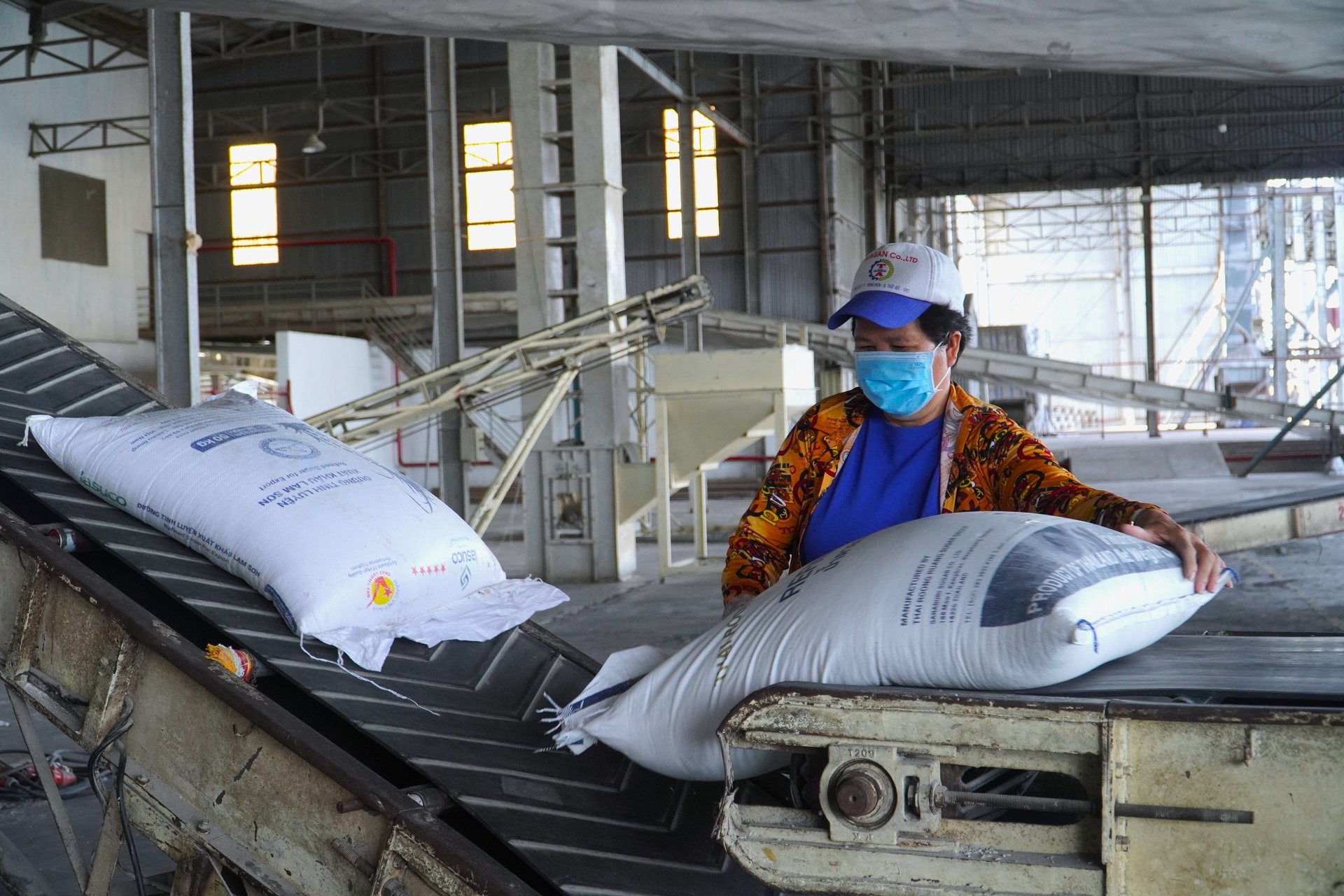
The 'Vietnam green and low-emission rice' brand produces premium-quality rice, paving the way for exports to demanding international markets. Photo: Kim Anh.
Before being granted the right to use the brand, businesses must undergo a strict verification process conducted by specialized authorities to ensure compliance with the criteria set forth by the association. Once the brand is granted, companies are responsible for managing the quality of their products from production directly to consumers.
Mr. Tung is hopeful that in the near future, localities within the "1 million hectares of high-quality rice project" will continue to expand their rice cultivation areas. As a result, millions of tons of rice will be certified as meeting the standards, enhancing the image of Vietnamese rice among consumers worldwide.
Sharing this hope, Mr. Do Ha Nam, Chairman of the Vietnam Food Association (VFA), expressed his desire for the 161 rice-exporting businesses in Vietnam to have the 'Vietnam green and low-emission rice' brand label on their product packaging. This would bring added safety to consumers both domestically and internationally, reinforcing the global reputation of Vietnamese rice as a safe and sustainable product.
Translated by Phuong Linh

(VAN) The 93rd General Session of the World Assembly of Delegates of the World Organisation for Animal Health (WOAH) highlighted the importance of investing in animal welfare, biosecurity, and food security.

(VAN) Experts consider AI and IoT-driven digital transformation as the key to building green, climate-resilient, and sustainable agriculture.

(VAN) A series of national-level events in Cua Lo is spreading a message on environmental protection, promoting a sustainable marine economy, and inspiring shared responsibilities across society toward a green, clean, beautiful Viet Nam.

(VAN) MAE Minister meets with WWF-US leadership to promote cooperation in nature conservation, biodiversity conservation, and climate change response.

(VAN) During four-year tenure, Ambassador Nicolai Prytz bridged bilateral cooperation, promoted dialogue and green cooperation implementation between two countries.

(VAN) Can Tho city has officially kicked off the technical assistance component of the Climate-Resilient Green Urban Development Project in Nga Bay.

(VAN) An estimated 25,000 people in Vietnam, Laos, Indonesia and the Philippines will join the 'Act for a Green Planet' campaign to mark World Environment Day.
