December 6, 2025 | 05:12 GMT +7
Hotline: 0913.378.918

December 6, 2025 | 05:12 GMT +7
Hotline: 0913.378.918
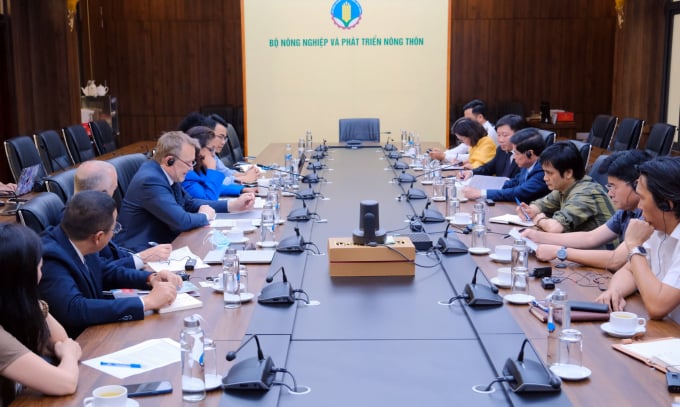
Leaders of the Ministry of Agriculture and Rural Development received the International Fund for Agricultural Development (IFAD). Photo: Bao Thang.
During the meeting, Deputy Minister of Agriculture and Rural Development Le Quoc Doanh praised the fruitful cooperation between Vietnam and MARD with the International Fund for Agricultural Development (IFAD) through a number of technical programs and projects, including "Network for Agriculture and Rural Development Think-tanks in Mekong Subregion" and "South-South cooperation to replicate value chain initiatives to adapt to climate change."
Mr. Nigel Brett, former Director of IFAD's Asia-Pacific Division, confirmed that Vietnam and MARD are significant IFAD partners in the region. Over the past 25 years, the organization has supported Vietnam to build and deploy several programs including Vietnam's national target program to build new-style rural areas, which enters the third stage of implementation.
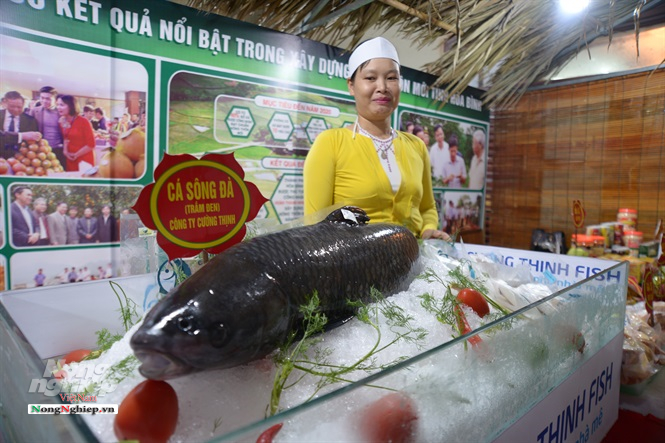
Back carp from the Da River of Hoa Binh province.
In addition, the two sides also achieved some prospective outcomes in building the OCOP Program.
"We expect that the OCOP Program will grow from a local school to a national scale," Mr. Brett said, adding that IFAD will support MARD in the program's next phase.
IFAD recognized the efforts and role of MARD in supporting the Network for Agriculture and Rural Development Think-tanks in the Mekong Subregion of the Institute for Policy and Strategy for Agriculture and Rural Development (IPSARD), particularly in the face of the Covid-19 pandemic as it benefits the Mekong countries.
IFAD is anticipated to continue The Climate-smart Agricultural Value Chain Development (CSAT) in Ben Tre and Tra Vinh Provinces in the near future. The organization expects the collaboration of the Mekong Delta Coordination Office for Agriculture and Rural Affairs in order to perform the project smoothly and effectively.

Ms. Reehana Raza, the Regional Director of the Asia and Pacific Division at the International Fund for Agricultural Development (IFAD). Photo: Bao Thang.
Mr. Brett also noted the Emission Reduction Project in Vietnam's Central Highlands and South Central Coast, which would contribute to the implementation of the REDD+ National Action Program or RECAF in short implementation. The ministry's support would help ensure the success of the program in regions that aim to reduce greenhouse gas emissions through agroforestry projects. This is a program funded by IFAD's ODA and the Green Climate Fund's "non-refundable" funding (GCF). IFAD wants to work closely with the Vietnam Administration of Forestry to guarantee the timely and effective implementation of this project. According to the IFAD representative, this is an excellent chance to further deepen MARD's connection with the organization.
The aforementioned projects can assist Vietnam in meeting its strong commitments made at the United Nations climate change conference (COP26) to reduce net emissions to "zero" by 2050 and global methane emissions by 2030. Thus, it assists Vietnam in establishing agriculture that is green, sustainable, and adaptable to climate change.
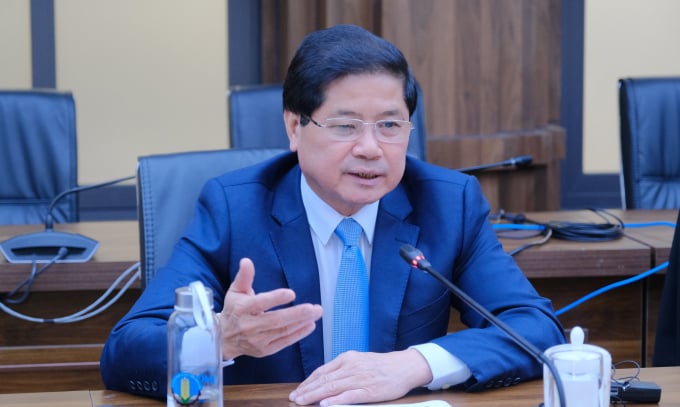
Deputy Minister Le Quoc Doanh highly appreciated the cooperation efficiency between the two sides over the past time. Photo: Bao Thang.
In response to IFAD's views, Deputy Minister Le Quoc Doanh stated that the Mekong Delta is one of the main objectives of Vietnam's agricultural industry since it is a significant production area with key crops including rice, fruit, and aquatic products. In addition to including programs and plans to support the development of the Mekong Delta in the face of the problem of climate change, agriculture sector policies have also incorporated such initiatives.
He agreed with IFAD's idea to broaden the scope of the OCOP program because it is one of the long-term initiatives aimed at constructing new-style rural areas.
The Deputy Minister also suggested that IFAD collaborate with the Ministry of Agriculture and Rural Development to develop proposals for grants from development funds such as GCF and other bilateral partners to provide technical support for the next phase of the building new-style countryside program, which includes building models of rural tourism, planning for landscape development in agriculture, agritourism, development of OCOP, and digital transformation of agriculture.
The representative of the Ministry of Agriculture and Rural Development proposed that the International Fund for Agricultural Development (IFAD) support localities through loans develop climate change-adaptive agricultural value chain infrastructure and technical assistance on community-based resource management and afforestation development.
In addition, Deputy Minister Le Quoc Doanh requested that IFAD dispatch senior specialists in agricultural and rural development to assist the Ministry in institutional development and to provide guidance in the formulation and implementation of development strategies for the agriculture industry.
Translated by Dieu Linh

(VAN) As of 2025, the ASEAN region has a total of 69 ASEAN Heritage Parks recognized across its 10 member states. Among them, Viet Nam contributes 15 ASEAN Heritage Parks.

(VAN) Yok Don National Park has high biodiversity with numerous endemic plant and animal species, and it is also the only dipterocarp forest ecosystem conservation area in Viet Nam.

(VAN) Viet Nam and Brunei signed two important MOUs on fisheries and IUU, expanding cooperation in agriculture, the environment, and Halal exports, aiming to substantively implement joint projects.

(VAN) The Viet Nam Coconut Association worked with the International Finance Corporation (IFC) and businesses to promote the supply chain, enhance competitiveness, and develop the coconut industry sustainably.
![Hue aims for Net Zero: [2] Pioneering low-emission tourism](https://t.ex-cdn.com/nongnghiepmoitruong.vn/608w/files/huytd/2025/12/04/0633-dulichzero-4-095634_236-161125.jpg)
(VAN) The ancient capital of Hue has developed Net Zero tourism products and models, aiming to reduce carbon emissions and pioneer the establishment of Viet Nam's green tourism destination.

(VAN) C.P. Viet Nam has announced the successful completion of its goal to plant 1.5 million trees during the 2021-2025 period, a key milestone within company's long-term ESG strategy and its roadmap for emission reduction.

(VAN) This is an initiative of MAE aimed at creating a unified coordination mechanism to implement agricultural cooperation programs with developing countries.
