December 7, 2025 | 11:58 GMT +7
Hotline: 0913.378.918

December 7, 2025 | 11:58 GMT +7
Hotline: 0913.378.918

Pepper imported from Vietnam gains more market share in Russia.
According to the Russian Federal Customs Service, during the past ten months of last year, Russia imported 8,140 tonnes of peppers worth US$19.66 million, down one per cent in volume and 5.1 per cent in value compared with the same period of 2019.
The average price of imported peppers to Russia during the past ten months of last year was US$2,415 per tonne, a decline of 4.1 per cent compared with that of the same period of 2019. While the average prices of peppers imported from major suppliers to Russia were reduced, the prices of pepper imported from Vietnam, Brazil, Poland and Germany rose.
During the same period, Russia increased pepper imports from its main pepper suppliers like Vietnam, India and Indonesia but reduced imports from other ones.
Particularly, in the past ten months of 2020, Russia imported 6,100 tonnes of peppers worth US$15.54 million, marking an increase of 7.9 per cent in volume and 9.7 per cent in value compared with those of the same period of 2019.
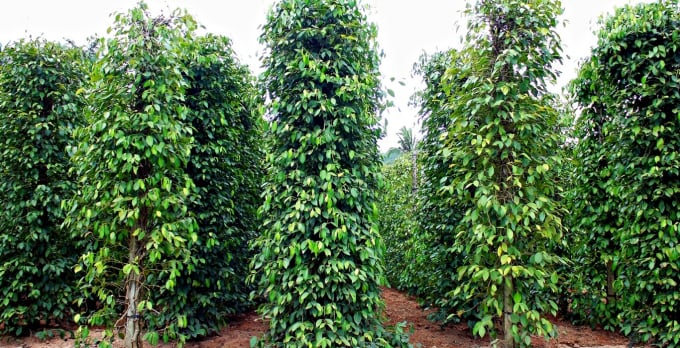
A pepper farm in Phu Quoc Island in the southern province of Kien Giang in Vietnam.
Thus, in the first ten months of 2020, Vietnamese peppers accounted for 74.7 per cent of the total pepper volume that Russia imported. During the same period of 2019, Vietnamese peppers accounted for 68.56 per cent of total pepper volume imported to Russia.
Russia also increased more peppers from India. In the first ten months of 2020, Russia imported 991 tonnes of peppers from India worth US$1.12 million, marking an increase of 48.6 per cent in volume and 32.2 per cent in value compared with those of the same period of 2019.
Russia imported peppers not only for domestic consumption but also re-export to other markets. According to the International Pepper Community, Russia mostly exports peppers to former Soviet Union countries.
In the first four months of 2020, five biggest pepper importers of Russia were Kazakhstan which imported 118 tonnes, up 94 per cent compared with that of the same period of 2019, Belarus (importing 66 tonnes, up 27 per cent), Ukraine (importing 50 tonnes, up 33 per cent), Azerbaijan ( importing 7 tonnes, down 18 per cent) and Kyrgyzstan ( importing 6 tonnes, up 18 per cent).
Translated by Bich Huong

(VAN) Despite numerous challenges, Vietnam's key seafood products are maintaining strong momentum, setting the stage for full-year exports to potentially reach USD 11 billion.

(VAN) The signing of a protocol between Viet Nam and China on the export of fresh jackfruit represents a significant milestone in agricultural trade cooperation between the two countries.

(VAN) On November 27, the Ninh Binh Department of Agriculture and Environment and the Institute for Green Growth Research organized a training course on greenhouse gas inventory for businesses.

(VAN) China’s cooking oil is suddenly flooding into India. It all comes down to a soybean surplus that Beijing doesn’t quite know what to do with.

(VAN) An Giang promotes supply-demand connections, standardizes quality and builds value chains, creating a foundation for sustainable bird’s nest development and aiming to expand exports.
/2025/11/24/5339-4-nongnghiep-075331.jpg)
(VAN) Recently, the conference on 'Sustainable Fisheries Linkage Chain - Tilapia for Export' took place in Tien Hai commune, Hung Yen province.
/2025/11/21/4309-2-153400_128.jpg)
(VAN) Green and low-emission rice is paving the way for Vietnamese rice to enter high-end markets, marking the beginning of a transformation journey toward greening and elevating the national rice brand.
