December 7, 2025 | 21:00 GMT +7
Hotline: 0913.378.918

December 7, 2025 | 21:00 GMT +7
Hotline: 0913.378.918
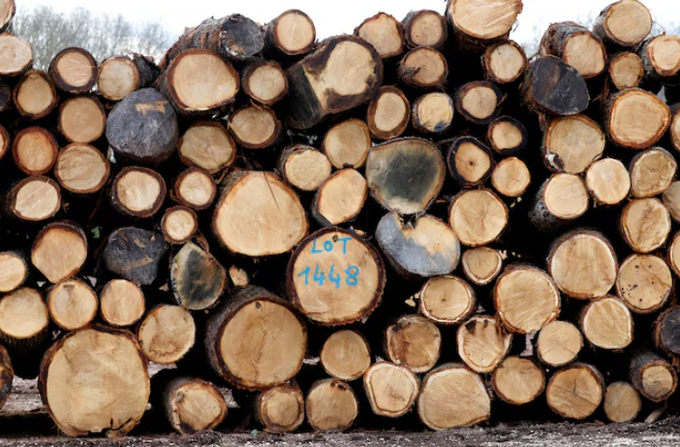
Chopped oak trunks are seen at the Margaritelli Fontaines sawmill in Burgundy, France, April 10, 2018.
The U.S. paper and pulp industry is lobbying President Donald Trump's administration to ask the EU to declare the United States deforestation-free, a step that could make it easier for exporters to meet the bloc's new environmental rules.
From December, the European Union's anti-deforestation policy will ban imports of commodities linked to forest destruction. Brussels already delayed the policy's launch by a year following complaints from trade partners including Brazil, Indonesia and the Biden administration in the United States.
"A delay does not solve our concerns with the regulation's complex requirements and significant technical barriers," Heidi Brock, CEO of the American Forest and Paper Association (AF&PA), told Reuters, saying the EU law would impose "costly and unnecessary obligations" on U.S. companies.
"We are urging President Trump and his trade advisors to include this on the list of items to negotiate with the European Union to ensure the U.S. is recognised as a country that wisely manages its forest resources and must be recognised as not contributing to deforestation," Brock said in emailed comments.
That goes beyond a call by Trump's nominee to run the Commerce Department, Howard Lutnick, for the U.S. to be classed as "low-risk" - the EU policy's least-stringent level. That would still require U.S. companies to conduct due diligence and face inspections.
The Office of the U.S. Trade Representative, U.S. Commerce Department and European Commission did not respond to requests for comment. A spokesperson for the Trump transition team who has been handling media inquiries for Lutnick did not respond to a request for comment.
The EU policy will categorise countries as high, standard or low risk - with imports from "low-risk" countries facing lighter compliance requirements.
However, the law does not contain a category of countries deemed to be deforestation-free - despite EU lawmakers attempting unsuccessfully to add a new "no risk" category of countries which would face even lighter rules.
Any changes to the EU law would require a legal proposal from the Commission, and approval from EU lawmakers and member states.
Europe's world-first deforestation law will require companies and traders placing cattle, cocoa, coffee, palm oil, rubber, soy and wood products onto the EU market to provide proof their supply chain does not contribute to deforestation, or face fines and potentially have their products turned away.
The aim is to ensure that European consumers are not fuelling deforestation, from the Amazon to Southeast Asia. At least 120 million metric tons of CO2 emissions were caused by deforestation associated with EU commodity imports in 2021-2022, according to campaign group Global Witness.
U.S. forest product exports to the EU are valued at more than $3.5 billion, and the U.S. is Europe's biggest supplier of speciality pulp used to make diapers and menstrual products, according to AF&PA.
The AF&PA said U.S. pulp and paper mills cannot comply with the EU policy's traceability requirements.
"The leftover materials from sawmills and forest residues our industry uses are regularly blended multiple times throughout the production process," Brock said. "This makes tracing each individual wood chip from the original forest plot of land to a final product effectively impossible."
(Reuters)

(VAN) Newly designated initiatives in Australia, Canada and South Africa represent science-based and inclusive examples of ecosystem restoration.

(VAN) Rice-based food has been selected as Japan's 'Dish of the Year' for 2025, reflecting public interest in the stable supply of the country's staple food amid a recent rice shortage.

(VAN) A research project in Sweden explored how valuable substances can be extracted from organic waste, such as food waste and animal manure, and how this loop can be closed by producing animal feed.

(VAN) Average retail fertilizer prices continued to be mostly higher during the fourth week of November 2025, according to sellers surveyed by DTN.

(VAN) Inaugural Appeal focuses on cost-effective agricultural solutions that link urgent needs with long-term resilience.

(VAN) Landmark SOLAW 2025 report reminds us that resources for food are not infinite.

(VAN) Climate change is a growing concern for agricultural productivity and several studies have focused on how climate variations can impact crop yields.
