December 7, 2025 | 17:27 GMT +7
Hotline: 0913.378.918

December 7, 2025 | 17:27 GMT +7
Hotline: 0913.378.918
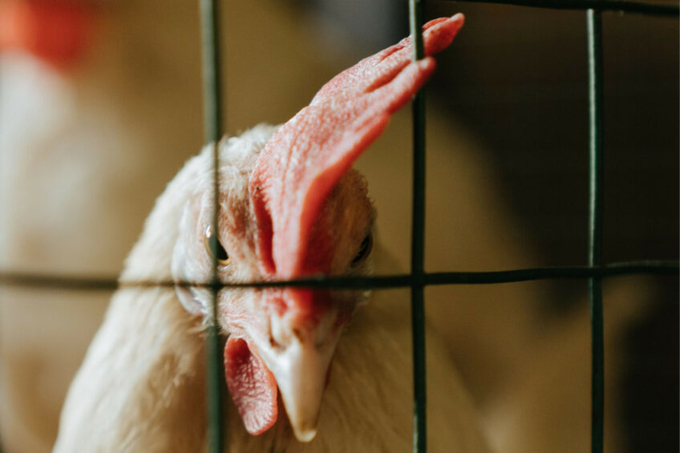
Numerous European countries and regions plan to impose restrictions on cage farming. Photo: Canva.
As Czech poultry farmers are heavily investing in capacity modernisation to match new requirements, a lack of a unified approach to cage farming in Europe is projected to put them at a disadvantage.
“On behalf of the Czech Republic, we stressed that if we are to talk about animal welfare in a sincere and fair way, we need to harmonise some of the measures that the Czech Republic has already taken, such as ending cage farming of laying hens,” Czech agricultural minister Marek Výborný outlined, speaking following the meeting in Brussels.
The minister added: “We scheduled it [the ban on cage farming] to come into force in 2027. The rest of Europe is pretending that it doesn’t concern them. We don’t consider that fair.”
The ban on cage farming promises to incur much pain to the Czech poultry industry. At the end of 2023, the Czech-Moravian Poultry Union estimated that Czech poultry farmers still kept 52.4% of laying hens in cages.
Lost investments
Gabriela Dlouhá, chairwoman of the board of directors of the Czech-Moravian Poultry Union, admitted that due to the ban, farmers would have to dismantle some capacities built less than a decade ago.
“Those who switched to ‘Euro cages’ in 2012 made a management mistake, invested huge amounts of money in technology conversion and today, without having paid it off, have to switch to another technology,” said Josef Dvořák, a local poultry farmer who forecast that the country could lose around 15% of egg production because of the move.
European ban is out of sight
Quite a few European countries and regions plan to impose restrictions on cage farming. For example, Germany will prohibit it from 2026, and the Belgian Wallonia in 2028. France has banned the construction of new cage farms (since 2018). In Slovakia, the government struck a deal with poultry farms to phase out cage farms by 2030.
However, in the absence of the ban in other EU member states, Czech farmers are growing increasingly concerned over competition against cheap imports, primarily from Poland.
The future of male chicks is unclear
Against this background, Czech poultry farmers spoke against the legislation making the use of sex selection technology mandatory unless such a requirement is introduced at the all-European level. The technology, which could save the lives of billions of male chicks at hatcheries, however, would also put the farmers at a disadvantage.
“We are definitely not in favour of this legislation,” Dlouhá said. “Purchasing a sex-detecting device would be economically very demanding, especially for smaller hatcheries.”
(PW)

(VAN) At the TARASA25 Conference, participating countries shared experiences on implementing agroecology and regenerative agriculture, contributing to a sustainable transformation of food and agriculture systems.

(VAN) Green industry is becoming a driving force for the development of Hue City, not only promoting economic growth but also protecting the environment, creating the foundation for the Net Zero goal.

(VAN) As of 2025, the ASEAN region has a total of 69 ASEAN Heritage Parks recognized across its 10 member states. Among them, Viet Nam contributes 15 ASEAN Heritage Parks.

(VAN) Yok Don National Park has high biodiversity with numerous endemic plant and animal species, and it is also the only dipterocarp forest ecosystem conservation area in Viet Nam.

(VAN) Viet Nam and Brunei signed two important MOUs on fisheries and IUU, expanding cooperation in agriculture, the environment, and Halal exports, aiming to substantively implement joint projects.

(VAN) The Viet Nam Coconut Association worked with the International Finance Corporation (IFC) and businesses to promote the supply chain, enhance competitiveness, and develop the coconut industry sustainably.
![Hue aims for Net Zero: [2] Pioneering low-emission tourism](https://t.ex-cdn.com/nongnghiepmoitruong.vn/608w/files/huytd/2025/12/04/0633-dulichzero-4-095634_236-161125.jpg)
(VAN) The ancient capital of Hue has developed Net Zero tourism products and models, aiming to reduce carbon emissions and pioneer the establishment of Viet Nam's green tourism destination.
