December 1, 2025 | 20:37 GMT +7
Hotline: 0913.378.918

December 1, 2025 | 20:37 GMT +7
Hotline: 0913.378.918
The Food and Agriculture Organization (FAO) of the United Nations acknowledges Vietnam as a substantial contributor to global food security, despite its not yet achieving the status of influencing global rice prices.
In 2024, Vietnam achieved a significant milestone in rice exports, reaffirming this accomplishment. The total export volume and value in the first 11 months of 2024 exceeded 8.5 million tons, equivalent to 5.31 billion USD. This represents a 10.6% increase in volume and a 22.4% increase in value when compared to the same period in 2023.
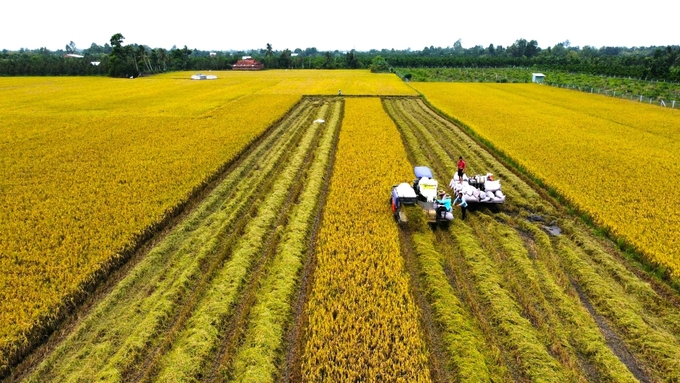
Vietnam is currently one of the world's leading rice exporting countries. Photo: Kim Anh.
According to estimates, the average export price of rice during the first 11 months of 2024 was 627.9 USD per ton, representing a 10.6% increase from the same period in 2023 and the highest level ever reported. In addition, Vietnam's rice exports have undergone a consistent transition in recent years, with an increase in the proportion of high-quality, high-value rice and a decrease in lower-grade varieties.
At the seminar "Building a National Brand for Vietnamese Rice," which was organized by the Ministry of Agriculture and Rural Development, the People's Committee of Soc Trang Province, and Tuoi Tre Newspaper on December 10, Mr. Le Thanh Hoa, Deputy Director of the Department of Quality, Processing, and Market Development, underscored the necessity of redefining brand-building endeavors in light of this status.
Businesses must establish the "identity" of their products, prioritize the preservation of consistent quality, and cultivate consumer trust—these are the fundamental components of brand development.
At present, numerous Vietnamese rice enterprises have effectively established their brands and secured a position in the international market. For instance, the ST25 rice brand, which was created by Labor Hero Ho Quang Cua, was awarded the title of "World's Best Rice," which served as a source of pride for Vietnam's agricultural sector. The rice industry of Vietnam has been able to enhance its global reputation as a result of the success of ST25.
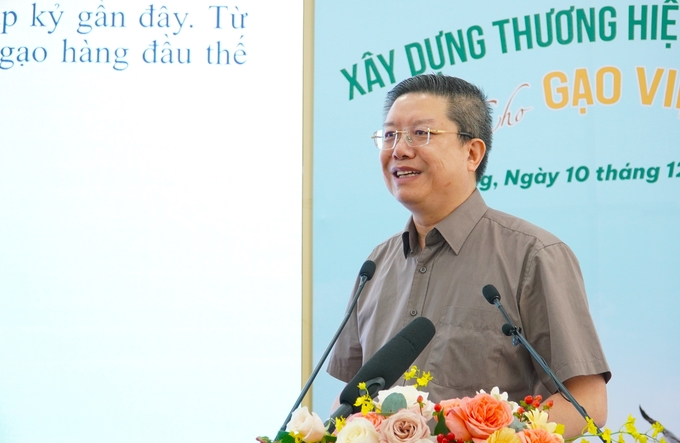
Mr. Le Thanh Hoa, Deputy Director of the Department of Quality, Processing and Market Development, said that it is time to reshape brand building. Photo: Kim Anh.
The majority of experts concur that branded rice is a product that is both trusted and favored by global consumers. Consequently, in order to establish a robust brand, it is imperative to possess a clear vision and excel in three critical areas: the development of high-quality products, the involvement of large-scale enterprises, and the establishment of an ecosystem that facilitates brand expansion.
Mr. Pham Thai Binh, Chairman of the Board of Directors of Trung An Hi-Tech Agriculture Joint Stock Company, expressed his agreement with this viewpoint, stating that Vietnam has been contemplating the establishment of a rice brand for an extended period. The ST25 rice variety has been acknowledged by numerous countries worldwide to date; however, it has not yet accounted for the totality of Vietnam's rice exports.
It would be inaccurate to assert that Vietnam's rice branding initiatives have been unsuccessful. Vietnam's rice brand has indeed attained success over the past 3-4 years, despite the fact that no single variety serves as its representative. Currently, the Philippines imports several million tons of rice from Vietnam each year, and this figure is expected to surpass four million tons by 2024. The leader of a prominent rice export enterprise in Can Tho City stated, "This confirms that Vietnamese rice has established a brand and consumer trust both domestically and internationally."
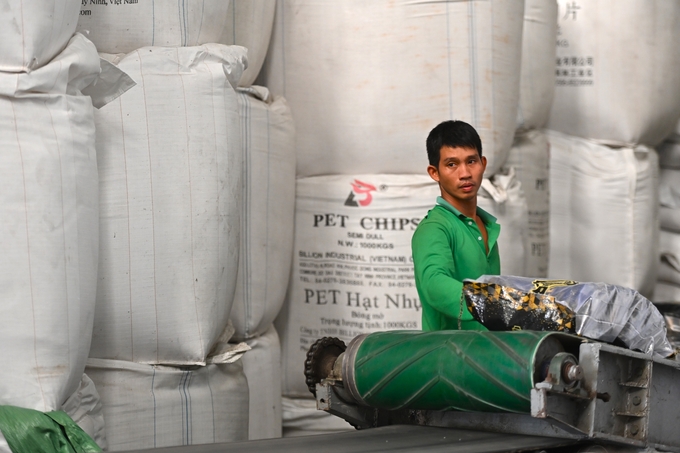
In 2024, for the first time, Vietnam will achieve great rice export achievements, with the total volume and value in the first 11 months of 2024 reaching nearly 8.5 million tons, equivalent to 5.31 billion USD. Photo: Kim Anh.
Mr. Binh maintains that the development of a rice brand requires a comprehensive approach that encompasses food safety and sanitation, from the field to the dining table. This involves the establishment of a value chain that includes the selection of seeds, the application of fertilizers and pesticides, the care of crops, and the use of sowing methods to satisfy the needs of consumers in various countries and regions.
Labor Hero Ho Quang Cua proposed solutions to preserve the unique fragrance of rice grains by using insights from the success of three nations—India, Thailand, and Cambodia—in creating global rice brands.
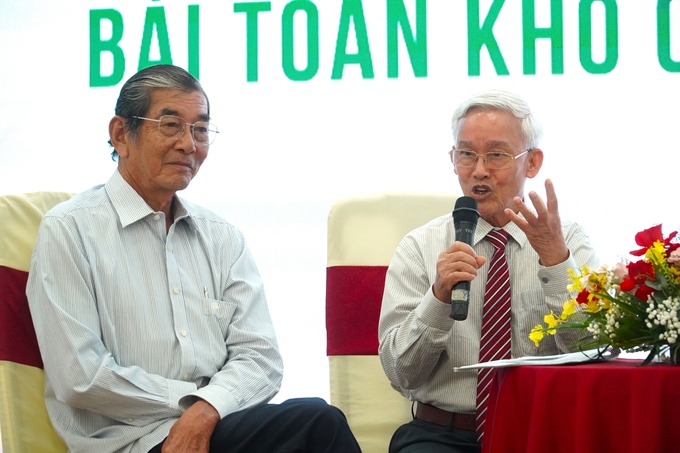
Delegates share solutions to build Vietnamese rice brand. Photo: Kim Anh.
The fragrance of rice is the essence of rice, and many countries use it as the benchmark for brand construction, according to Mr. Cua. Consumer preferences, however, are inconsistent. Additionally, in order to preserve the rice grain's natural flavor, it is necessary to prioritize the use of organic fertilizers and biological products, minimize the use of chemical fertilizers and pesticides, and avoid harvesting during extended periods of rain or extreme heat.
Translated by Linh Linh

(VAN) Lao Cai’s forestry sector is stepping into the spotlight with a series of pioneering initiatives in forest management, monitoring, and sustainable development aimed at generating carbon credits.

(VAN) The Provincial Competitiveness and Governance Index (PCGI) is a tool designed to reflect the quality of local governance.

(VAN) An environmental expert has outlined eight strategic actions for Vietnam to successfully meet its commitment to achieve Net Zero emissions by 2050.

(VAN) After the institutional merger, Da Nang possesses significant forest-carbon reserves and is proactively engaging in the carbon market, creating a new revenue stream.

(VAN) An Giang strengthens communication against IUU fishing, increases inspections and sanctions, and is determined to remove the EC’s “yellow card” while developing a sustainable fisheries sector.

(VAN) As green transition becomes a global trajectory, Viet Nam’s biggest challenge is not only technology and models, but how to ensure that capital flows reach the right beneficiaries.

(VAN) The Ministry of Agriculture and Environment must spearhead the construction of green governance, spanning decision-making processes and investment standards to policy evaluation mechanisms.
